
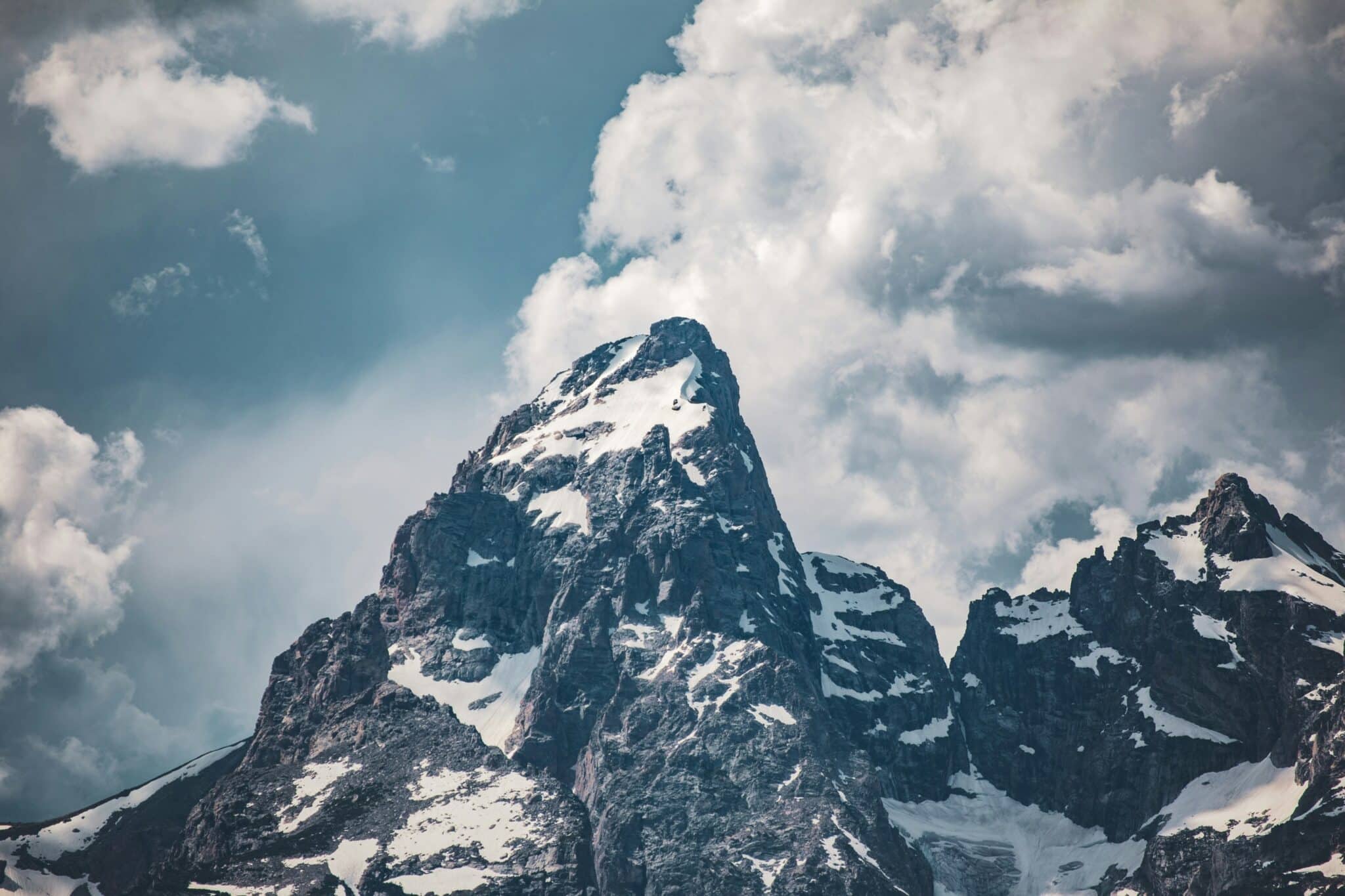
Imagine a simple puddle of water perched atop a mountain. Depending on the breeze or the exact millimeter where a drop overflows, it will begin a journey that leads it toward horizons that are radically opposed. This geographical miracle truly exists. Nestled in the heart of the Rockies, an exceptional peak acts as a gigantic natural crossroads, dispatching meltwater toward three distinct oceans. A fascinating geological rarity that is only the tip of the iceberg of our planet’s aquatic mysteries.
What you will learn
-
The fascinating mechanism of this “hydrological summit” that feeds three ocean basins on its own.
-
The crucial importance of these vast natural water towers for the survival of alpine ecosystems.
-
Other river phenomena defying logic, from rivers running upstream to waterfalls vanishing into the abyss.
The Great Hydrological Switchboard of the Rockies
The North American watershed divide forms a colossal natural barrier slicing the continent from Alaska to Mexico. But in Glacier National Park, Montana, this boundary takes on a unique scale. The aptly named Triple Divide Peak does not merely separate waters into two directions; it sends them off in three opposite directions.
The fate of a snowflake landing on this summit is dictated by a ruthless geometry. If it melts on the west slope, the water will cascade down to the Columbia River and be carried to the Pacific Ocean. If it slides down the east flank, it will join the vast Missouri-Mississippi network to complete its journey in the Atlantic. Finally, if it tilts toward the north, it will feed rivers that flow to Hudson Bay and, ultimately, to the icy waters of the Arctic Ocean.
A vital water reservoir for biodiversity
If the American summit is iconic, it does not have the monopoly on this rare phenomenon. Farther north, the Canadian Snow Dome reproduces exactly the same feat, distributing its melted ice toward the Pacific, the Arctic, and Hudson Bay.
Far from being mere topographic curiosities, these mountains are the true beating hearts of continental hydrology. By irrigating vast territories, they give birth to intricate networks of streams and lakes. These water arteries are the pillars of alpine ecosystems, supporting a fauna and flora of immense richness, including many endemic and threatened species that rely exclusively on these crystal-clear waters to survive.
When nature defies gravity
The capricious distribution of waters is not the only odd behavior of our hydrology. Our planet is full of rivers that refuse to follow the rules.
Powerful rivers sometimes decide to flow backward. This phenomenon, observed on the Amazon or on certain Australian rivers, has also occurred in the United States when Hurricane Isaac pushed back the waters of the Mississippi, temporarily reversing its current. Elsewhere, waterfalls play tricks: in Minnesota, a waterfall splits into two. If one half normally feeds Lake Superior, the other plunges into the “Devil’s Basin,” a mysterious chasm whose exit remains unknown.
