
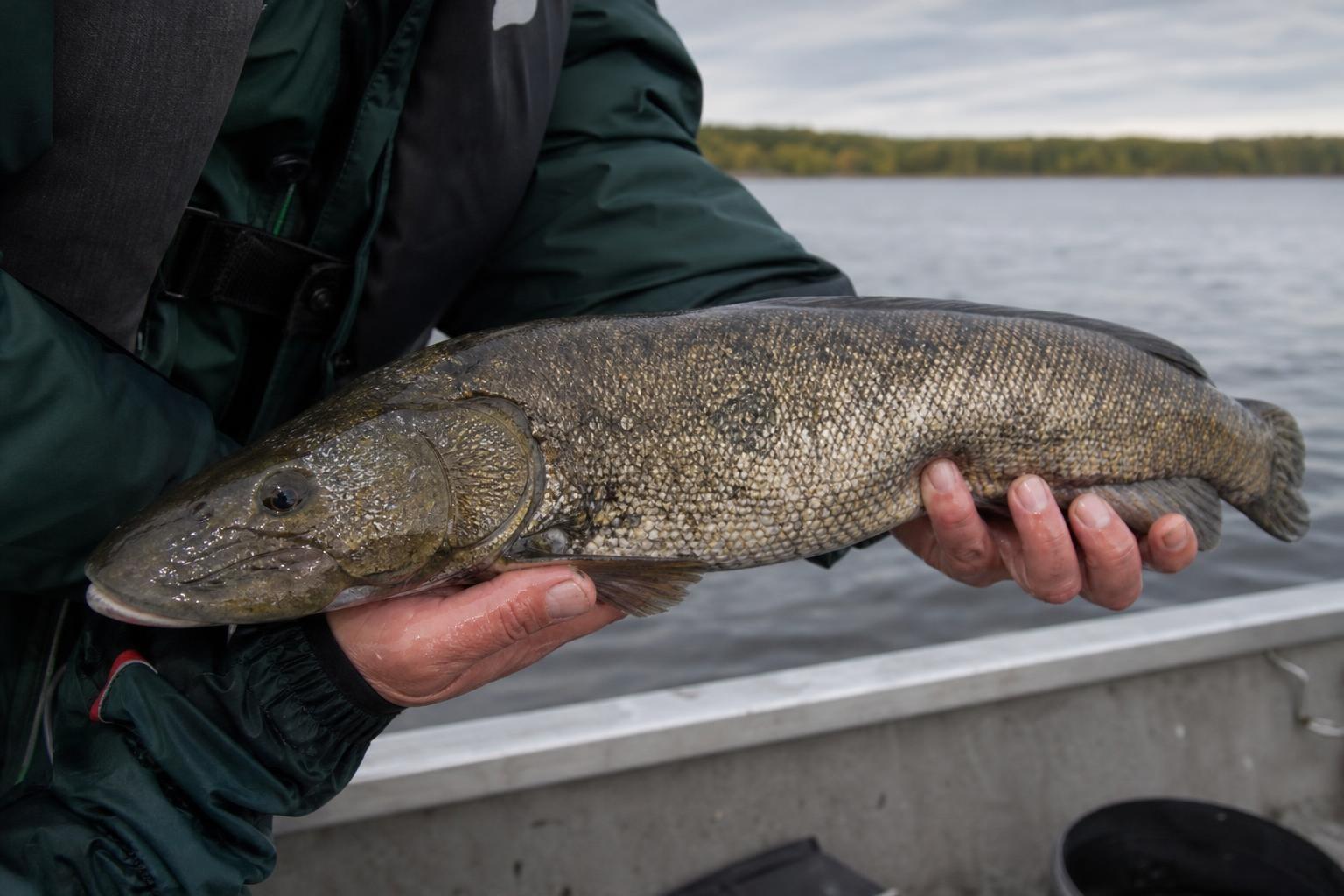
It was hiding in plain sight, a freshwater veteran sliding through weed beds and reeds, outliving generations of anglers who never guessed its age. In the Upper Midwest, a native fish quietly kept birthday after birthday, accumulating rings of time in a part of the skull nobody thought to check. Only recently did scientists piece together the evidence, and the result felt less like a statistic than a revelation: our assumptions about “common” fish were profoundly wrong.
The fish with a secret calendar
The species is the bigmouth buffalo, a wide‑mouthed, bronze‑toned native often mistaken for an invasive carp. It cruises Minnesota’s glacial lakes, filtering plankton and tiny invertebrates with serene efficiency. To the casual eye it looks ordinary, but its life history is anything but.
For decades, people believed these fish lived briefly, because scale readings suggested modest ages. The truth lay not in the scales but in otoliths—small ear stones that record a fish’s years like tree rings. When researchers turned to those otoliths, a century unfurled inside a fleck of calcium.
How scientists cracked the age code
In 2019, researchers applied careful sectioning and bomb‑era radiocarbon dating to validate the age estimates. The techniques cross‑checked the otolith rings against known spikes of atmospheric carbon‑14, a forensic timestamp left by 20th‑century nuclear testing. “It was like shining a light into a locked archive,” one researcher said, “and the files were still in perfect order.”
What they found astonished even skeptics. Individuals collected from Midwestern waters, including Minnesota lakes, weren’t just old—they were ancient. Some had been alive before modern highways, before outboard motors, before many lakeside cabins were even built.
Why such longevity went unnoticed
Long life can be invisible when your tools are blunt. Scales can regenerate or grow irregularly, muddying the count; otoliths, by contrast, don’t lie. Add in a cultural habit of lumping native “buffalo” species with non‑native carp, and it’s easy to see how a centenarian went uncelebrated.
Other forces kept the secret safe. Bigmouth buffalo often experience “boom‑and‑pause” recruitment, with strong year classes born during rare, just‑right conditions. Decades can pass with few young fish visible, making populations look deceptively stable while elders quietly age.
• Key blind spots: misidentification as “carp,” reliance on scales, sporadic reproduction, and a cultural bias toward game species over so‑called “rough” fish.
A rethink of “rough fish”
The discovery forced managers and anglers to rethink an old label. “Rough fish” is a catch‑all that historically invited dismissal, not stewardship. But a creature that can outlive a century of change carries ecological memory, stabilizing food webs across droughts, floods, and invasive‑species waves.
These fish aren’t trophies in the conventional sense, yet their biology is exceptional. A long‑lived filter‑feeder can dampen algal blooms, recycle nutrients, and anchor a lake’s rhythm through wildly different eras. “When you remove the elders,” a field biologist noted, “you erase institutional knowledge from the ecosystem.”
The pressures of modern attention
Ironically, what hides can also be targeted. The rise of night bowfishing with high‑power lights and decks made it easy to spot large buffalo in the shallows. A single evening can remove fish that took a century to grow, and a few seasons can flatten an age structure built slowly over generations.
Management is beginning to shift. Angler education, adjusted limits, and reassessments of “rough fish” categories are entering the conversation. “If a fish can live past three or four generations of people,” one manager said, “it deserves policy that looks past this weekend.”
Reading time in bone and water
The sheer number—more than a hundred birthdays—grabs headlines, but the method matters just as much. Otolith chemistry, micro‑milling, and radiocarbon benchmarks offer a template to revisit assumptions about other long‑lived freshwater species. What else have we been aging with the wrong clock?
Every time science refines a lens, familiar creatures look new. A fish once shrugged off as background fauna turns out to be a master of survival, aging gracefully through cold winters and warm summers, snowmelt surges and late‑season droughts.
What it means for lakes and people
For Minnesotans, this revelation is a mirror. Lakes are not just playgrounds; they’re archives, and some residents carry a memory the length of a century. To keep them, we might need fishing rules with longer horizons, habitat that allows rare strong year classes to form, and a vocabulary that doesn’t write natives off as nuisance fish.
“Respect,” an angler said softly after seeing an otolith cross‑section under light, “that’s what this teaches.” Respect for hidden age, for quiet roles, for the possibility that we still don’t know our most familiar waters as well as we think.
The next time a bronze shape glides beneath a dock in the twilight, remember what the old tools missed. Somewhere in that wide, patient body is a ledger of storms, summers, and snow—a record written in bone, kept faithfully, and finally read.
