
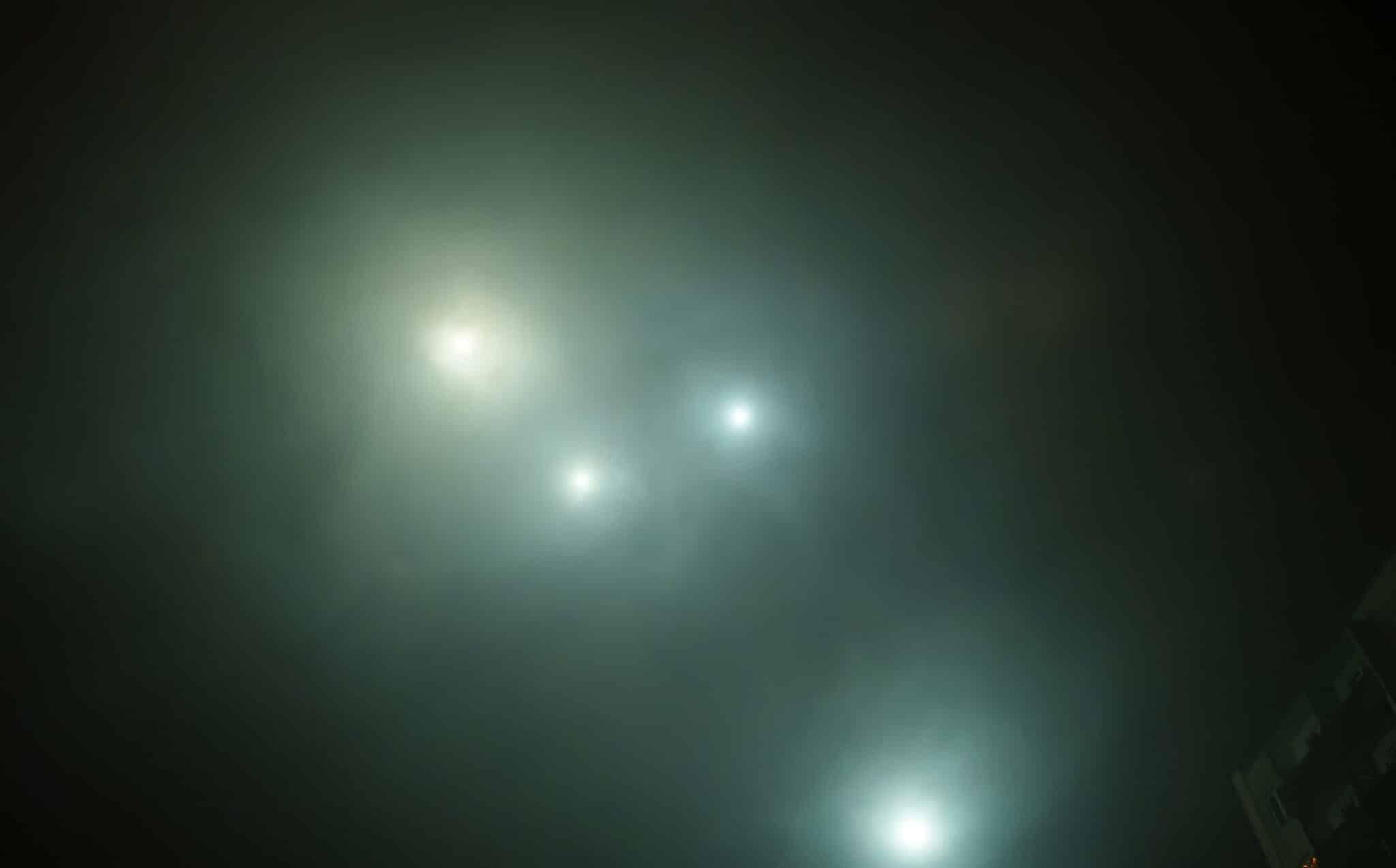
What if certain anomalies in our astronomical archives revealed the existence of phenomena still unknown? For several years, an international team of researchers has been working on a fascinating project: to identify, across a century of observations, luminous sources in the sky that appear and disappear without explanation. These events, called “transients,” intrigue because of their fleeting nature… and some date back even before the satellite era, making their origin even more enigmatic.
A Century of Archives Scrutinized Under a Microscope
The initiative is named VASCO (Vanishing and Appearing Sources during a Century of Observations). Since 2017, its objective is clear: to sift through old astronomical images to spot stars or other light sources that were not there before… or which, conversely, vanished suddenly.
If some of these variations can be explained by known phenomena — such as supernovae or photographic plate defects — others defy any simple interpretation.
In their work, the researchers distinguish notably very short “transient events,” with exposure times under 50 minutes, absent from frames taken just before and not found in later surveys. In some cases, several of these lights appear on the same photograph, which makes traditional explanations even more difficult to invoke.
Back to Pre-Sputnik Observations
For their latest study, the team chose to focus on a well-defined period: from November 19, 1949 to April 28, 1957, thanks to the images from the Palomar Observatory Sky Survey (POSS-I). This strategic choice allows us to rule out at once a common cause of modern false transients: reflections from artificial satellites, which did not exist before the launch of Sputnik in 1957.
This filtering makes the anomalies found even more puzzling. Among them, one case stands out: on July 19, 1952, three stars visible on a photograph disappear within a 50-minute window. Coincidentally with one of the most famous episodes in the history of ufology: the Washington DC UFO wave observed on July 18–19 and July 26–27, 1952.
Statistics That Intrigue
Beyond coincidences, the team applied an in-depth statistical analysis to their data. One of the most revealing tests concerns the position of the events relative to the Earth’s shadow.
If the anomalies were merely photographic plate defects, they should be uniformly distributed, independent of this shadow. Yet the researchers observe a striking difference: transient phenomena are significantly fewer in the shadowed zone than in the rest of the sky.
At an altitude of 80,000 kilometers, the calculations predict about 339 transients in this shaded region, out of a total of more than 106,000. In reality, only 79 are recorded there. The difference, statistically highly significant, suggests an explanation tied to light reflection… which raises the question: what exactly would have produced these reflections, in a time devoid of artificial satellites?
Hypotheses and Avenues for Investigation
Researchers remain cautious: this is not to claim that these signals originate from extraterrestrial artifacts. Other causes are possible, such as atmospheric nuclear testing, which could produce luminous phenomena visible from Earth.
But the lack of a definitive explanation and the rarity of these events make them a topic of scientific interest.
The team also notes that some transients are difficult to reconcile with known astronomical phenomena such as gamma-ray bursts or gravitational lensing effects. Their distribution and their brevity place them in a category apart, which could represent either an as-yet-unknown astrophysical phenomenon, or the first signs of artificial activities in our near-space environment.
A Call to Revisit the Past to Illuminate the Present
The authors conclude by urging continued analysis of ancient photographic archives while applying their methods to modern deep-sky surveys. By comparing yesterday’s and today’s data, it would be possible to better understand the true nature of these anomalies.
In any case, these results remind us that the images of the past still hide many secrets. And that even in a discipline as rigorous as astronomy, some lights in the sky can fade away, taking more questions than answers with them.
Sources: Aligned, Multiple-transient Events in the First Palomar Sky Survey (iopscience.iop.org) | Transients in the Palomar Observatory Sky Survey (POSS-I) may be associated with nuclear testing and reports o (nature.com)
Article prepared with the help of AI · Our method
