
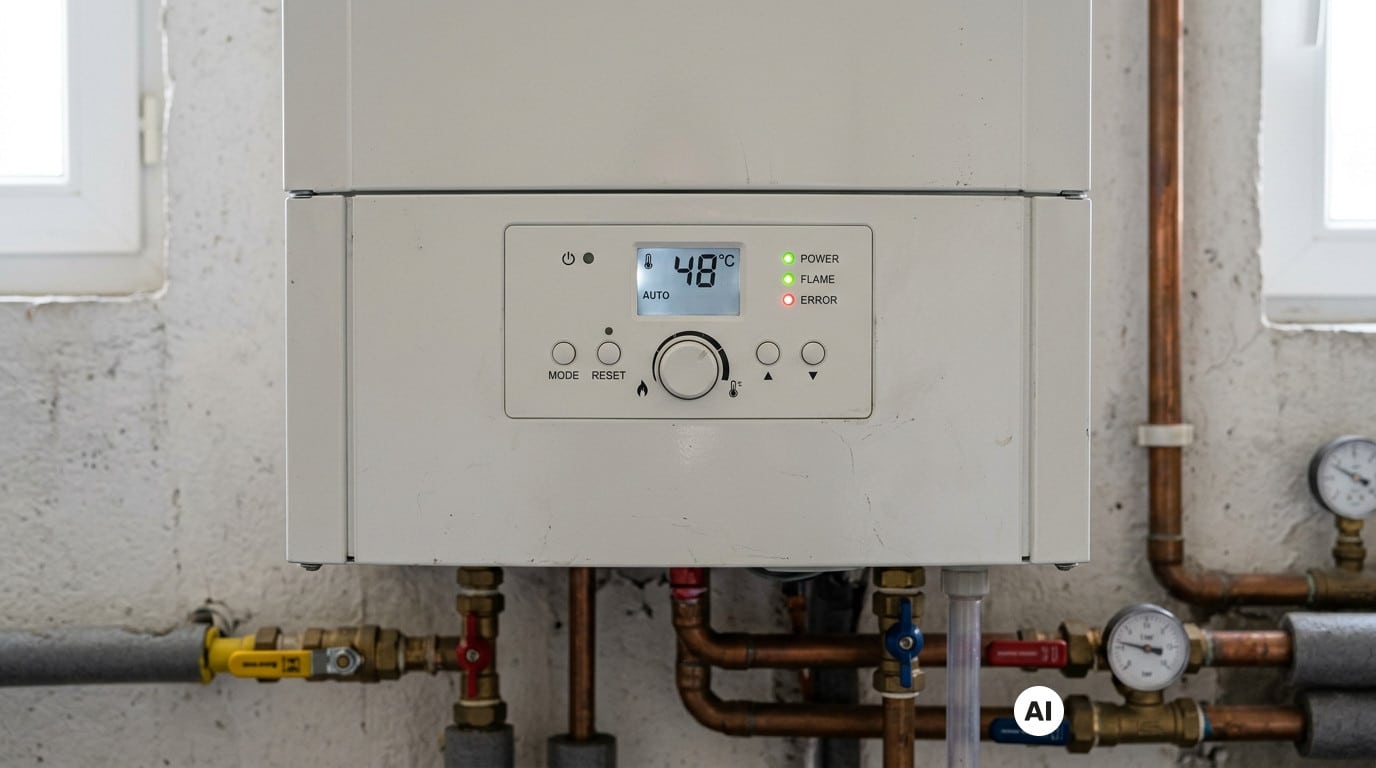
No, a boiler that purrs along without the slightest mechanical issue does not, by any means, escape an obligatory annual appointment. It is even one of the most common misconceptions among the French: people wrongly believe that maintenance is only useful in case of a breakdown or suspicious noise.
Yet the regulations leave no room for interpretation on this point. Whether the unit runs like clockwork or already shows signs of fatigue, a professional visit remains mandatory, and this is independent of the observed operating state. Before diving into the details of this sometimes overlooked obligation, it is worth understanding why the legislator chose to impose a systematic check rather than maintenance on demand, and what this means in practical terms for occupants of homes heated by gas, fuel oil, wood, or coal.
Ce que dit la loi sur l’entretien annuel des chaudières
French regulations require an annual maintenance for combustion boilers—whether gas, fuel oil, wood, or coal—provided their output lies within 4 to 400 kilowatts. This range covers the vast majority of individual installations found in houses and apartments across the country, from small models that heat a studio to larger devices that supply sizable living areas. The rule is not conditioned on a malfunction being detected. In other words, a quiet, efficient boiler with no history of failure is just as subject to this requirement as an older unit showing signs of wear.
This preventive logic is straightforward: a heating appliance can harbor anomalies invisible to the naked eye or to the ear, particularly in terms of combustion. A poor adjustment or a slightly dirty component does not necessarily produce suspicious noises or a perceptible drop in performance, while still generating real risks. It is precisely to detect this kind of silent problem that the annual visit remains required, regardless of the daily impression of good operation that the installation may give.
Qui doit payer et organiser cette visite : locataire ou propriétaire
In the vast majority of rental situations, it is the tenant who is responsible for arranging this maintenance and bearing its cost, unless explicitly stated otherwise in the lease agreement. This allocation aligns with the usual practice of handling routine upkeep costs for a rented dwelling, just like other usage obligations that fall to the occupant rather than the landlord. It is therefore advisable to scrutinize the lease terms carefully before organizing the work, as some contracts may set different arrangements between the two parties.
The landlord is not completely exempt from responsibilities in this area, however. He must ensure that the rental property has a compliant heating installation that functions correctly, which requires particular vigilance when the property is vacant between tenants. This division of roles, while logical on paper, can lead to misunderstandings or oversights, especially during tenant turnover when no one is quite sure who should take the initiative to contact a professional.
Ce qui se passe réellement lors du contrôle du professionnel
Contrary to what one might imagine, this visit is not simply a quick glance followed by a stamp on a form. The qualified professional who attends conducts a series of technical checks intended to ensure the overall proper operation of the device, and not merely the absence of an obvious breakdown. This comprehensive approach makes it possible to spot malfunctions that would never be detected by the occupant alone, due to a lack of technical skills or the absence of appropriate measuring tools.
Within 15 days after this intervention, the professional issues a maintenance attestation, a document officially confirming that the visit took place and that the device meets the required criteria. This paper, often filed away at the back of a drawer, nonetheless assumes crucial importance in certain circumstances, notably in the event of a claim or a dispute with an insurer. Here are the main points of what this annual visit typically covers:
- An assessment of the boiler’s general condition and its components
- A check of the appliance’s energy performance
- Usage advice tailored to the specific installation
- The issuance of a maintenance attestation within 15 days following the visit
These steps help ensure that the boiler operates under optimal conditions, both in terms of safety and energy efficiency, two closely linked dimensions for combustion appliances.
Les risques encourus en cas de négligence de cette obligation
Ignoring this annual obligation does not come without consequences, far beyond mere administrative inconvenience. If a lapse is detected, although the law does not impose a fine, the landlord may deduct the cost of the maintenance from the tenant’s security deposit. This legal framework is primarily designed to hold occupants accountable for equipment that, when poorly maintained, can pose real health and safety hazards to the household.
Beyond the regulatory aspect, the absence of a maintenance attestation can also seriously complicate procedures in the event of a heating-related incident. An insurance company could indeed use this omission to challenge a claim, leaving the occupant potentially liable for substantial costs. This document, far from being a mere administrative formality, thus represents real protection for anyone who arranged the inspection in a timely fashion.
Source : Entretien annuel de la chaudière : quelles règles pour le locataire ?
Article préparé avec l’aide d’une IA · Notre méthode
