
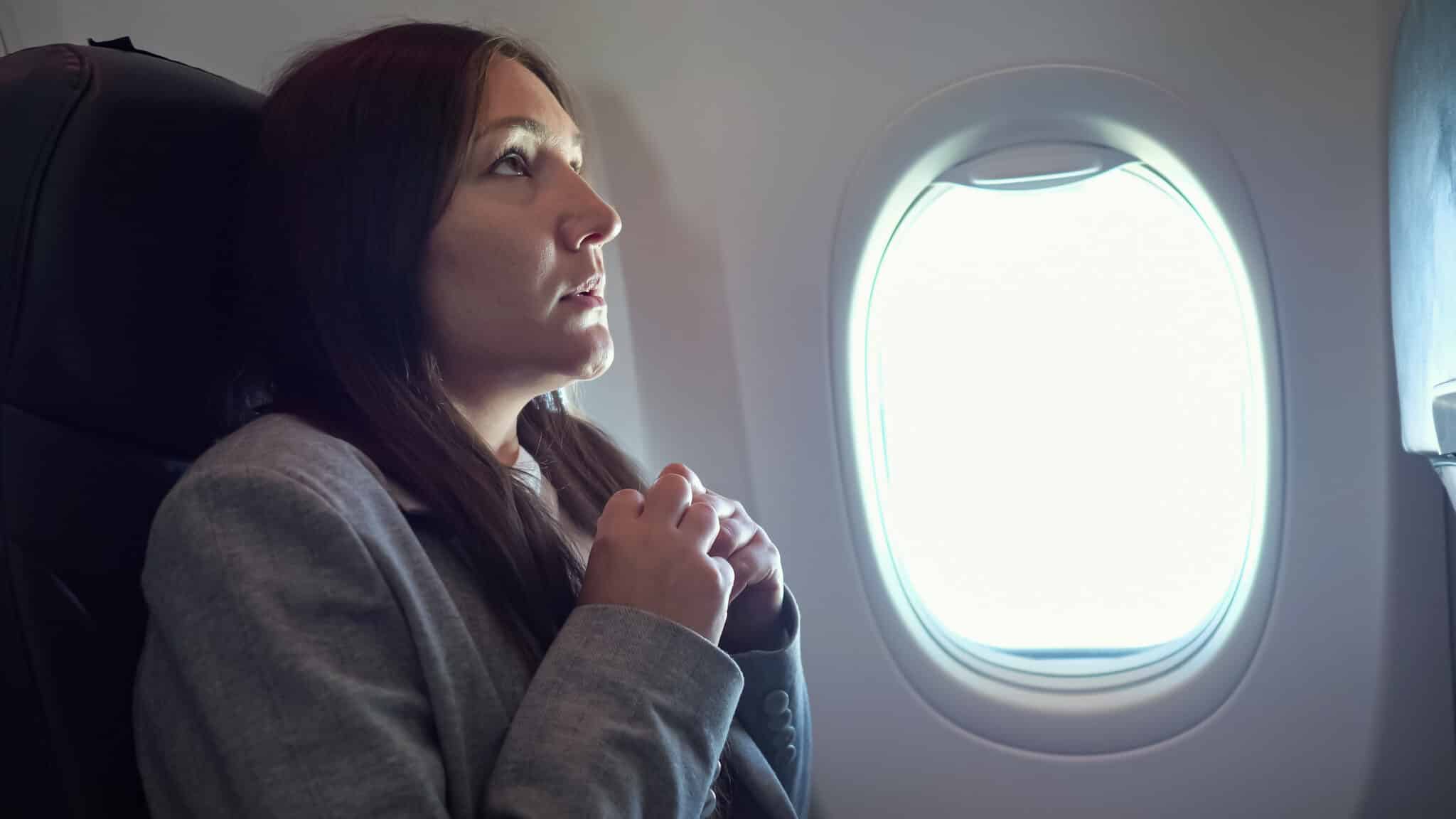
The scene is a staple of air travel. You’re comfortably seated, seat belt fastened, the aircraft slowly backing away from the boarding gate. Silence reigns, broken only by the distant purr of the engines. Suddenly, a series of mechanical yelps, like a panting dog or a circular saw biting into damp wood, rises from the floor. Glances are exchanged, uneasy. This noise, which seems to herald a critical fault even before takeoff, is in fact the audible signature of an invisible technical feat.
The Barking Dog Syndrome
If you’ve flown on a narrow-body aircraft in Europe or the United States, you’ve surely heard this sound. It is the trademark of the most-sold family in civil aviation: the Airbus A320 family (including the A318, A319, and A321). For pilots and cabin crew, the noise is part of the backdrop, on a par with the chime of the “fasten your seat belt” sign. For a first-time passenger, it evokes the anxious image of a mechanical part letting go.
Yet this racket is not a sign of malfunction, but a signal of the aircraft’s heightened vigilance. The culprit bears a stern name: the PTU, for Power Transfer Unit. Located at the heart of the airplane, often just beneath the wing roots, this device acts as a vital tightrope walker for the aircraft’s “muscles.”
A Tale of Fluids and Pressure
To understand why your plane “barks,” you have to dive into its anatomy. A commercial airliner does not steer by arm strength alone. To move the flaps, extend the landing gear, or operate the brakes, it relies on hydraulic circuits. On an Airbus A320, there are three independent circuits, color-coded for quick reference: Green, Yellow, and Blue.
Under normal conditions, each engine feeds its own circuit (engine 1 powers the Green, engine 2 powers the Yellow). This is where the PTU comes into play. It is a bidirectional, reversible pump that links the Yellow and Green circuits. Its role is to ensure redundancy: if one circuit loses pressure (for instance when a engine is shut down), the PTU instantly activates to transfer energy from the “strong” circuit to the “weaker” one.
The technical nuance is crucial: the PTU transfers power, but never liquid. Picture two paddle wheels placed side by side but separated by a watertight partition. The liquid from the Yellow circuit spins the first wheel, which, via a mechanical shaft, drives the second wheel, thereby pressurizing the liquid in the Green circuit. The aircraft’s blood never mixes.
Why this Saw-like Noise?
The question remains: why is this system so loud? The answer lies in the violence of pressure fluctuations. The PTU operates in an “all or nothing” mode. When it activates, it oscillates rapidly between running and stopping to maintain a perfect balance between the two circuits (approximately 3,000 PSI).
It is this rapid pulsation, thousands of micro-adjustments per second, that makes the hydraulic lines attached to the aircraft’s structure vibrate. The airframe, acting as a resonance chamber, converts the vibration into that rhythmic sound: woof-woof-woof.
The Departure Ritual
If you hear this noise mainly on the ground, before takeoff or after landing, it is for economic and ecological reasons. More and more often, pilots taxi on a single engine to save fuel.
In this configuration, one engine runs (pressurizing its hydraulic circuit) while the other is off (leaving its circuit inert). The on-board computer detects this imbalance of more than 500 PSI and automatically activates the PTU to pressurize the inactive side. Moreover, during engine start, the aircraft performs an auto-test of this system. What you hear is the airplane flexing its muscles and checking that its survival reflexes are operational.
Far from being a sign of weakness, this barking-dog noise is the audible confirmation that your aircraft is ready to handle any situation, ensuring that your flight controls will remain responsive, no matter what happens.
Source : What is that noise? Is there a dog in the cargo hold? – ICI (ici.fr)
Article prepared with the help of AI · Our method
