
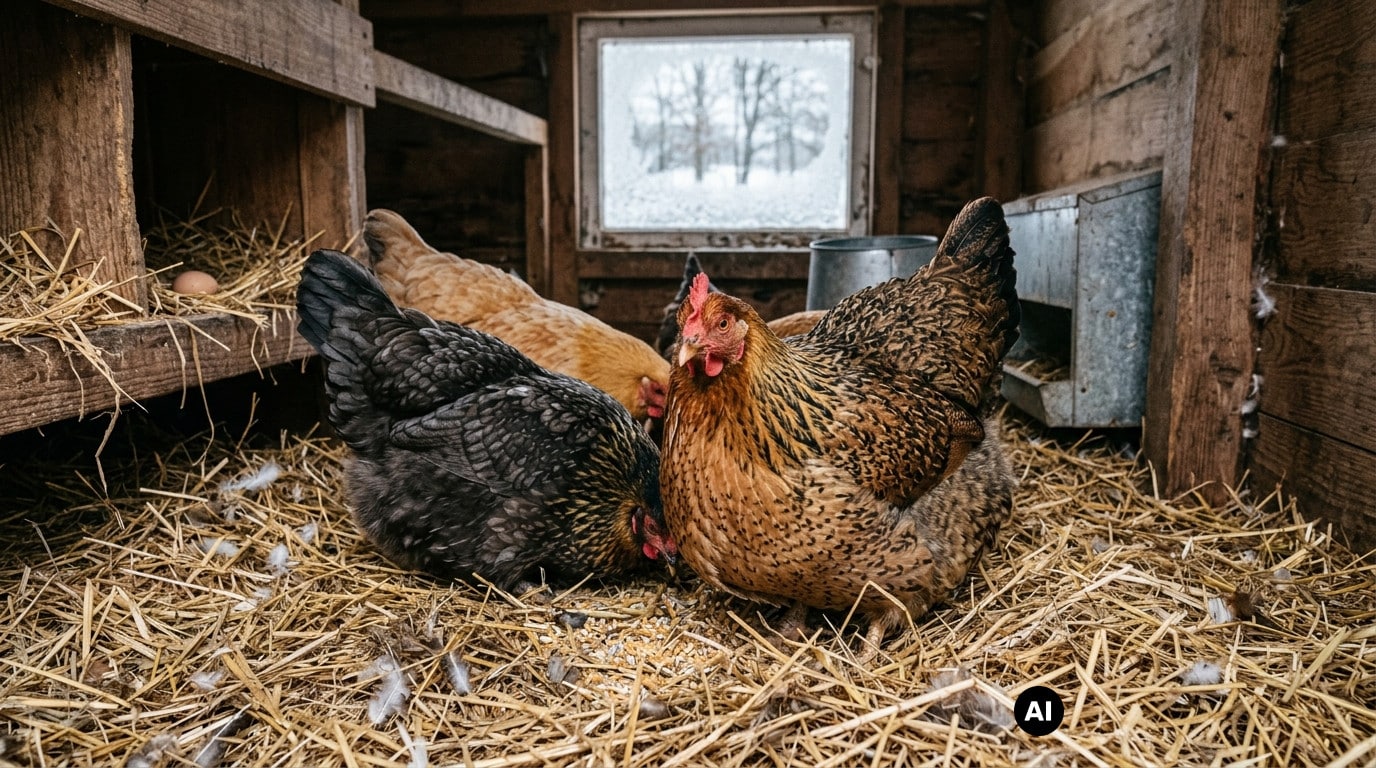
Chickens in a family backyard can be contaminated by avian influenza viruses, even without any apparent contact with a sick bird. When the risk level requires it, access to the garden must be limited to a protected area. These obligations also apply to individuals who own only a few poultry.
Why are garden-reared chickens exposed?
Avian influenza is a contagious viral disease that affects both wild and domestic birds. Highly pathogenic forms can cause substantial mortality among poultry.
Contamination can occur through direct contact with an infected bird, but also via contaminated materials or surfaces such as water, food, droppings, equipment, shoes, or clothing. The absence of visible contact with wildlife is therefore not enough to rule out the risk. According to Anses, the viruses can enter poultry through the respiratory or digestive tracts.
When does sheltering become mandatory?
The regulations distinguish three levels of risk: negligible, moderate, and high. These levels determine the preventive measures that apply, and local restrictions may be added.
When the risk level is high, establishments with fewer than 50 birds must keep their birds in a building or protect them with nets. This obligation, provided for by Article 16 of the order of September 25, 2023, also concerns small family backyard flocks. Owning only two or three hens does not exempt from complying with these measures.
It is important to separate this general rule from the provisions applicable in certain exposed sectors or around a household. To know the obligations concerning one’s henhouse, one should consult the information from the Ministry of Agriculture and the orders published by the prefecture.
A run protected by a net can replace staying indoors
Sheltering does not necessarily mean locking the hens in their coop. For the small backyard flocks concerned, the regulations also provide the possibility of a run protected by nets. However, allowing the animals to roam in an open garden does not meet this obligation.
The setup must limit contact with wild birds. Its condition must be checked regularly: openings, tears, or defective fastenings can compromise the protection.
Nevertheless, a net is not a barrier against all routes of transmission. Equipment or dirty footwear can also introduce the virus into the space reserved for the hens.
The backyard declaration does not wait for an outbreak to appear
The registration of poultry raised outdoors is not limited to areas around a household in alert zones. Individuals who own a backyard flock must register, even outside a local alert.
The process can be completed online or by sending the corresponding Cerfa form to the town hall where the birds are kept. This census allows authorities to know the bird owners and to inform them more quickly in case of a health threat.
What actions complement sheltering?
Prevention relies on several complementary measures:
- Protect water and feed from contact with wild birds.
- Regularly clean the poultry house equipment.
- Avoid bringing contaminated equipment or footwear into the enclosure.
- Check prefectural instructions and maintain the protections that have been installed.
These precautions reduce the chances of introducing the virus, but do not guarantee zero risk. Any unusual mortality should be promptly reported to a veterinarian or to the Departmental Directorate for Population Protection, without waiting to determine the cause oneself.
Sources: Avian influenza in 11 questions (anses.fr); Decree of September 25, 2023 relating to surveillance, prevention, control and vaccination against highly pathogenic avian influenza (HPAI)
Article prepared with the help of AI · Our method
