
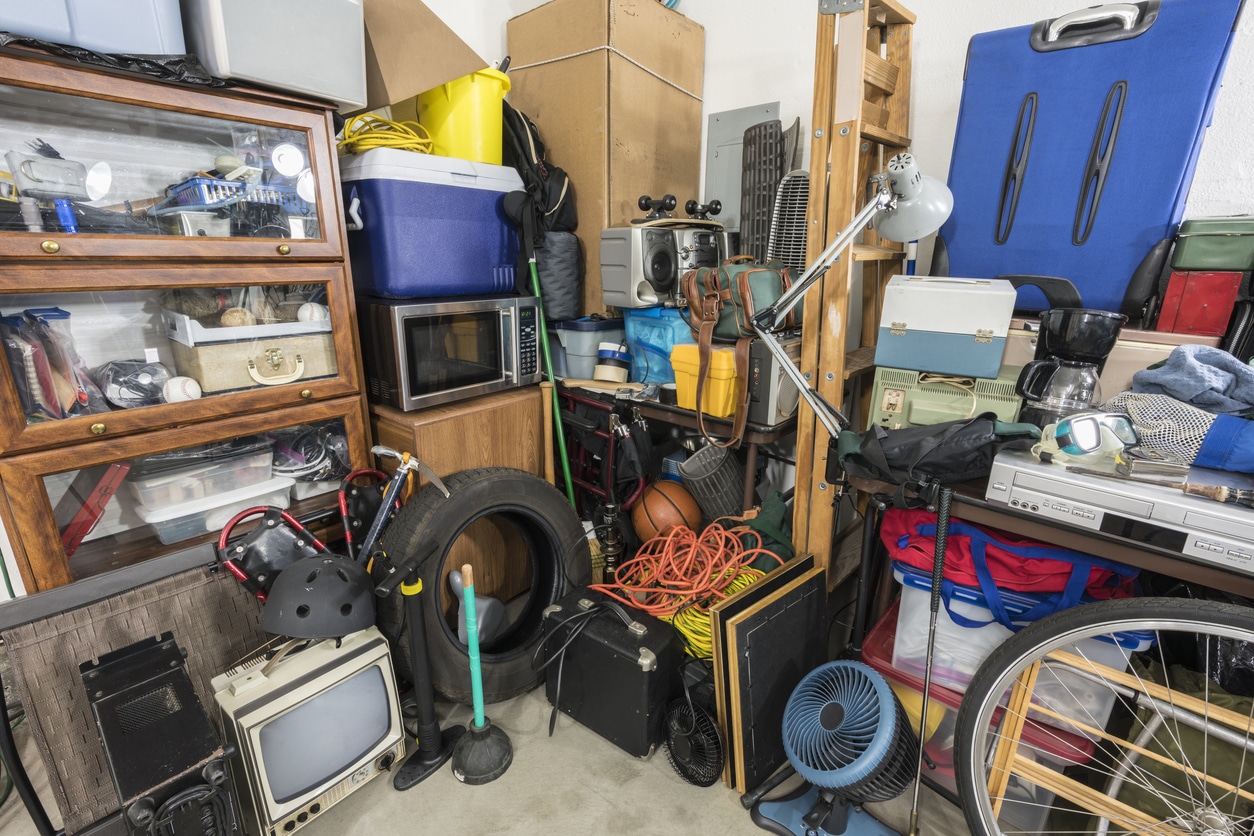
Even with regular tidying, many people’s homes quickly revert to a real mess. It must be said that these individuals often hold onto a multitude of objects of all kinds—and sometimes useless. According to researchers, one reason could be the rising popularity of auction shows.
An accumulation of useless objects
When one thinks of people living in disorder, it is fairly easy to mention Diogenes syndrome. This genuine behavioral disorder relates to a compulsive and extreme accumulation of objects of all kinds – sometimes even waste. In many cases, this leads to a severe neglect of oneself and one’s living space. However, the notion of disorder is not confined to those individuals affected by the syndrome.
Indeed, there exists an innumerable number of people who sometimes muster the courage and regularly tidy their homes. Yet disorder reappears rather quickly. It is often a matter of an accumulation of sometimes completely useless objects. Other items are stored away, but according to their owners, they might be useful in the future, especially for their children.
In an article published by the magazine Discover on February 6, 2023, psychology researchers from DePaul University (United States) posited the hypothesis that the rising popularity of auction shows could be the source of this accumulation. These shows would give people the impression that their ordinary objects could have value, which also has the effect of encouraging consumption.
A burdensome notion of tidying
If the best way to solve the problem is to clear out these bulky items once and for all, it is evident that this is not easy for everyone. American researchers then published a study in the International Journal of Environmental Research and Public Health on January 23, 2023. The objective? To highlight the behavior of people who seem unable to decide to declutter their living space.
The leaders of the study sought to understand whether the confinement episodes linked to the Covid-19 pandemic could have enabled these individuals to attempt an “evacuation operation.” No fewer than 227 people participated in the study, those who had stated a wish to tidy their homes during those periods. Yet, the results of the questionnaire showed that these individuals experienced more difficulties than others in carrying it out. Furthermore, it is worth noting that the questionnaire addressed several notions, such as perceptions of disorder, decision-making, and procrastination.
The researchers’ conclusion is simple. Since tidying is essentially a sequence of decisions aimed at reducing clutter, more indecisive people may feel overwhelmed. In other words, tackling the disorder will seem insurmountable, which will place these individuals in a kind of denial, thereby worsening the problem.
