
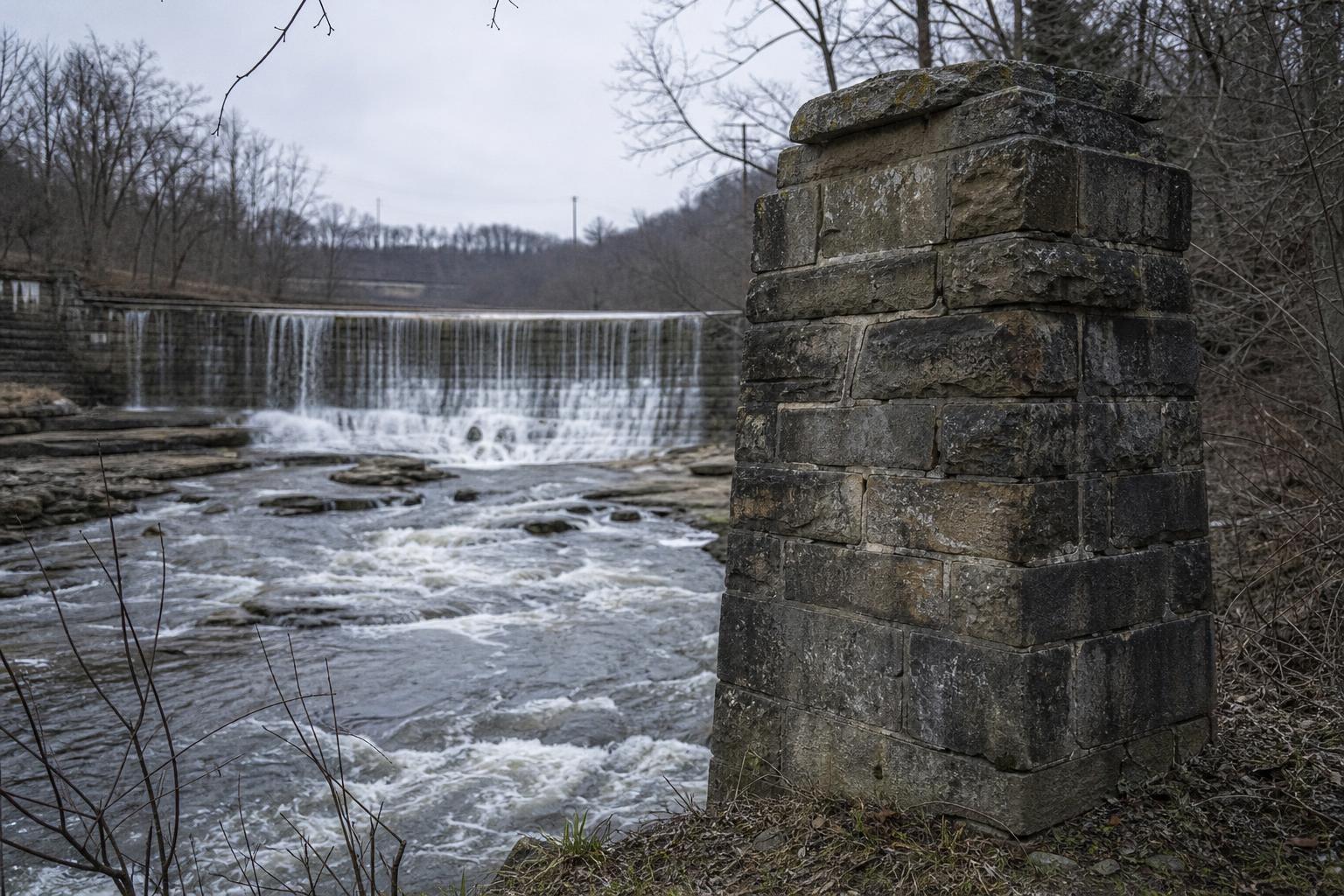
The late-spring sky looked ordinary, yet the valley below held a catastrophe waiting to be unlatched. By the time residents sensed the strange hush of impending disaster, it was already too late for preparation. What followed was a roar, a shuddering collapse, and a force that turned streets into channels and homes into wreckage.
The Private Dam Above a Public Town
High in the hills sat a reservoir once meant to feed canals but repurposed as a retreat for a club of powerful men from Pittsburgh. Their lakeside lodge glittered with leisure, ringed by manicured paths, boats at the ready for weekend outings. The dam itself—altered, lowered, and screened by fish grates—stood between calm pleasure and the lives of thousands in the valley below.
The South Fork structure was a patchwork, a repertoire of quick fixes and confident bets that the worst would never arrive. “It seemed as permanent as the hills,” one later account insisted, but permanence proved a story people told themselves to ease their minds.
Rain, Pressure, and the Sound of Failure
Days of relentless rain fattened the lake, each rivulet feeding a growing weight pressed against earthen walls. Messages went flashing down the line—warnings, worries, and then, suddenly, only the rush. An eyewitness would later say, “I heard a snap like iron breaking, then the earth began to move.”
When the barrier let go, the lake did not simply empty; it transformed into a moving architecture of uprooted trees, iron rails, shingles, cattle, and people. The surge gathered speed, shredding hamlets and mills as if they were paper theater sets. Within the hour, a towering mass of water had become the author of a single, dreadful sentence.
Johnstown in the Path
The city was a lattice of industry, neighborhoods strung along the river, smokestacks punctuating a steady rhythm of work. That day the ordinary clatter of life was overrun by the volume of water, a violent grammar that broke every line. Houses swung like doors ripped from hinges, bridges choked with a jam of debris, and people clung to anything that seemed solid.
At the Stone Bridge, the tide slammed into masonry and piled into a grotesque raft—timbers, carts, telegraph poles, and the bodies of the lost. Fire kindled inside that heap, fed by kerosene and shattered kindling. “There was light where there should have been only night,” a witness murmured, “and a heat where there should have been only river.”
Numbers, Names, and a Hollow Quiet
By the time silence returned, more than two thousand lives were gone, and thousands more were injured or made homeless. Streets were smeared with a paste of mud, lime, and splinters, everything smelling of damp and smoke. Lists of the missing ran to pages and pages, while families stood before notice boards hoping for a single mark beside a beloved name.
Clara Barton and her Red Cross arrived swiftly, raising tents, sorting provisions, and helping impose a fragile order on the chaos. Relief trains rattled in with blankets, tools, and a vocabulary of recovery that began with shovels and ended with tears.
Wealth, Responsibility, and the Law’s Thin Edge
The owners of the hillside lake had invested in status, scenery, and a private playground, but not in the kind of safety that treats worst-case scenarios as inevitable. Courts of the era bent toward the owners, requiring direct proof of negligence in a time before modern standards of strict liability settled into the law. The verdicts left the public with a stark aftertaste: grief was communal, but risk had been privatized.
A survivor was blunt: “If you own the water, you ought to own the danger.” His words struck like a hammer on an empty drum, resonant but unanswered by the men who returned to their offices and clubs in the city.
Mechanics of a Preventable Disaster
Engineers later pointed to a handful of choices that tilted probability toward failure:
- Lowered crest and neglected spillways that throttled safe outflow
- Fish screens that trapped floating debris and boosted hydraulic pressure
- Inadequate inspection and piecemeal repairs masked by long droughts
- A culture of deference to wealth over blunt engineering truths
Each factor was a small, confident compromise; together they formed a fatal system.
Memory Carved in Mud and Iron
Communities rebuilt with a stubborn will, yet you can still read the event in strata—in old photographs edged with silt, in plaques by the river, in family stories that begin with a cloudburst and end with a quiet, aching pause. “The water came like a living thing,” one elder later said, “and when it left, we were not the same people.”
The lesson is not simply that dams must be sound, but that governance must be strong, inspections independent, and warnings treated as promises, not guesses. Public safety cannot be a private favor; it must be a shared, enforceable duty.
What failed that day was more than an earthen wall. A whole web of assumptions snapped—about nature’s patience, about money’s invisible privileges, about the space between “probably fine” and “utterly, fatally wrong.” The river runs on, indifferent yet instructive, reminding every town downstream that prevention is the only hero strong enough to hold the line.
