
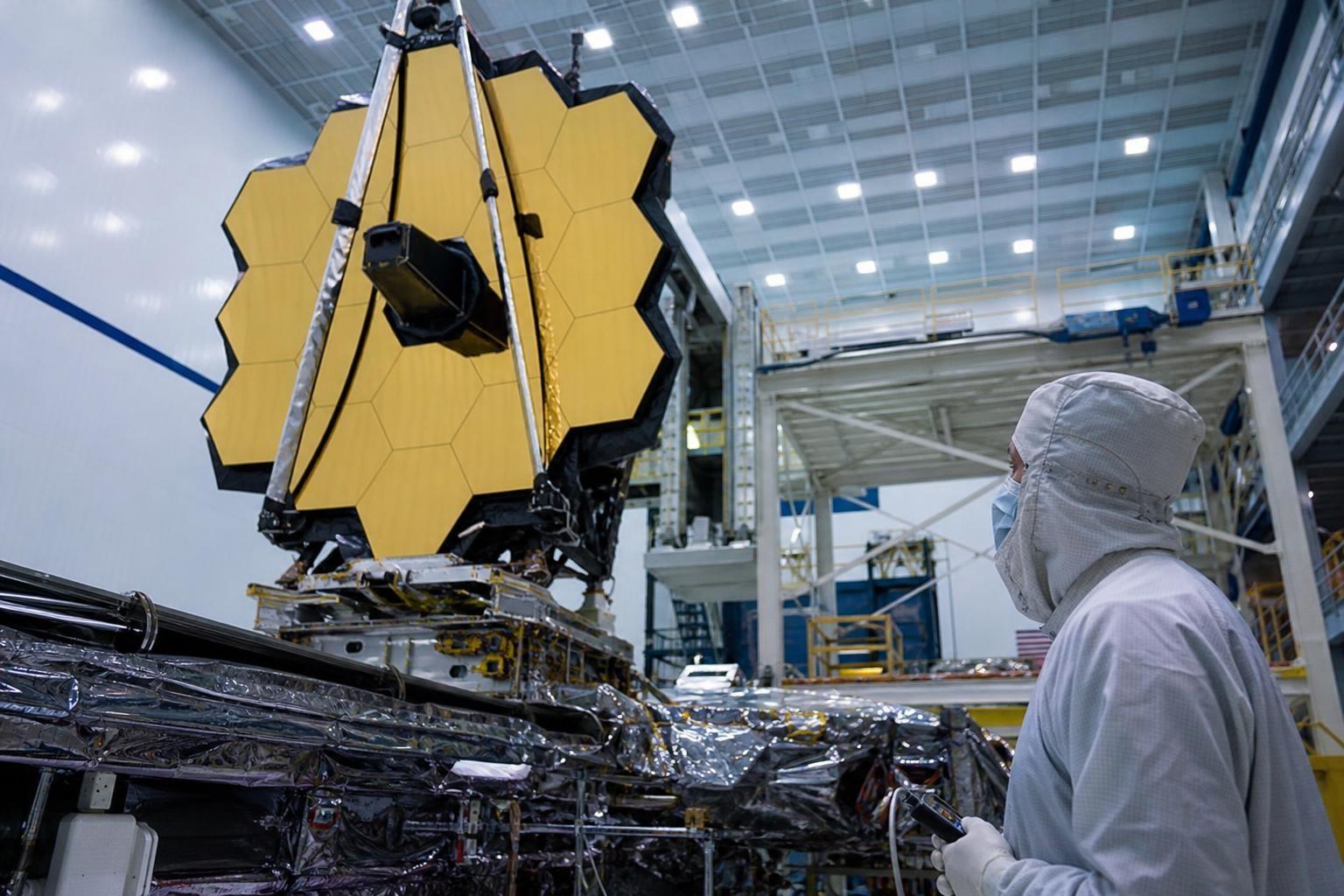
A faint, starlight-shy signal has stirred fresh excitement in the sky next door. Early analyses from the James Webb observatory hint at a possible giant world circling Alpha Centauri A, our nearest solar analog. The candidate is tentative, the signal delicate, yet the implications are enormous.
“Patience,” whisper seasoned astronomers. “A candidate is not a confirmation.” Even so, the idea that a large planet might orbit a star so nearby feels like the start of a new, more intimate era of exoplanet exploration.
What the observatory may have seen
The putative world appears as a faint thermal smudge in the mid-infrared, captured with coronagraphic imaging that cancels much of the host star’s glare. By rolling the telescope and subtracting successive views, analysts tease out stationary light from stubborn, speckled noise. Webb’s sensitivity at 10–15 microns can reveal a warm giant’s glow at separations that ground-based scopes struggle to resolve.
The signal sits where a planet at roughly Earth-like orbital distances would project on the sky, at a fraction of an arcsecond from the dazzling primary. At Alpha Centauri’s proximity, that tiny angle still maps to real miles—astronomically many of them.
Why this star matters so much
Alpha Centauri A is a near-twin of the Sun, part of a famous binary with a long-period dance. For decades, modelers have shown that stable orbits can exist within a few astronomical units despite the companion’s pull. A big planet here would be a landmark: not just a distant dot, but a future target for detailed weather, chemistry, and seasonal studies.
The neighborhood matters, too. “If you want to practice interstellar dreaming, you start with your neighbors,” goes a common refrain. A nearby gas giant could host big moons, boast broad rings, or shape belts of dust that sculpt the system’s architecture.
Caution before celebration
Signals this close to a brilliant star are treacherous. Quasi-static speckles can masquerade as planets, exozodiacal dust can glow, and unrelated background sources can sneak into the frame. The binary companion complicates processing, seeding the image with extra structure.
“Extraordinary claims demand extraordinary evidence.” For this candidate to graduate beyond “maybe,” teams will want time, color, and motion. Fortunately, Alpha Centauri’s large proper motion offers a clean test: a real companion will track with the star, while a distant interloper will lag behind on the sky.
How confirmation could happen
Follow-up will lean on multiple threads of proof that converge on the same world:
- Repeated detections at the same star‑centric position after accounting for proper motion
- Consistent mid‑IR “color” indicating a self‑luminous, cool atmosphere
- Subtle orbital motion across months that fits a bound Keplerian path
- Absence in reference‑star PSFs, cutting through instrument‑born artifacts
- Low‑amplitude radial‑velocity hints, or precise astrometric wobbles
Each step tightens the net. None alone is decisive, but together they can turn a whisper into a world.
The kind of planet we might be seeing
If the signal is a planet, it’s likely a gas giant—perhaps Neptune‑to‑Jupiter scale—with a modestly warm atmosphere glowing in the mid‑IR. At a roughly temperate orbit around a Sun‑like star, equilibrium temperatures could land near a few hundred kelvin, bright enough for Webb yet dim beside the blinding host.
Such a world could carry clouds of water, ammonia, or photochemical hazes, with features like methane at 7.7 and 3.3 microns or water bands interleaved across the mid‑infrared spectrum. Even crude spectra would reveal chemistry, cloudiness, and hints of day‑night contrast.
The road ahead
Expect more visits during the next visibility window, tuned coronagraphic setups, and deeper roll‑subtractions to press down the noise floor. Parallel efforts on large ground telescopes—ERIS on the VLT, GPI2 at Gemini, and, soon, METIS on the ELT—can chase the same spot, each with distinct wavelength leverage and speckle behavior.
On the dynamics side, ultra‑stable spectrographs like ESPRESSO and EXPRES will keep harvesting radial‑velocity data, hunting tiny stellar tugs that betray a heavyweight companion. Astrometry remains challenging for this brilliant, complex system, but any coherent wobble would be hugely persuasive.
Why this would be historic
Finding a giant planet orbiting the nearest solar twin would turn abstract ambition into practical plans. It sharpens proposals for future direct‑imaging missions aimed at smaller, Earth‑sized targets in the same system. It tests the limits of coronagraphy, improves noise modeling, and builds the playbook for seeing rocky worlds against incandescent stars.
Most of all, it brings the idea of other skies within touching distance. “The cosmos feels big until a world shows up on your doorstep,” as one researcher quipped in private notes. Whether the candidate survives scrutiny or fades as a phantom, the chase itself advances the craft—and brings our nearest stellar neighbor into sharper, shared focus.
