
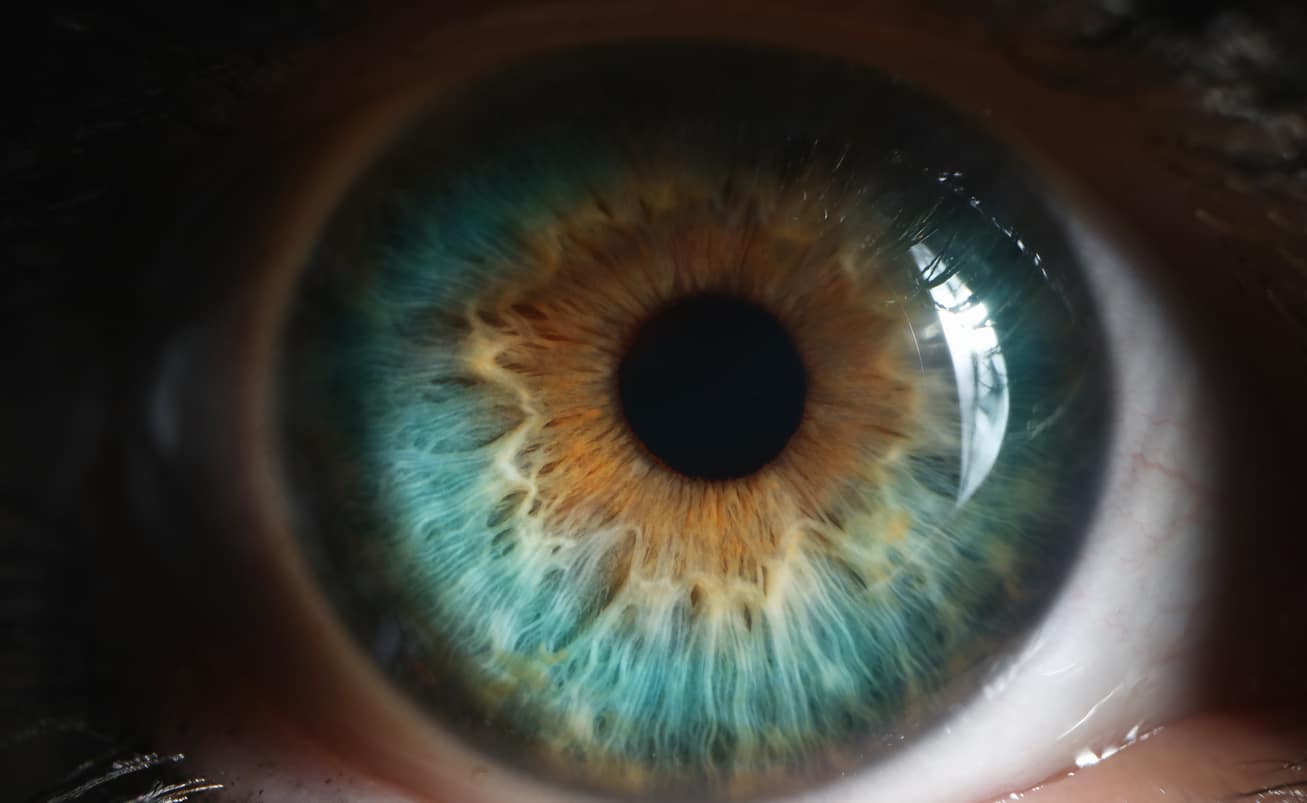
In Israel, doctors have achieved the transplantation of a 3D bio-printed cornea to a 70-year-old woman suffering from severe corneal edema. This marks a historic first that, beyond the achievement, offers a genuine beacon of hope amid the current global shortage of grafts.
Excellent Biocompatibility
In 2022, Swedish scientists managed to fully restore sight for three blind patients using bio-artificial corneas made from collagen derived from pig cells. While efforts to restore vision continue to progress, 3D printing is beginning to assume a prominent role in this field. For evidence, Rambam Health Care Campus in Haifa (Israel) successfully conducted the transplantation of the first fully bio-printed 3D corneal implant in a human, at the end of 2025. Dr. Michael Mimouni achieved this graft on a 70-year-old woman suffering from a severe corneal edema due to endothelial dysfunction.
Although the patient was legally blind in the treated eye, the implanted device, designated PB-001, began functioning immediately. Physicians announced a partial restoration of vision in the following days, thereby demonstrating excellent biocompatibility. It should also be noted that the corneal implant was designed to unfold naturally after insertion using standard surgical tools, so that it could integrate seamlessly with the patient’s tissues.
Hundreds of Implants Produced from a Single Donor Cornea
As described in a Fierce Biotech article, the implant is a highly advanced tissue developed by the American regenerative medicine company Precise Bio. In essence, it comprises living human corneal cells cultivated in a laboratory. Remarkably, the company managed to produce 300 corneal implants from a single donor cornea from a deceased donor. It is also important to note that this technology is a form of 4D printing – laser-assisted biofabrication – which enabled a layer-by-layer arrangement at the scale of a single cell, faithfully reproducing the optical clarity and biomechanical properties of a healthy natural cornea.
“For the first time, a corneal implant fully manufactured in the laboratory from cultured human corneal cells, rather than tissue obtained directly from a donor, has been successfully implanted in a patient.” said Aryeh Batt, cofounder and CEO of Precise Bio.
This truly technological feat forms part of a phase 1 clinical trial, whose objective is to evaluate the product’s safety on a group of 10 to 15 patients. If the first stage appears to have succeeded, the final results of the study are expected by the end of 2026.
Reproducible Tissues and Long-Term Storeability
For the researchers behind these efforts, the early results already signify a turning point in regenerative ophthalmology. Today, about 12 million people worldwide suffer from corneal blindness. Unfortunately, these patients do not have access to a proper graft due to the shortage of donors. Consequently, Precise Bio’s technology promises to radically transform transplantation by providing standardized and reproducible tissues.
Moreover, these implants will also be storable through a process of cryopreservation. This technique involves freezing biological material at ultra-low temperatures — typically between -150 and -196°C in liquid nitrogen — to temporarily suspend all biological activity. In other words, Precise Bio aims to convert living tissue into a medical product that can be stored long-term.
Sources: Precise Bio Achieves World’s First 3D-Bio-Printed Corneal Implant (ophthalmologymanagement.com) | Precise Bio completes procedure using PB-001, a 3D-bioprinted corneal implant (ophthalmologytimes.com)
Article prepared with the help of AI · Our method
