
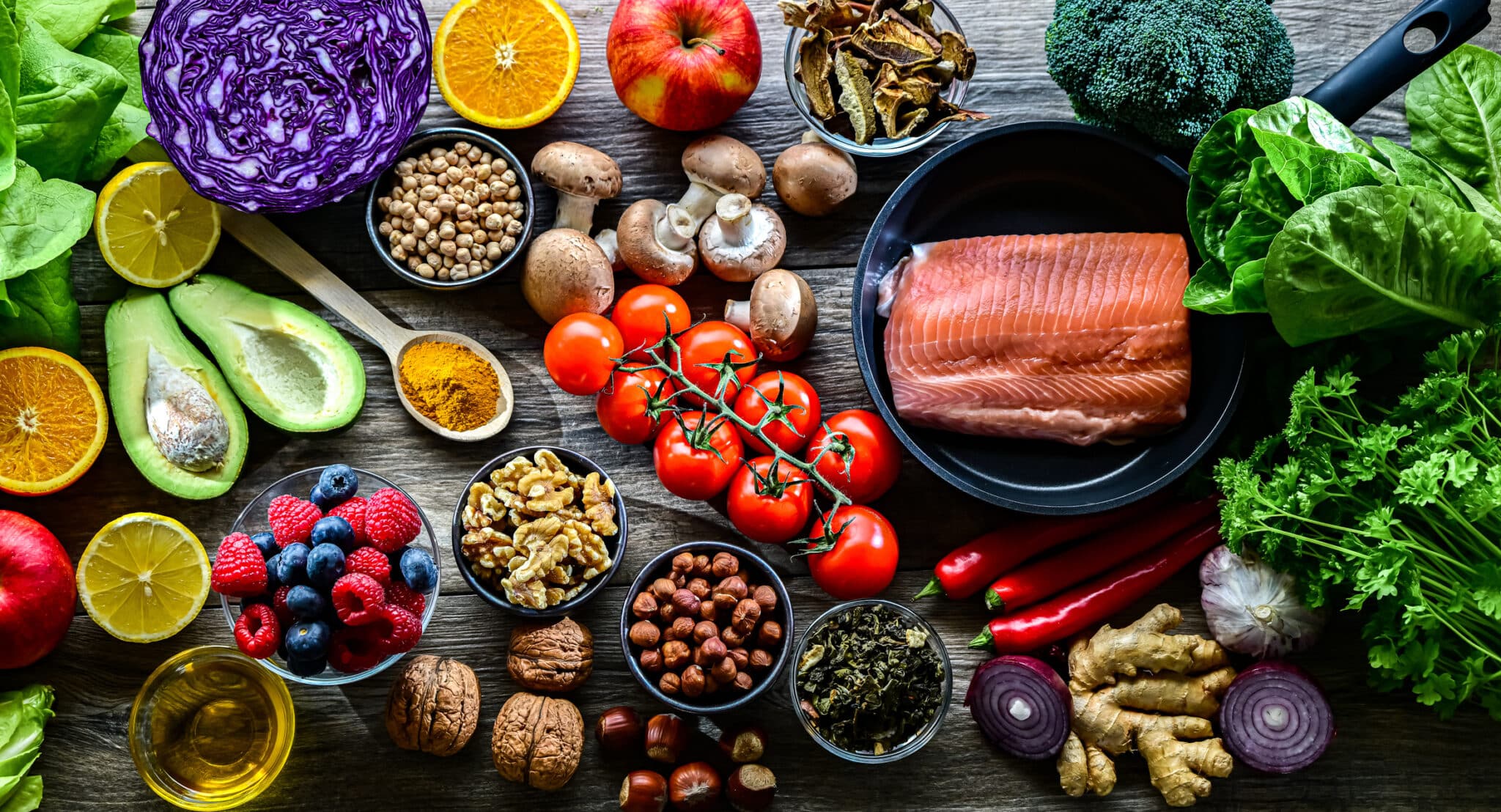
Based on a German study, a media outlet published an infographic listing the fifty countries closest to complete food independence. This independence refers to the capacity of states to meet the food needs of their population using only their own farms, livestock, and other fisheries.
An independence evaluated across seven food groups
Recently, the United Nations Office for the Coordination of Humanitarian Affairs (OCHA) published its latest Global Report on Food Crises. The document states that more than 295 million people in 53 countries and territories experienced acute food insecurity, an increase of 13.7 million from 2023. For reference, acute food insecurity refers to the inability of a person to access enough food (and sufficiently nutritious), thus endangering their life.
However, some countries are far more shielded than others. There are even states approaching a complete food independence, as shown by an infographic published on Visual Capitalist on July 21, 2026. This document incorporates data from a study led by the University of Göttingen (Germany) and published in the journal Nature Food on July 16, 2026.
The infographic lists the fifty countries closest to achieving complete food independence. However, this notion encompasses seven basic food groups: fruits, vegetables, legumes, starches, meat, fish, and dairy products (see below). For each category, the 100% rate corresponds to total autonomy, meaning that no imports are required. When the value exceeds 100%, the country enjoys production surpluses relative to the needs of its population.
Guyana at the top
First observation, only one country in the world is already completely autonomous in terms of food. This is Guyana, a small South American nation and former British colony hosting around 830,000 inhabitants. The country checks all the boxes with flying colors, enjoying an autonomy exceeding 200% for four food groups: vegetables (223%), meat (319%), fruits (403%), and starches (561%). The podium is completed by Vietnam and China, each with a single category in the red, namely dairy products.
In the Top 10 of the best-off countries, we find one single European country: Latvia (10th), with shortfalls in fruit production (14%), vegetables (23%) but showing exceptional autonomy in terms of starches (703%). In the Top 50, let’s name a few European countries such as Ukraine (14th), Estonia (15th), Croatia (16th), Spain (24th), or Slovakia (39th). Notably, Germany, France, Italy, and the United Kingdom are absent.
Some productions hit ceiling levels
Often regarded as the poorest continent, Africa still places a handful of representatives in the Top 50. Notable mentions include Mali (28th), Niger (29th), Cameroon (30th), Senegal (34th), and South Sudan (36th). On a global scale, the absence of other major players such as the United States and Canada may seem surprising, but in reality, these countries remain highly dependent on exports for several food groups.
Finally, some scores soar beyond ceilings and allow countries to build reserves and dedicate a large portion of their production to export. For instance, legumes are the specialty of Paraguay (7,545%) and Uruguay (3,817%). As for dairy products, New Zealand excels (6,100%).
👉 A small favor for Space Group? Follow us on Google, add us to your favorites, and find us on Google News so you don’t miss any discovery.
