
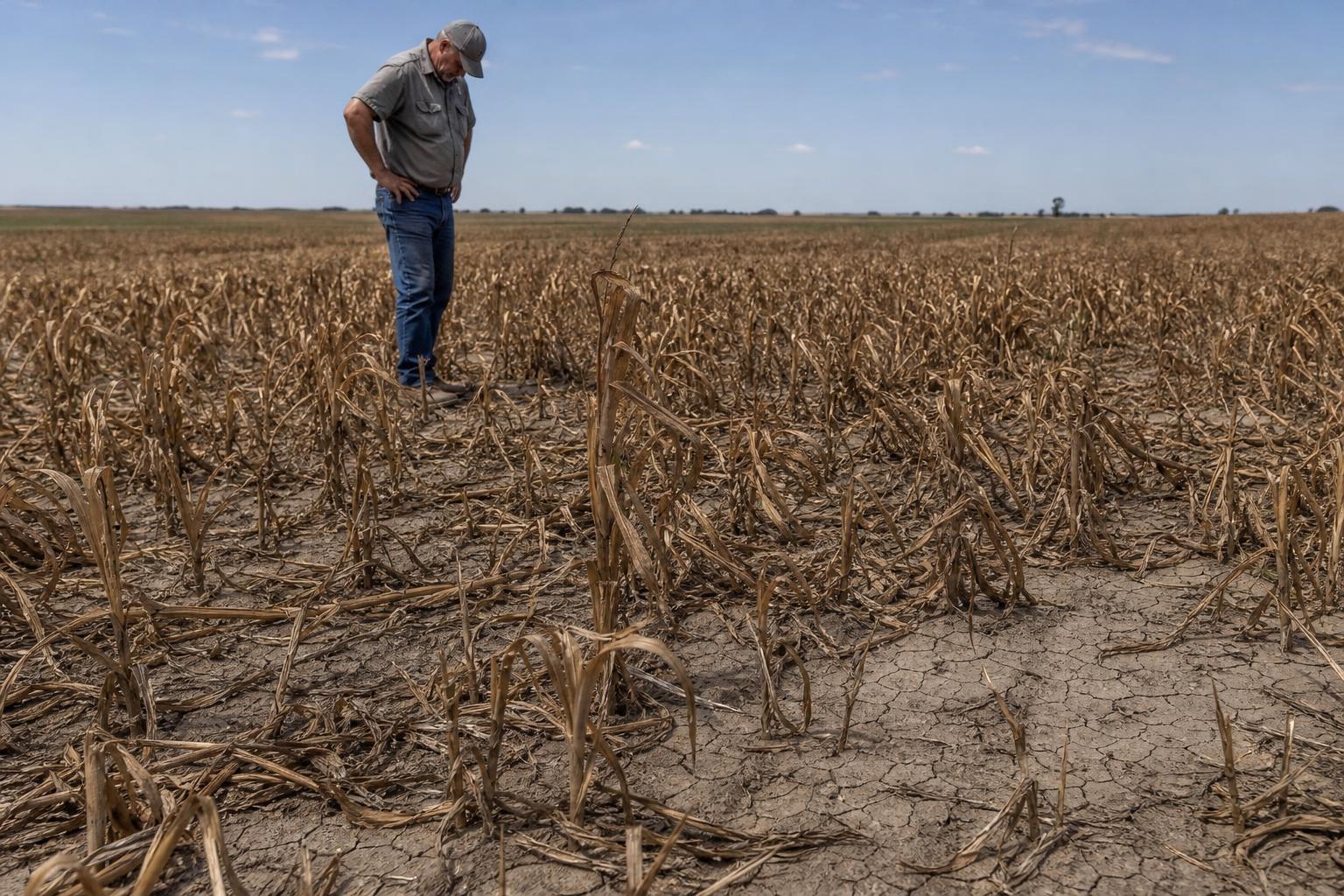
Beneath the Great Plains, an ancient reservoir quietly determines the fate of towns and farms. Its sheer scale is breathtaking, and its decline is unsettling. For millions of people, the future of food and local economies depends on how we manage what remains underground.
Why this underground sea matters
Stretching beneath eight states, the High Plains—often called the Ogallala—anchors the most productive irrigated region outside California’s Central Valley. The water stored there is roughly comparable to one of the Great Lakes, a reminder of both its abundance and our dependence. “When you turn the pivot, you’re really turning a community on,” one grower likes to say.
This aquifer powers corn, wheat, sorghum, beef, and dairy. It steadies rural towns, buffers drought, and multiplies the value of every raindrop that actually falls. The catch: far more is being pumped than naturally replaced.
A race between pumping and recharge
Most of the aquifer sits under lands with limited rainfall, where natural recharge is painfully slow—measured in inches per year, not feet. Wells and pivots extract water in days that took centuries to collect. “We’re drawing it down faster than time can pay it back,” says a water manager.
Geology adds a twist: the resource is not a smooth bathtub but a patchwork of thick and thin sediments. Some places still feel secure; others are nearing a cliff.
Kansas at the tipping point
Western Kansas is where the story turns urgent. In certain counties, monitoring wells show steep declines, and the math points to wide areas losing the ability to pump within a human generation. For growers who remember the 1980s, that shift now feels imminent rather than theoretical.
“Five years ago I could push late-season irrigation,” a producer noted, “now I plan for shortfalls.” As water levels drop, pumps pull more air, energy costs climb, and output shrinks even before a well actually goes dry. That means fewer acres, altered crop rotations, and decisions that ripple through elevators and Main Street.
Food, fiber, and fragile margins
The aquifer doesn’t just feed fields; it feeds entire value chains. Meatpacking, ethanol, feedlots—each depends on reliable water. Thin operating margins amplify every weather shock and price swing. When irrigation gives way, yields fall and risk spikes.
Yet scarcity can also spark ingenuity. In a few districts, cooperative caps on pumping extended water supplies while keeping farms profitable. “We didn’t save water to go broke,” one participant quipped, “we saved it to stay in the game.”
What can actually help now
There’s no single silver bullet, but a bundle of practical moves can buy time and build resilience:
- Smarter irrigation (drip, LEPA, soil-moisture sensors), crop and variety shifts (sorghum, small grains, drought-tolerant hybrids), voluntary local pumping limits, soil health practices that boost infiltration, targeted water pricing or trading, and strategic fallowing that protects overall farm income.
Each step sounds modest, but together they compound. Farmers talk about squeezing more “crop per drop,” and that’s exactly the ethos the moment demands.
Policy, trust, and the pace of change
Top-down mandates often hit political and cultural walls. Bottom-up frameworks—where neighbors agree on targets and verify results—tend to stick. Transparency builds trust; trust enables tradeoffs.
Data helps, too. Real-time meters, public dashboards, and clear rules around compliance make it easier to separate good-faith stewardship from free-riding. “If it isn’t measured, it isn’t managed,” goes the old line, and water is no exception.
Technology can stretch, not replace
New tools can push efficiency: variable-rate irrigation, better nozzles, predictive scheduling, even deficit strategies tuned to crop physiology. But technology cannot summon rain or rebuild ancient reserves at modern pumping rates. Precision tells you exactly how much short you are—it doesn’t make the sky open.
The honest frame is “use less, grow more,” while accepting biophysical limits. That frame still leaves real room for profit, especially when paired with risk management and diversified rotations.
Communities choosing their water future
Aquifers don’t vote, but communities do. Chambers of commerce, school boards, lenders—everyone is on the hook if the pumps slow. That’s why some regions are moving from quiet decline to explicit plans, with timelines and triggers people can actually see.
“Water is wealth,” an old Plains saying goes, “and shared wealth must be shared wisely.” The more people repeat that truth, the more durable the policies become.
A different kind of abundance
There is still enormous value left underground, and enormous value in using it well. Think of the remaining reserve as a community endowment: draw the interest, protect the principal. In practice that means irrigating when it truly pays, resting when it doesn’t, and rewarding those who keep the account in the black.
The future won’t look like the past, but it doesn’t have to be a story of loss. It can be a story of craft, where farmers, towns, and water managers shape a different kind of abundance—measured not just in bushels, but in years of viable life on the land.
