
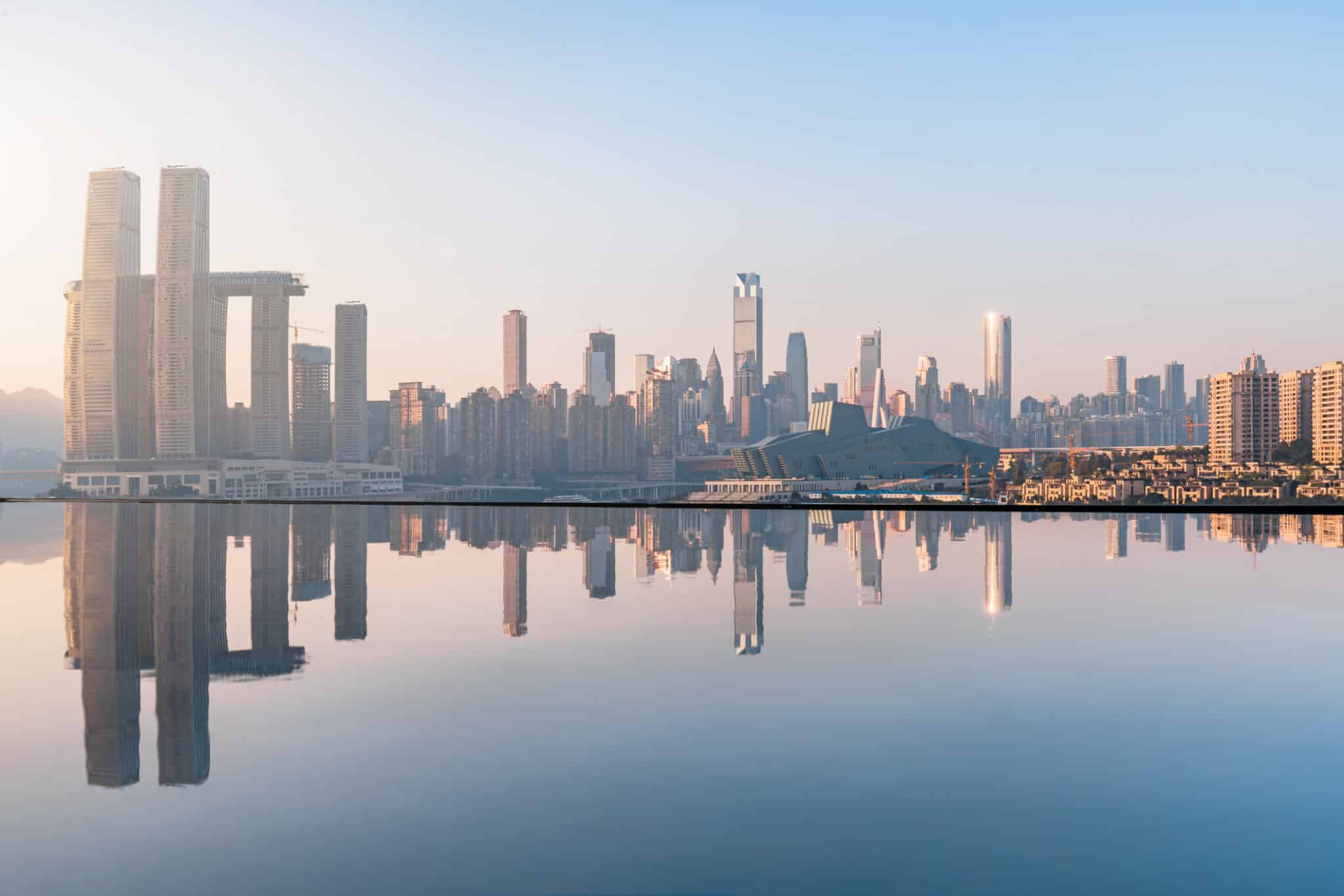
Since the 1950s, the world has undergone steady urbanization. Today, the number of people living in cities surpasses those living in rural areas. Moreover, this trend is unlikely to reverse, as projections for 2050 indicate.
Three Categories of Human Settlement
First, it is important to note that the overall course of the population is defined by a massive and ongoing urbanization of the planet, especially since the 1950s. A milestone was reached in 2007, when the urban population surpassed the rural population on a global scale. According to the United Nations, slightly less than 70% of the world’s population will be urban by 2050.
However, the figures are not as simple as they seem, as evidenced by a chart published by Visual Capitalist on July 29, 2026. Based on data from the United Nations Department of Economic and Social Affairs, the document traces the world’s urbanization from 1950 through 2050 projections.
Moreover, the chart does not merely distinguish between rural spaces (density of 300 inhabitants per km²) and cities, whose population exceeds 50,000. In fact, another category of human settlement sits between these two extremes, namely small towns or boroughs with populations over 5,000 inhabitants.
Cities, the Largest Population Category
According to the chart, urban life was relatively rare in 1950, with only 500 million people living in cities—roughly 20% of the world’s population. At that time, cities and rural areas accounted for a much larger share of the global population, each hosting about one billion people, or around 40% of the world’s population. This balance then rapidly shifted, as cities surpassed rural areas in 1975, and cities overtook small towns in 1997.
Today, cities constitute the world’s largest population category, with growth outpacing that of small towns and rural areas. In 2025, the urban population was estimated at 3.69 billion people, about 45% of the world’s population. Rural population, although growing at a different pace from urban areas, continued to rise, increasing from 997 million in 1950 to about 1.61 billion in 2025. This number is expected to reach a peak of 1.65 billion inhabitants in 2046. After that, rural population is expected to begin a decline.
What Explains the Phenomenon?
By 2050, the global urban population is projected to reach 4.67 billion, more than nine times the 1950 figure. This unprecedented level of urbanization can be explained by several factors. Notably, the reduced need for agricultural labor due to mechanization, combined with better access to employment, education, goods, services, and leisure in urban areas. Projections indicate that urban dwellers will account for two-thirds of global demographic growth in 2050, with most of the remaining growth concentrated in small towns. By then, cities are expected to become the main form of habitation in 127 countries.
A few weeks ago, an infographic listed the countries that are predominantly rural, a trend that is expected to persist in 2050. In the Top 10 we find Papua New Guinea, Liechtenstein, Burundi, Niger, Samoa, Rwanda, Malawi, Saint Lucia, Sri Lanka, and Nepal.
Finally, the world’s urbanization is not without environmental and climate implications, including spikes in air pollution, urban heat islands (UHIs), waste management challenges, habitat fragmentation, soil sealing, and more. In 2020, the most pessimistic scenario of a study stated that the surface area occupied by cities could be multiplied by six by 2100.
👉 A small gesture for Space Group? Follow us on Google, add us to your bookmarks, and find us on Google News so you don’t miss any discoveries.
