
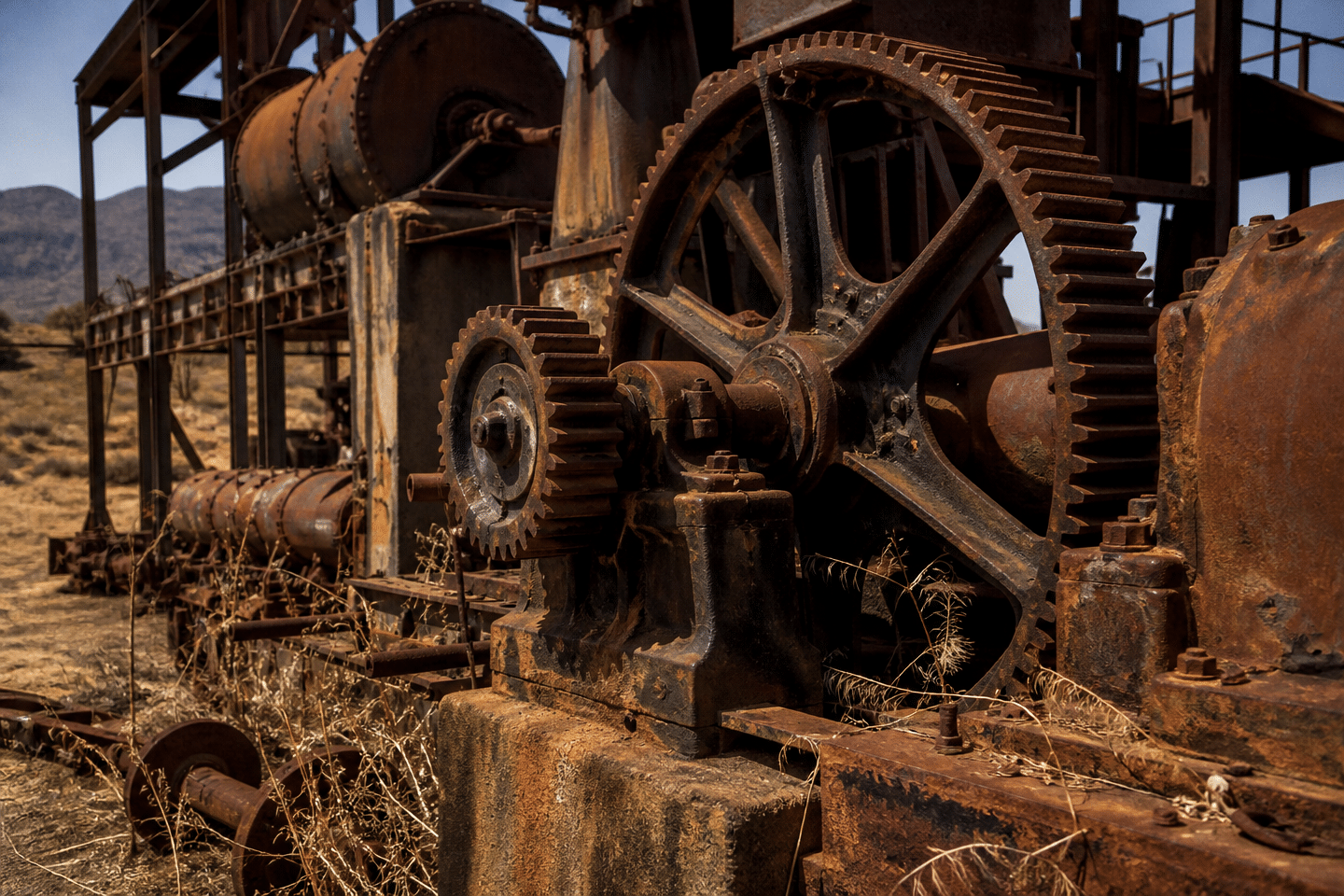
In the Omo Valley, south of Ethiopia, harvesters and industrial turbines have slept under open skies for years, exposed to rain and sun. According to Ethiopian Investment Holdings, the Omo Kuraz sugar project has swallowed more than 65 billion birrs, about 1.1 billion USD, yielding a result that looks more like an industrial graveyard than a refinery.
- The Omo Kuraz sugar project has cost more than 65 billion birrs (about 1.1 billion USD), with Kuraz I’s unfinished plant at 83% since construction halted in 2018.
- The Ethiopian sugar sector’s external debt stands at roughly 144 billion birrs (around 2.1 billion USD), and the government plans to cover half of it through the federal budget.
- Privatisation talks were halted in November 2025 due to a lack of serious offers, while machinery and equipment remain abandoned without protection against the weather.
- An open-air mess: multi-million-dollar machines left to rust
- 83% incomplete: the mystery of a plant that still won’t run
- 1.1 billion dollars blown: who will foot the bill for the Kuraz fiasco?
An Open-Air Mess: Multi-Million-Dollar Machines Left to Rust
Imagine machines capable of grinding thousands of tonnes of sugarcane every day, idle for years under the tropical sun and rains. That is the picture painted by an Ethiopian parliamentary report, circulated in April 2026, about the Omo Kuraz V site. Much of the machinery and equipment there simply sat outside, without any protection against the weather.
For those who study industrial supply chains, it’s nearly as if a luxury car had been left in a field with its doors wide open for entire seasons. Humidity seeps in, electronic circuits degrade, metal structures corrode. Each passing month makes reactivating the plant more expensive, and for some parts, technically impossible.
The Kuraz V project had begun with grand ambitions in 2016, entrusted to the Chinese contractor JJIEC. Construction was suspended for financial reasons, and the management of the sugar group has still not decided the fate of the plant. As a result, equipment bought at premium prices sits immobilized in administrative limbo, while its value erodes day by day.
This is not an isolated case. The group’s latest financial report, approved in 2026, confirms that work at several sites—Kessem, Omo Kuraz I, Omo Kuraz V, Tendaho, and Welkait—remains suspended due to financing, safety, and weather conditions. In short, doubts linger about the commissioning of these facilities.
83% Incomplete: The Mystery of a Plant That Still Isn’t Running
According to Ethiopian Investment Holdings, by 2026 the Omo Kuraz sugar project had consumed more than 65 billion birrs, about 1.1 billion USD, and 83% of the Kuraz I plant remained unfinished. A staggering figure: a structure that is nearly three-quarters complete, yet unable to produce a single bag of sugar.
How did this happen? The Kuraz I tale resembles an administrative soap opera. Construction had progressed to the 80% mark before it abruptly stalled in 2018, following the cancellation of the contract with Metals and Engineering Corporation, better known by its acronym MetEC. Since then, the site has been at a complete standstill, as if held in time.
The most frustrating part is that the finish line appears close on paper. Nearly 19 billion birrs would still be needed to complete the Omo Kuraz I plant, according to the same parliamentary report. A substantial amount, yet it seems almost trivial when compared with the tens of billions already spent without any production.
The Wolkayit plant does not escape this pattern either. Also according to the June 2026 statement made at the Ethiopia Delivers summit, another 42 billion birrs would be required to complete it. In total, the Omo Kuraz estates cost about 341 million dollars, financed mainly by debt, underscoring the gulf between ambition and reality: to crush 60,000 tonnes of cane per day across a 100,000-hectare plantation distributed over four plants.
1.1 Billion Dollars Wasted: Who Will Foot the Bill for the Kuraz Fiasco?
Behind these dizzying figures lies a far more down-to-earth question: who will shoulder the bill? The external debt of the Ethiopian sugar sector now stands at about 144 billion birrs, roughly 2.1 billion USD. A rescue plan announced in July 2026 provides that the state will cover half of it through the federal budget, meaning Ethiopian taxpayers will indirectly pay for rusting machines in a field.
Facing this colossal debt, privatization might have seemed a sensible solution. It has, however, stalled. In November 2025, Ethiopian Investment Holdings told Parliament that privatization talks had been halted due to a lack of serious offers and because of legal and technical hurdles considered too complex to resolve quickly.
This blockage illustrates a cruel paradox. More than 53 billion birrs had already been spent by June 2022, and the figures have only risen since, with no private buyer rushing to take over the project. Indeed, it is hard to attract investors when the equipment meant to run the factories is deteriorating outdoors, in the rain, while negotiations drag on.
The Omo Kuraz project, in its own way, highlights the pitfalls that large industrial programs can encounter when launched with ambition but without sufficient safeguards on financing and technical oversight. Between abandoned machines, plants stuck at 83%, and towering debt to be shared, the Ethiopian sugar dossier reads less like an industrial success story and more like a costly lesson on what not to do when building at this scale.
👉 A small gesture for Space Group? Follow us on Google, add us to your bookmarks, and find us on Google News so you don’t miss any discoveries.
