
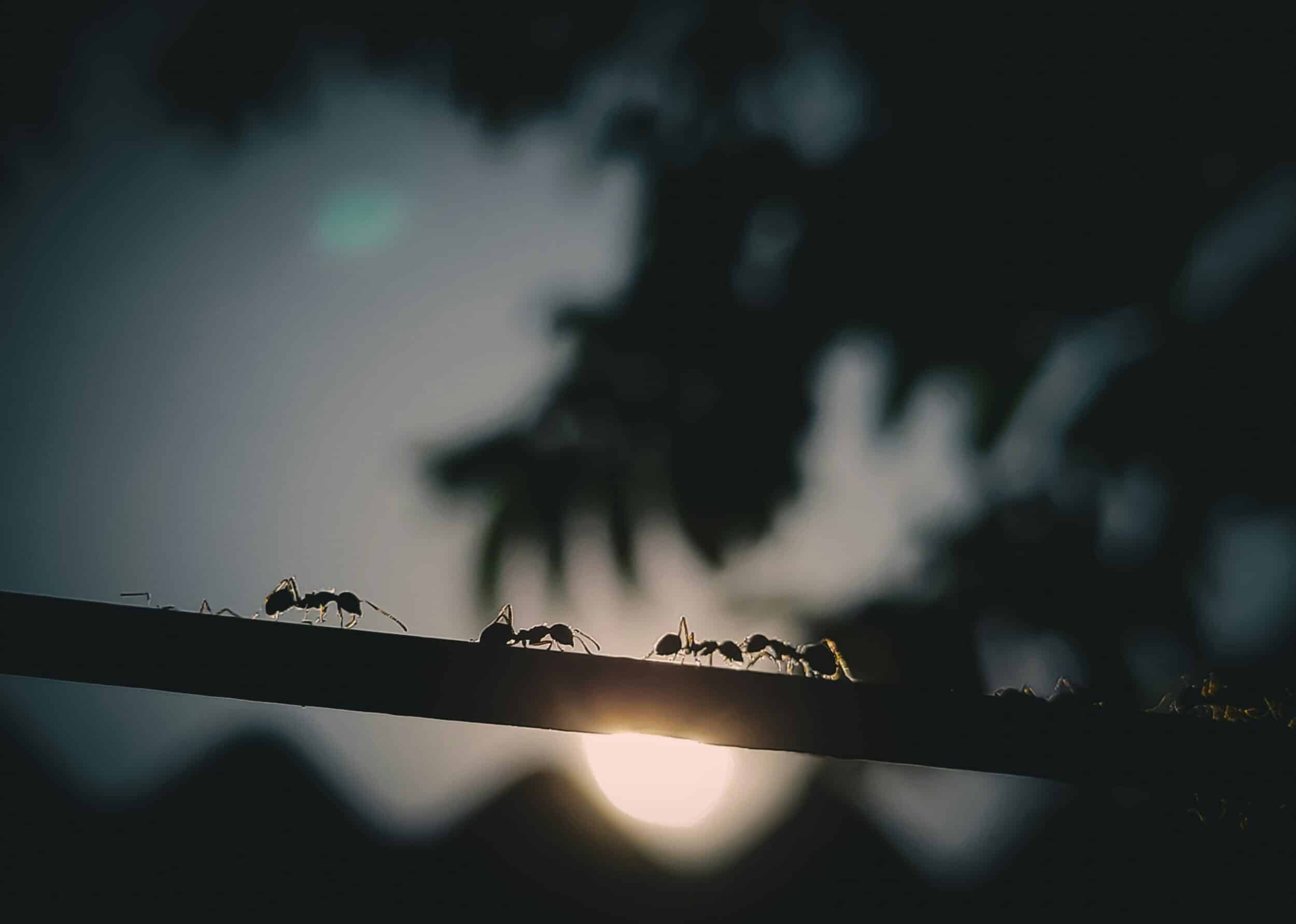
You may have wondered how many ants there are in the world. The astonishing ubiquity of these insects has long prompted naturalists to estimate their exact numbers on Earth, yet systematic, empirical estimates have been missing until now. A rigorous analysis allows us to see a little more clearly. So, how many ants exist on this planet? And what is the combined mass of all these insects?
Twenty Quadrillions
Knowledge of the distribution and abundance of biodiversity is fundamental to understanding the roles organisms play within their ecosystems, and thus their ecological importance. Such data are currently lacking for insects, even for the most ubiquitous such as ants (15,700 species). Yet they hold substantial ecological significance.
In the framework of a study published in the Proceedings of the National Academy of Sciences, researchers drew on all available data to make a reliable estimate of the total number of ants on Earth, their biomass, and their distribution. Their meta-analysis is based on 489 studies, spanning all continents, major biomes, and habitats.
Based on the data analyzed, the researchers prudently estimate that there are about twenty quadrillions (twenty million billions) of ants on Earth. This is double the rough calculation by E. O. Wilson, who in 1994 estimated the number of ants by extrapolating from data in the southeast of England. It should be noted that this estimate does not include colony members that do not leave their nests to forage, nor regions such as boreal forests where data are sparse.
Biomass and Distribution
Taking into account the diversity of ant body weights, the authors also estimate that the dry carbon in these quadrillions of tiny bodies amounts to about twelve megatons. By way of comparison, this is roughly 20% of human biomass.
Finally, regarding distribution, it emerges that there are roughly six times as many arboreal ants as ground-dwelling ants. Among the latter, abundances are strongly concentrated in tropical and subtropical regions, but vary considerably by habitat. For example, leaf litter ant density is highest in forests, while the number of ants actively searching for food on the ground is greatest in arid regions.
For the authors, these findings highlight the central role of these insects in terrestrial ecosystems, but also reveal major ecological and geographical gaps in our current knowledge. Ultimately, these data could provide a baseline for monitoring how ants respond to environmental changes.
