
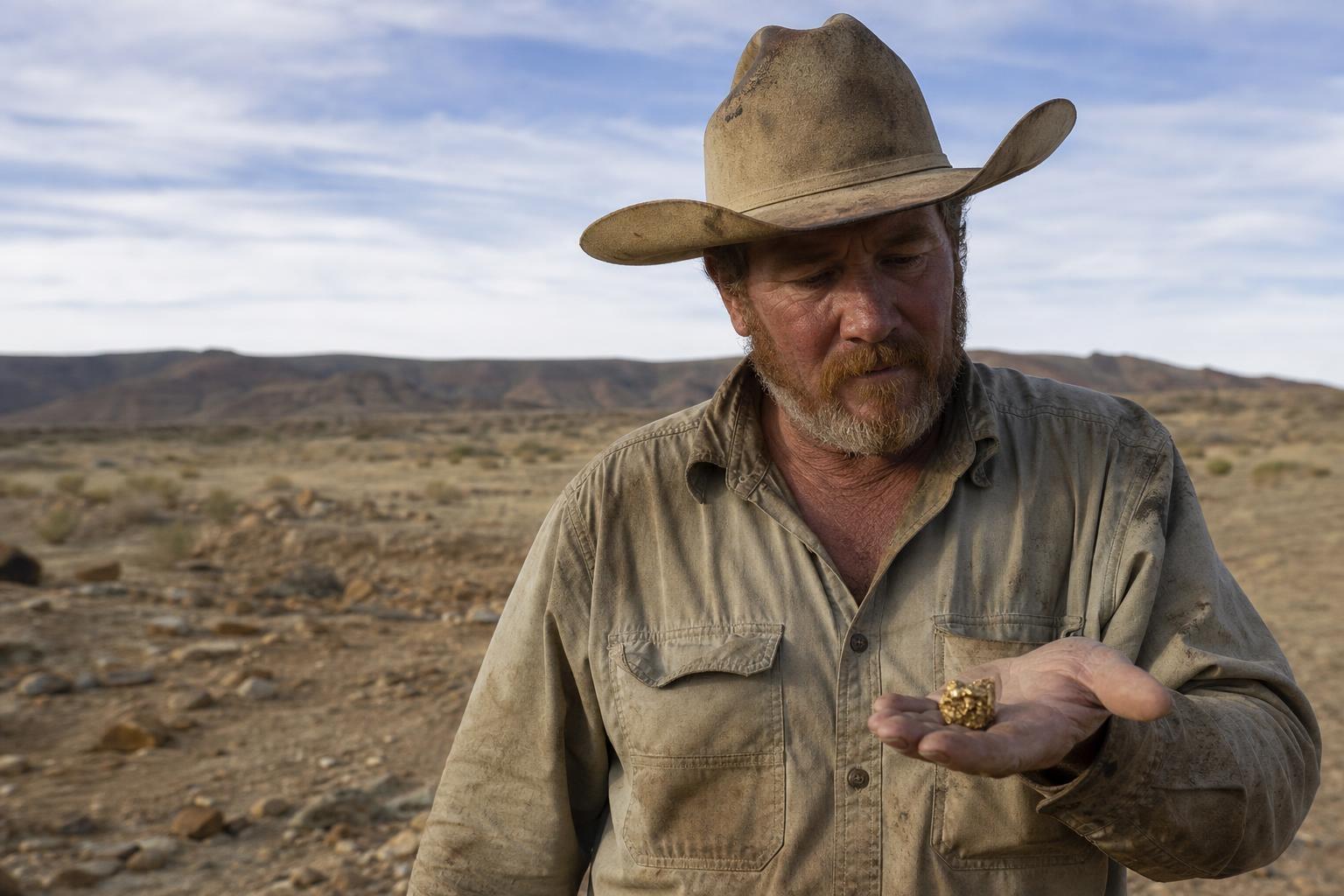
He felt the glint before he saw it, a quiet spark in the dust after spring rain. The nugget sat in his palm, heavy as a promise, small as a lie. By evening, the ranch’s kitchen table was cluttered with maps and coffee rings, a yellowed deed unfurled beside a dented scale. “I never asked for riches,” he said, “just a fair shake on my own land.”
A lucky find with strings attached
The ground may be yours, but the gold beneath might be someone else’s. In much of the American West, mineral rights were severed from surface rights long ago, sold to railroads, banks, or speculators. That historical paper trail can be ironclad, leaving a rancher to graze cattle on soil he can’t disturb.
An attorney who works on rural land deals put it bluntly: “What you own isn’t the whole stack of rights. It’s a slice—and often not the mineral slice.” To a layperson, that sounds absurd, but to the law it’s routine.
When land and minerals are strangers
In split-estate states, the mineral estate is “dominant,” which means it can be accessed within reason, even over a landowner’s objections. The surface holder has protections—notice, compensation, and limits on damage—but the balance tilts toward extraction.
The rancher in this case found gold near an arroyo, and the discovery was real enough to attract interest. But the mineral rights had been assigned to a century-old corporate successor, and any digging would require their consent and a thicket of permits.
The permitting gauntlet
Even if you hold the mineral rights, modern mining isn’t a pickaxe and a smile. You face reclamation bonds, water discharge limits, dust control plans, and habitat reviews. If federal land or money touches the project, the National Environmental Policy Act can trigger impact statements that take years.
“People think you just scoop up gold and call it a day,” a state regulator said. “But every scoop is a decision—about water, about wildlife, about neighbors who breathe your dust.”
Culture, water, and wildlife complicate the picture
Gold found near a dry wash might implicate the Clean Water Act, because seasonal streams are still regulated. Gold near petroglyphs or burial sites can unleash cultural resource laws with criminal teeth. And if the habitat supports a listed species, the Endangered Species Act stands watch.
These are not trivial barriers, nor mere bureaucratic games. They reflect a public judgment that some values outrank quick profit, especially when the ground remembers more than our deeds do.
What a rancher can do now
The rancher’s options are narrow, but not zero:
- Verify the mineral-rights chain, and confirm severance in the recorded deeds
- Seek a lease or royalty agreement with the mineral-rights holder
- Test only on a small-scale, hand-tool basis, if state law and contracts allow
- Hire a mining engineer to draft a compliant plan
- Explore selling or joint venturing the prospect rather than mining it alone
“I thought I had two choices,” he said. “Dig or don’t. Turns out I have a dozen, and all of them cost.”
The market’s siren song
Gold prices whisper in headlines, but mines are built in ledgers. Sampling, lab assays, hydrological studies, and cultural surveys add up quickly. Investors crave certainty, and rural families prefer sleep. Between the two lies a chasm you can’t cross with hope alone.
A veteran geologist offered a warning: “Most gold in the ground is never mined. The easy stories end at the fence; the real stories end in the footnotes of permits.”
A wider argument over who owns what
This case exposes the American quirk that land is a bundle of sticks, not a single staff. You can own the grass but not the gravel, the water but not the wind, the view but not the void below. It’s an elegant legal machine, and a maddening human experience.
Reformers want a reset, arguing that surface owners should have first refusal or tighter environmental controls. Industry counters that stable rules protect investment and keep critical minerals flowing. Both are right, and both are wrong, depending on which map you’re holding.
The human scale of a legal puzzle
On the ranch, calves still cry for their dams at dusk. The nugget sits in a kitchen jar, not a museum case. “It’s funny,” the rancher said, turning the glass with his thumb. “You spend a life pulling value from the sun and the soil. Then you learn the shiny stuff isn’t really yours.”
He’s hired a lawyer, made some calls, and put the backhoe keys in a drawer. The cattle don’t care about royalties, and the wind keeps its appointments. Somewhere underfoot, the gold keeps sleeping, bound by a century of signatures and a future full of ifs.
