
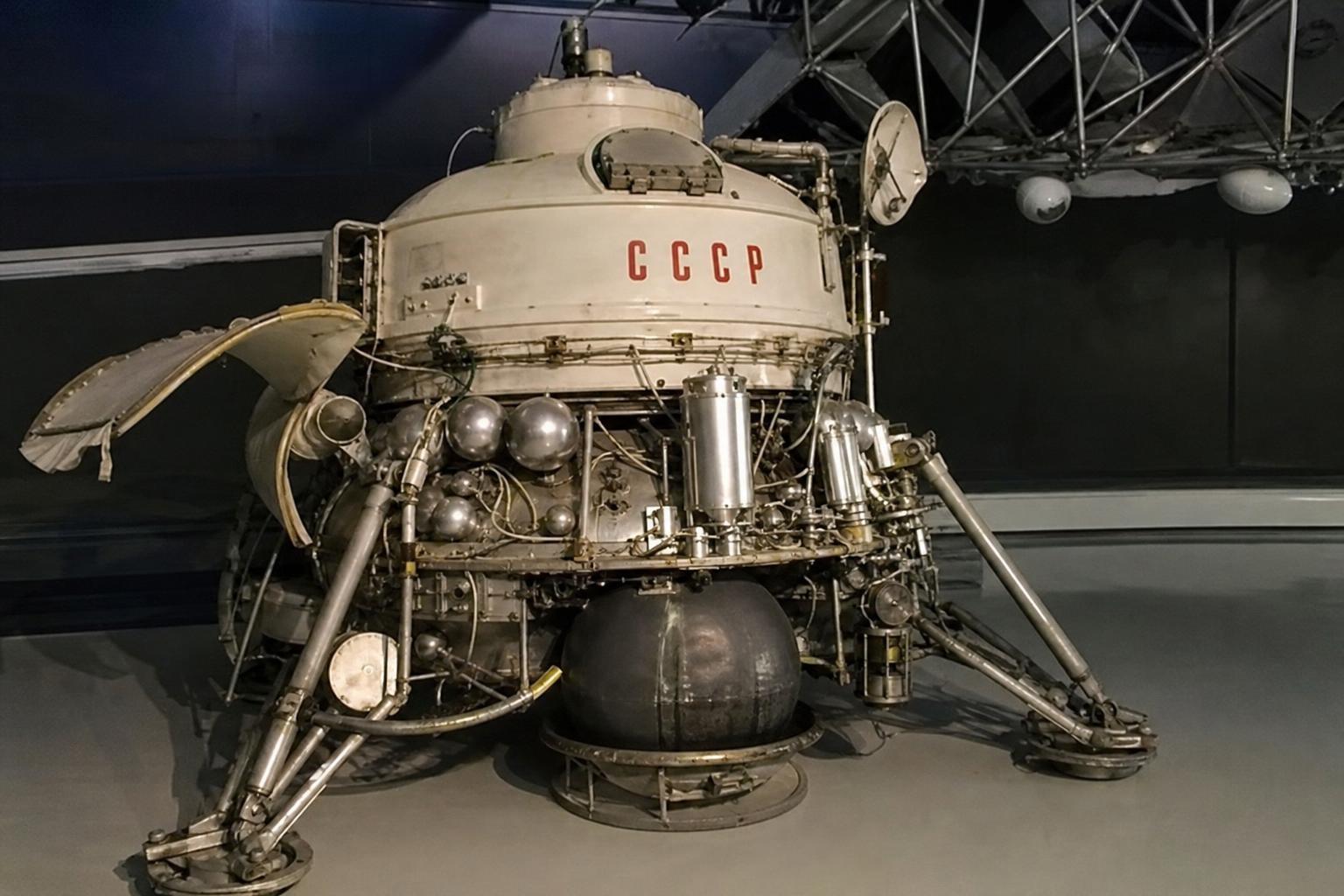
A world so hot it can melt lead, so heavy with air it would crush a submarine, briefly hosted a human-made visitor—and it talked back. In the early 1980s, a chunky metal lander dropped through murky clouds, touched alien ground, and did something no one had seen before: it sent home color. For two hours, the surface of Venus wasn’t just theory; it was texture and tone, rocks and sky, a place.
The planet that fights back
Venus is a furnace of carbon dioxide under roughly 90 Earth atmospheres of pressure. Surface temperatures hover near 465°C, hot enough to soften steel and bake electronics alive. Sunlight filters through acid-drenched clouds, turning day into a diffuse, amber glow. Every second on the ground is a negotiation against heat, pressure, and chemical attack.
Engineers must outwit physics with thick shells, exotic metals, and clever cooling that buys minutes—not months—of life. “Design for survival, not for comfort,” could have been the quiet mantra behind every bolt.
Hardware with a deadline
The Soviet Venera landers were built like diving bells for a planetary abyss. A sealed pressure vessel protected the brains, while thermal mass and pre-chilled interiors slowed the inevitable overheat. Windows of tough, high-temperature crystal guarded the cameras; explosive caps popped free only after touchdown to keep lenses clean.
Inside, instruments were chosen for speed and stamina. Panoramic cameras carried a rotating filter system to reconstruct true color. A drill and sample-handling mechanism fed rocks to a spectrometer before the heat could win. A microphone listened to the alien wind, turning pressure into a faint, grainy whisper.
The two-hour miracle
When the parachutes cut and the lander thumped down, the race began. Within minutes the lens caps fired and the first frames spooled, a slow-motion reveal through syrupy air. The signal climbed through the atmosphere and across interplanetary space, line by line, until a world took shape.
What came back looked like a kiln-lit quarry: coarse gravel, fractured slabs, and a horizon stained orange by the thickened sky. Rocks showed the muted browns of weathered basalt, hinting at ancient volcanism and chemical aging. “It’s like standing beside a blast furnace at dusk,” one might say, and the picture agrees.
The drill bit grabbed a sample with industrial urgency, feeding it to instruments that read a basaltic signature—consistent with a planet forged by lava and then locked beneath crushing air. The microphone’s thin hiss and clatter, likely wind and mechanical noise, added a scrap of lived-in sound to a place we’d only imagined.
And the clock kept ticking—far past the original spec. The lander endured not for 30-odd minutes, but for 127, outliving its design in a defiant, measured fade. “We built a mayfly and it became a mule,” the data seemed to say.
What the colors told us
Color wasn’t just a novelty; it was context. Orange light means scattering by dense gas and suspended aerosols, altering how rocks and soil truly appear. Corrected images let geologists spot subtle hues—rusty undertones, grayish chips, shadow gradients that sketch grain size and texture.
The palette suggests a sunlit twilight where everything is muted, yet unmistakably real. In that hazy glow, the terrain feels oddly familiar—like a quarry after rain—and then alien again as you remember the crushing, breathless weight above.
Specs, at a glance
- Survival time: about 127 minutes in ~465°C, ~90-bar conditions
- Deliverables: first surface color images from Venus, panoramic mosaics
- Surface science: drilled sample with basaltic composition, spectral reads
- Extras: atmospheric acoustics and environmental telemetry under extreme load
Lessons that still matter
The feat reshaped how we think about “impossible” missions. Thermal mass buys time, even when active cooling can’t fully cope. Redundant pathways and simple, robust mechanisms outperform delicate ingenuity under stress. “Build it to fail gracefully” becomes a survival philosophy when every component is living on borrowed minutes.
Those principles echo in today’s Venus plans. Orbiters like Akatsuki map clouds and winds from above, while upcoming missions such as DAVINCI, VERITAS, and EnVision aim to peel back the planet’s history—composition, tectonics, and the riddle of past water. A new generation dreams of smarter landers, hotter-rated electronics, and maybe small, short-lived scouts that sprint through tasks before the heat wins.
Why it still grips the imagination
There’s a rare, human clarity in a machine that knows it will lose, yet does its job with meticulous calm. The images aren’t just pictures; they’re proof that patience and craft can pull color out of a hostile, faraway dusk. For 127 minutes, an engineered shell became our borrowed body, standing under an alien sky, and sending home what our own eyes might have seen—if only we could stand there and breathe.
