
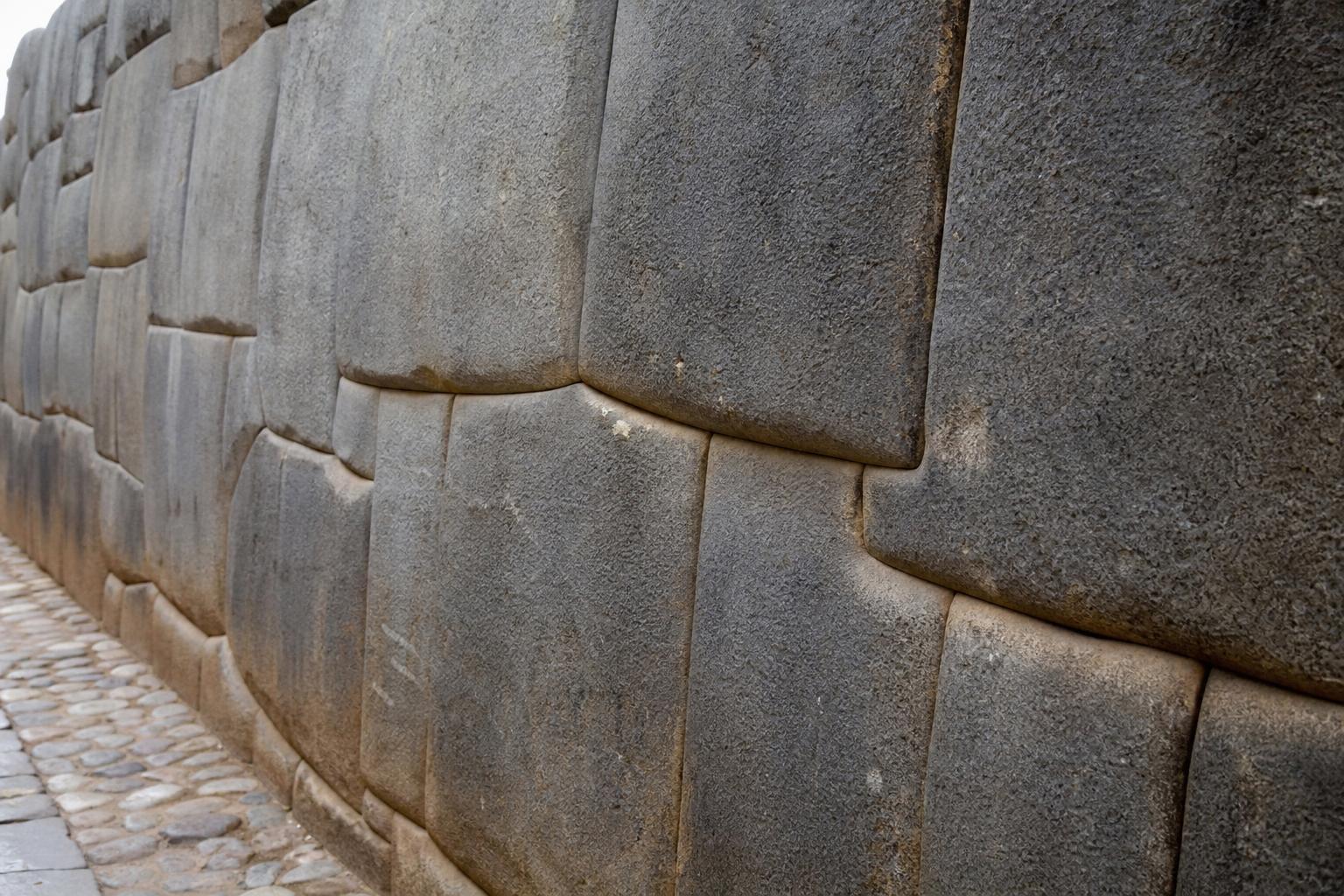
For centuries, the seamless stonework of Inca walls looked like a riddle wrapped in granite. Now, a series of hands-on experiments and material analyses have aligned to show a clear, testable method. It wasn’t alchemy, and it wasn’t alien technology. It was craftsmanship pushed to the edge of precision, built on patient iteration, intelligent geometry, and the physics of rough stone turned into smooth interfaces.
A craft of precision, not mystery
The iconic, polygonal blocks lock with such minute accuracy that a blade of grass can’t slip through. Researchers have now replicated that fit with period-appropriate tools and stepwise workflows. “The trick is patience, not mystery,” one experimenter noted. The builders didn’t pour or melt rock; they shaped, tested, and corrected until stones kissed across their whole faces.
The workflow, step by step
At its core, the process is iterative fitting. Stones were rough-shaped, then honed in situ until contact was continuous. Replication teams converge on a consistent sequence:
- Select a suitably tough block (andesite, diorite, or basalt), rough it with harder hammerstones, set it into position, mark high spots with sooty transfer media or clay, re-peck those bumps, then grind with water and quartz-rich sand into a fine match.
Each pass shaved microns from the surface, guided by visual shine, contact marks, and the feel of sliding friction. “Every high point tells you where to work next,” as one stonemason said. Over hours or days, the joint transforms from many-point contact to near-total bearing, achieving that famed dry fit.
Tools that leave a signature
The toolkit is surprisingly spare. River cobbles served as hammerstones, with harder varieties like quartzite or dolerite used to peck and dress faces. Wooden levers, fiber ropes, and earthen ramps handled placement. Straightedges, plumb bobs, and cord lines ensured plumb walls and true courses.
On original blocks, microscopic pecking pits, striations from sandy slurries, and edge chamfers line up with what experiments produce. Those little rounded “bosses” on some faces are best explained as temporary grips for handling that were later softened but not entirely removed. Nothing in the wear patterns suggests poured binders, saw-cut kerfs, or metal planers—just abrasion, impact, and rubbing.
Tolerance as structure
Inca walls don’t just look tight; they behave like machines. With broad, perfectly mated surfaces, loads spread evenly, reducing stress risers. Irregular polygonal blocks interlock like a 3D jigsaw, arresting crack propagation. Slightly beveled joint edges prevent spalling while allowing micro-movements during quakes.
Engineers have modeled these walls as granular assemblies with high friction and geometric redundancy. The result is remarkable damping: when the earth shakes, energy routes through multiple paths, joints rock and re-seat, and the structure returns to shape. “If two rocks touch everywhere, earthquakes have nowhere to start a break,” as one researcher put it.
Myths, retired gracefully
Bold claims once suggested secret chemicals, molten stone, or metal tools unknown to Andean metallurgy. The replicated workflow undercuts those ideas with simple physics. Cold stone plus hard hammerstones, guided by pigment transfers and abrasive slurry, is enough to achieve the famed fit.
Some crews likely used temporary clay or sand bedding during placement, but final joints were built to stand without a grain of mortar. The evidence matches what is visible on site: feathered transitions, incremental corrections, and consistent finishing textures. “It’s not about impossible technology,” says a field instructor. “It’s about disciplined iteration.”
Why time was the secret ingredient
In a world without wheels for heavy transport, time itself became the critical resource. By dedicating labor to refinement, Inca builders turned abundant stone into a high-performance system. The material choice matters: fine-grained andesites and diorites take a superb polish, pair well under load, and resist weathering.
Water heightens surface contrast, revealing glossy contact patches; ochre or lampblack transfers flag bumps. Peck, check, grind, check—repeat until stones glide like slate on glass. The process is slow, but it compounds into astonishing accuracy across entire walls and stepped terraces.
Lessons for today
There’s a modern payoff to all this clarity. Dry-fit masonry is inherently low-carbon: no lime kilns, no cement binder, fewer chemical inputs. It’s repairable, modular, and designed for longevity. Contemporary engineers are revisiting friction-fit assemblies, interlocking blocks, and quake-ready geometry inspired by Andean precedent.
Digital tools now complement ancient craft. High-resolution scans document joint topographies; finite element models test load paths; augmented reality guides reassembly in conservation work. Yet the core lesson stays human: meticulous feedback loops beat brute force. “Make the contact honest, and the wall will do the rest,” as one conservator likes to say.
What needed “confirming” wasn’t a single hidden trick, but a whole culture of measured making. In the hands of focused crews, stone’s roughness becomes precision, friction becomes strength, and a wall becomes both a puzzle and a promise that endures beyond centuries.
