
Biodiesel is a fuel produced from vegetable or animal oils, conceived as a greener alternative to conventional diesel drawn from petroleum. On paper, the idea is especially appealing to countries with vast stretches of underutilized land and heavy dependence on imported hydrocarbons. India, confronted with these two realities in the early 2000s, saw in this technology almost a miraculous promise: to turn wastelands into fuel deposits while offering new incomes to its poorest farmers. A bold bet, carried to the highest levels of the state, but it would collide with agronomic and economic realities far more complex than expected.
- In 2003, India launches the National Biodiesel Mission aiming to replace 20% of diesel consumption with jatropha-based biodiesel.
- Jatropha proved to be unproductive on poor soils, contrary to promises, and by late 2007 only 500,000 to 600,000 hectares were cultivated instead of the targeted 11.2 million hectares.
- Prosopis juliflora, a shrub already present on these lands, provided more jobs and energy services than jatropha, whose cultivation required nitrogen-rich fertilizers harming the environment.
- A pharaonic plan to green India’s diesel
- Jatropha, the miracle plant that disliked poor soils
- In Tamil Nadu, fields planted for nothing
- An agricultural ruin still visible twenty years later
A Pharaonic Plan to Green India’s Diesel
In April 2003, the Indian government officially launched its National Biodiesel Mission. The stated ambition was colossal: to identify a plant capable of growing on lands deemed uncultivable, then extract oil from it to be transformed into fuel. The choice fell on jatropha curcas, a hardy shrub reputed to thrive where nothing else grows. The commission in charge recommended cultivating no less than 11.2 million hectares of this plant on marginal lands, with the ultimate goal of replacing 20% of the national diesel consumption with this homegrown biodiesel.
The project was to progress in stages, with a first demonstration phase from 2003 to 2007, covering 400,000 hectares and led by the Rural Development Ministry. Among the most prominent backers of this initiative was Abdul Kalam, the eleventh president of India, who saw in jatropha an energy and social solution capable of reviving neglected lands while creating rural employment. A seductive storytelling, almost too good to be true.
Jatropha, the Miracle Plant That Hated Poor Soils
The problem is that jatropha never really lived up to the magical plant imagined. Presented as able to grow on any degraded soil without irrigation or fertilizer, it proved, in reality, far more demanding than expected. On truly poor lands, seed yields plummeted, making biodiesel production economically unviable. In other words, the worse the soil, the less the plant produced, a paradox that undermined the program’s very premise.
Another major issue: the notion of wasteland itself turned out to be much blurrier than announced. A study dedicated to Tamil Nadu showed that this term was politically malleable, designating both true derelict land and agroforestry plots already exploited by local communities. As a result, the program sometimes encroached on spaces that already served other purposes, generating tensions and misunderstandings on the ground rather than the promised valorization.
In Tamil Nadu, Fields Planted for Nothing
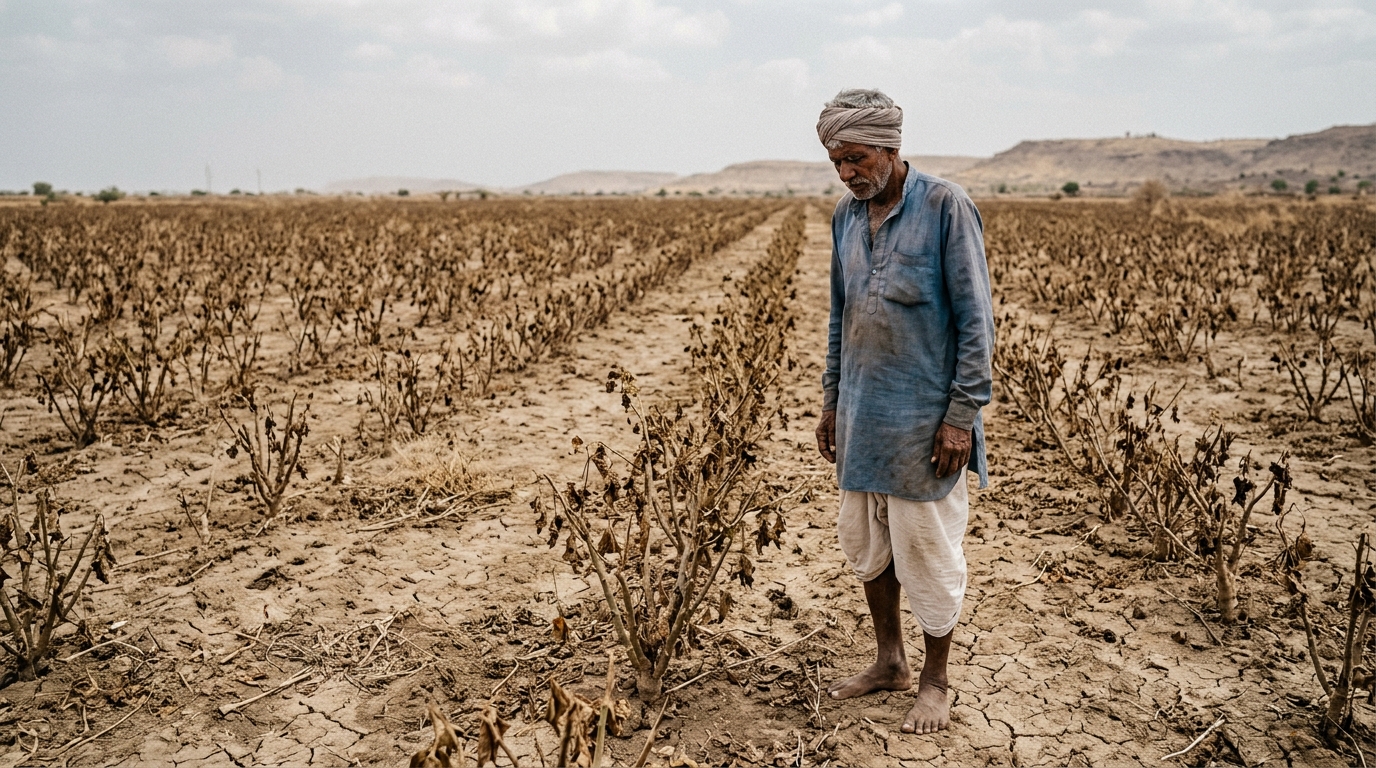
It is precisely in this southern Indian state that the gap between rhetoric and on-the-ground reality becomes most evident. The plan targeted 11.2 million hectares to blend 20% biodiesel into the national diesel, but on poor soils the seed yielded too little to be profitable. In Tamil Nadu, most farmers eventually abandoned their jatropha crops, discouraged by harvests insufficient to cover even the costs incurred.
One must note that jatropha faced an unexpected rival, already well established on these marginal lands: Prosopis juliflora. This spiny shrub, often considered an invasive plant, nonetheless sustained a dynamic energy economy, providing firewood and charcoal to millions of rural and urban consumers. Ironically, Prosopis offered more energy services, jobs, and development opportunities than the jatropha biodiesel could ever provide. And in a paradox, this plant had itself been massively introduced in India in the 1970s, as part of a previous program to valorize uncultivated lands. The story thus seems to repeat itself, twenty years apart and with equally disappointing results.
An Agricultural Ruin Still Visible Twenty Years Later
By the end of 2007, the assessment by the Rural Development Ministry was there for all to see: jatropha finally covered only 500,000 to 600,000 hectares across the country, far from the 11.2 million hectares initially envisaged. A scientific article dedicated to this failure points to a simple yet decisive structural cause: the first phase of the National Biodiesel Mission never truly got off the ground, due to insufficient institutional support on the ground. The failure of the second phase was then the almost logical, almost mechanical consequence.
Environmentally, the record is also more nuanced than the official discourse suggested. A life-cycle study showed that jatropha could indeed improve the structural quality of ecosystems when planted on genuinely degraded lands, but it simultaneously reduced the functional quality of these environments. The intensive use of nitrogen-based fertilizers, necessary to compensate for soil poverty, emerged as one of the main contributors to these negative impacts, erasing a large portion of the ecological benefits initially anticipated.
Two decades later, the traces of this missed bet remain visible in the Indian rural landscape, through abandoned plots and disappointed hopes among farmers who had bet on this crop. This chapter of India’s biodiesel experiment, in its own way, offers a lasting lesson well beyond the subcontinent’s borders, echoing what had already been observed when 42 million hectares of steppe were tilled in 1954 to feed the USSR: no energy solution, however seductive on paper, can escape a rigorous assessment of the agronomic, social, and economic realities of the terrain where it must thrive.
