
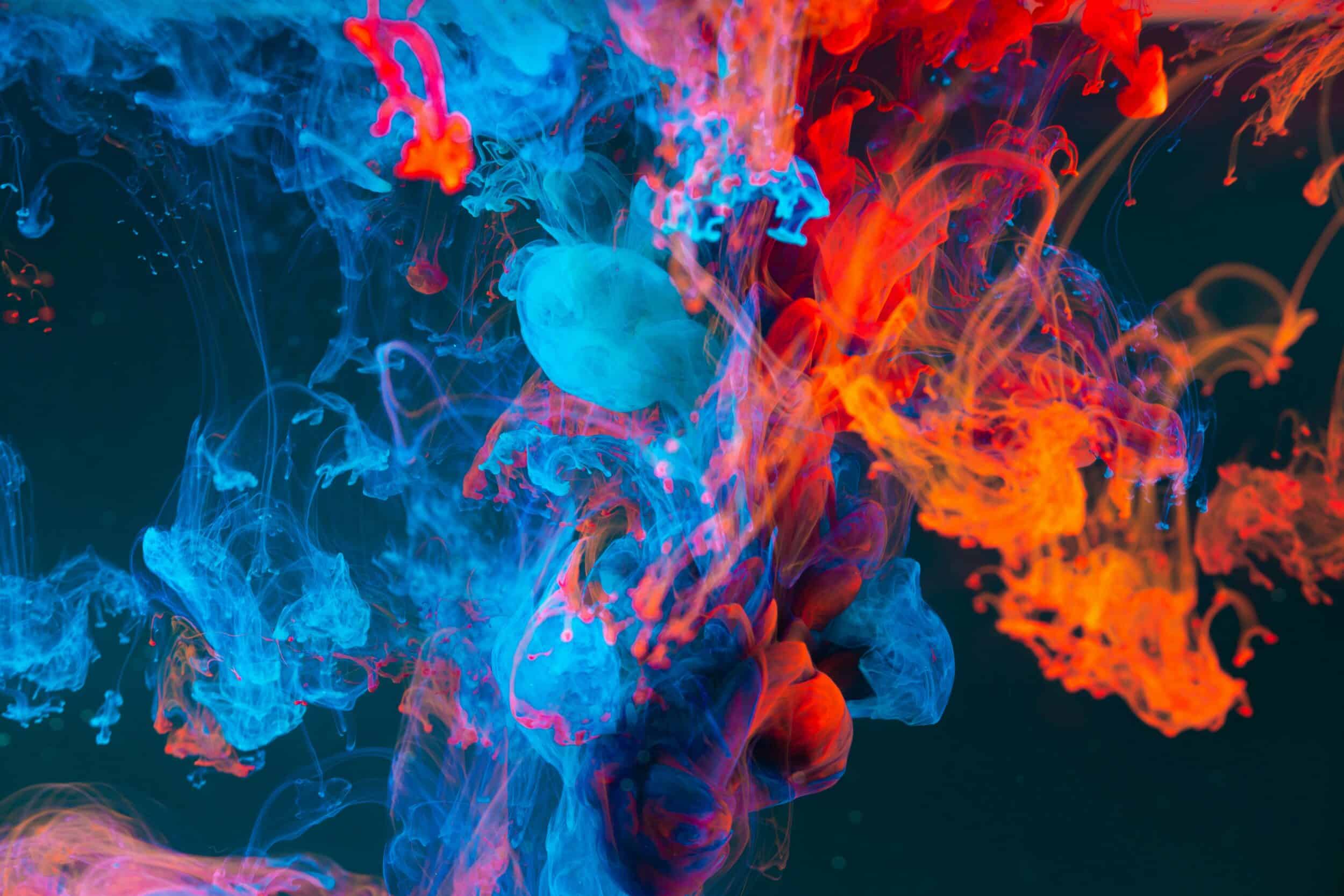
Some people hear red. Others have seen the number 7 in yellow since childhood. Still others perceive every musical note as a distinct and immutable color. Synesthesia — that involuntary fusion of senses — touches about 4% of the world’s population. For a long time regarded as a quirk or an invention, today it stands as one of the most valuable windows into how the brain constructs perception.
What you will learn
- Which neurological mechanism gives rise to synesthesia — and why certain brains “fuse” distinct senses
- Why synesthesia is hereditary and disproportionately common among artists and musicians
- What this phenomenon reveals about how all brains construct the reality they perceive
Not a metaphor — a real perception
When a synesthete says that the number 5 is red, it isn’t a poetic analogy. They truly perceive a red hue linked to that number — a perception as involuntary and constant as the color of the sky.
The first objective evidence for the reality of synesthesia came from brain-imaging studies published in Neuron in 1995 by Jeffrey Gray of the University of Cambridge. By asking synesthetes to listen to words, researchers observed activation of the visual cortex — the region that processes color — in the absence of any visual input.
It wasn’t imagination. It was measurable neural activation in a region that should not have been active.
Cross-wiring: two competing theories
Two main neurobiological explanations have competed within the scientific literature.
The cross-wiring theory, developed by Vilayanur Ramachandran and Edward Hubbard of the University of California, San Diego, in works published in the Journal of Consciousness Studies, posits that synesthetes possess additional anatomical connections between brain regions that are normally separate. The fusiform area of the cortex that processes numbers and letters sits anatomically next to the color-processing region — a proximity that could foster cross-activations.
The disinhibition theory, championed by Roi Cohen Kadosh of the University of Oxford, proposes that all brains harbor these latent connections, but that synesthesia results from a failure of inhibition that permits these cross-activations to reach conscious awareness. This theory is supported by experiments showing that hallucinogenic drugs can temporarily induce synesthesia-like states in non-synesthetes — by specifically lowering cortical inhibition.
Overrepresentation among artists
Synesthesia is seven times more common among artists, musicians, writers, and poets than in the general population — a finding documented in studies published in Perception by Simon Baron-Cohen of Cambridge University.
Famous synesthetes include the composer Rimsky-Korsakov, who experienced each musical pitch as a distinct color; the novelist Vladimir Nabokov, who linked every letter to a specific hue; and the singer Billie Eilish, who sees her songs in color while composing.
This overrepresentation is unlikely to be incidental. Synesthesia expands the repertoire of available metaphors, strengthens associative memory, and can provide additional perceptual structures to inform creative work.
What synesthesia reveals about all brains
The most fundamental insight to emerge from synesthesia research does not concern synesthetes — it concerns everyone.
Work published in Nature has shown that even non-synesthetic brains perform automatic cross-modal associations. The vast majority of humans instinctively link high-pitched sounds with sharp shapes and low-pitched sounds with rounded shapes — a statistical form of synesthesia documented across dozens of cultures.
What extreme synesthesia makes clear is that perception is not a passive recording of reality. It is an active construction by the brain — and the boundaries between senses are far more permeable than daily experience would have us believe.
Sources
- Synesthesia: classic and contemporary readings — Neuron, Gray et al., 1995
- Synesthesia: a window into perception — Journal of Consciousness Studies, Ramachandran & Hubbard
- Prevalence of synesthesia in artists — Perception, Baron-Cohen et al.
- Cross-modal associations in non-synesthetes — Nature, Spence et al.
