
What if sunlight wasn’t the only doorway for vitamin D into the body? In most countries, this vitamin is instinctively linked to the UVB rays that kiss the skin in summer. But what happens when the sun is scarce for nearly half the year? That’s the challenge Finland had to address, with a winter that plunges the country into almost constant gloom. Rather than endure this foretold deficiency, the authorities devised a solution as simple as it was clever: to slip vitamin D directly into everyday foods. The outcome exceeded all expectations regarding the population’s vitamin status. But before applauding milk and margarine alone, one must understand what truly happened behind these impressive figures.
- As of 2003, Finland systematically enriched milk and margarine with vitamin D to compensate for the winter sun deficit.
- Between 2000 and 2011, the share of the population with adequate vitamin D status rose from 33% to 90%.
- This improvement resulted from both dietary fortification and an increase in supplement use, rising from 11% to 41% over the period.
- A sunless country for several months
- The decision to fortify milk and margarine with vitamin D
- Spectacular results in the population’s vitamin status
- The parallel rise of dietary supplement use
- How to disentangle the effect of fortified milk from supplements
- What Finland can inspire other countries
A Country Deprived of Sunlight for Several Months
Finland lies at latitudes where the sun stays scarce for most of the year. During winter, days sometimes amount to only a few hours of gray light, and the sun’s angle is too low for the skin to produce vitamin D. This natural mechanism, which works in more temperate climates, relies on UVB rays striking the epidermis; without them, the skin’s synthesis simply halts. Finns thus found themselves every winter in a kind of luminous desert, with an organism deprived of one of its main natural levers to maintain a healthy vitamin D level. A recurring finding that, year after year, began to alarm the country’s health authorities.
The Decision to Fortify Milk and Margarine with Vitamin D
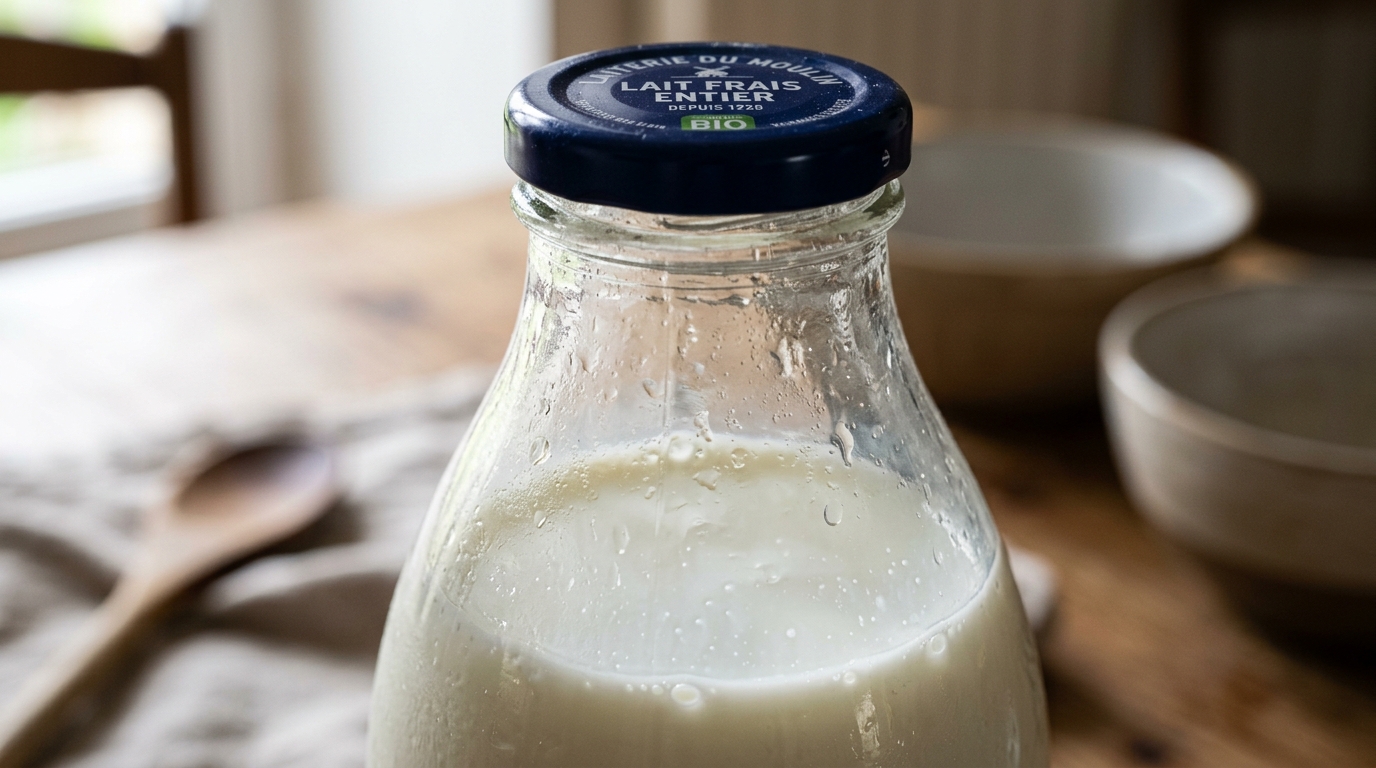
Faced with this structural shortfall, the Finnish Ministry of Social Affairs and Health took a decisive step: starting in February 2003, liquid milk and margarines in the country began to be systematically fortified with vitamin D. The idea was to act where dietary habits are already deeply ingrained, without upending daily life for households. The initial effects were rapid among young men, with the share of people deficient in vitamin D dropping from 78% to 35% in just one year. But the results were more mixed for adolescent girls, for whom fortifying milk and margarine did not fully avert the risk of deficiency. The authorities adjusted course in 2010: after consulting scientists, they increased the doses of vitamin D added to foods and recommended, in addition, targeted supplementation for children, adolescents, and the elderly.
Spectacular Results in the Population’s Vitamin Status
Looking back, the figures are striking. In 2000, before the program began, only about one-third of Finns had an adequate vitamin D status. By 2011, that share had risen to 90%. The FINDIET national survey corroborates this shift in dietary intake, with a notable rise from 2002 to 2012:
- The average daily vitamin D intake rose from 5 to 17 micrograms among men
- Among women, it rose from 3 to 18 micrograms daily over the same period
- Dairy products accounted for up to 39% of vitamin D intake among young men
- Fat spreads contributed, on average, 28% of vitamin D intake
A follow-up study led by the University of Oulu, involving 3,650 individuals from the 1966 birth cohort followed up at ages 31 and 46, measured an average increase of 10.6 nmol/L in blood vitamin D concentrations. On the face of it, these data attribute the turnaround to the fortification strategy.
The Parallel Rise of Dietary Supplement Use
There was, however, another actor in this success story that is often overlooked: dietary supplements. During the same period in which adequate vitamin D status climbed from 33% to 90%, supplement use rose from 11% in 2000 to 41% in 2011. In other words, nearly one Finn on two had become a regular user of supplements by the time the health statistics reached their peak. In these conditions, it is difficult to attribute the full improvement to fortified milk or margarine alone. Both levers clearly advanced in tandem, making the interpretation of a success story that one might want to credit to a single dietary fix a bit more complex.
How to Disentangle the Effect of Fortified Milk and Supplements
To gain clarity, researchers compared consumption profiles. Among people not taking supplements, drinking milk every day raised the average vitamin D level by 20 nmol/L, i.e., 6 nmol/L more than those who did not consume milk daily. The fortified milk thus had a measurable effect, but it remained partial. A 2007 study even concluded that fortifying dairy products alone was not enough to resolve vitamin D insufficiency among young Finnish men. More surprisingly, the University of Oulu study found that fortifying fat spreads did not produce the same blood-level effect as milk, which might justify reevaluating that practice. Overall, researchers attribute the improvement in vitamin status to both national intake recommendations and the fortification program, while underscoring the non-negligible role of supplements. A nuanced result, far from the shortcut of claiming that simply drinking milk suffices to bridge an entire sunless winter.
What Finland Can Inspire to Other Countries
In France, franceinfo recalled a striking fact: infants studied in Finland were born without vitamin D deficiency, likely thanks to this broad food fortification, particularly of milk consumed by mothers. A hopeful signal for other nations, including France, facing similarly sun-deprived winters and dietary intakes often insufficient in vitamin D. The Finnish example demonstrates that a well-constructed public health policy can truly shift outcomes, provided no single lever is over-relied upon. Pairing fortified foods with clear guidelines and targeted supplementation appears more effective than hoping for miracles from a single glass of milk.
In the end, the Finnish lesson is less about a recipe than about a method: combining several complementary tools rather than seeking a sole solution. A tempting approach for anyone looking to maintain a healthy vitamin D status during winter without waiting for the sun’s return.
