
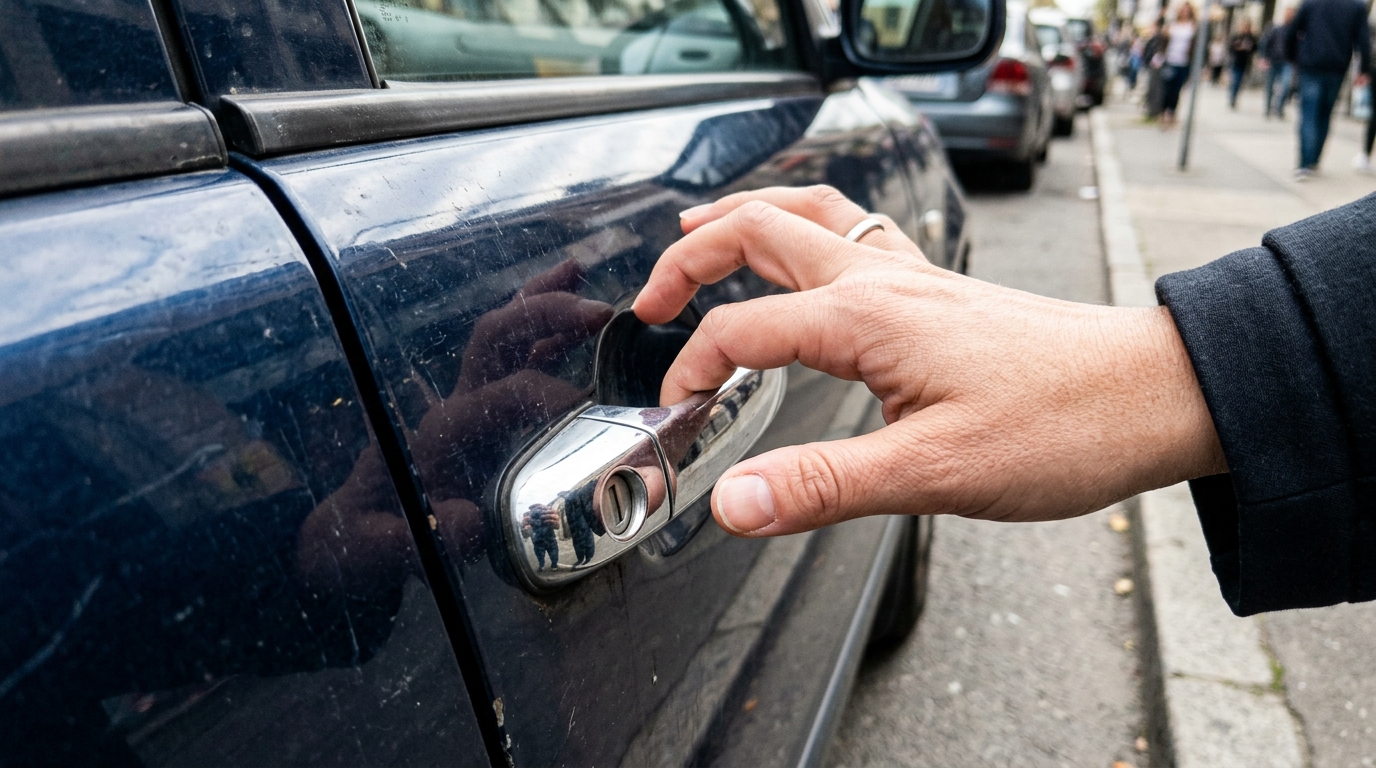
A handshake, a car door, a light switch, and there it is—the tiny jolt that pricks the fingertips. Many blame a wool sweater or a synthetic rug. Yet the true trigger hides elsewhere: the cold air that has settled since October 7 holds physically less water vapor than warm air. As a result, the atmosphere dries out, and this drying is intensified when heaters come back on across France. This dryness prevents electrons accumulated on clothes or skin from gradually dissipating into the ambient humidity. They finally discharge abruptly at the slightest contact with a conductive surface. A commonplace phenomenon, but one that will multiply in the coming days.
- Cold air and heating drive indoor humidity below 40%, creating ideal conditions for electrostatic discharges
- For optimal comfort, indoor relative humidity should stay between 40% and 60%, with a temperature around 19 °C
- Ventilating for ten minutes a day, using a humidifier, and favoring cotton or linen effectively limit these small discharges
- The dry winter air becomes the real culprit behind electrostatic discharges
- Indoor heating quietly worsens the phenomenon
- Simple actions to limit these small discharges in daily life
The dry air of winter becomes the real culprit behind electrostatic discharges
After a September unusually mild, with a temperature anomaly of +3.1 °C above normals according to Météo-France, the fourth consecutive month above this threshold, the shift was abrupt. From Wednesday, October 7, maxima plunged by 5 to 10 °C, locally up to 15 °C. Friday, October 9 marked the coldest point in this sequence, with minimums ranging from 2 to 9 °C inland, and only 2 °C recorded in Aurillac and Nevers. Ten major French cities even dipped below 5 °C that morning, with a risk of light frost. And the trend doesn’t stop there: models forecast a new rise in temperatures for the week of October 12 to 18. Yet, colder air naturally contains less humidity. It’s a simple physical law, but its consequences on daily life are real, especially inside homes.
Indoor heating quietly aggravates the phenomenon
The return of the cold naturally brings back heating. Collective boilers are traditionally restarted around October 15, and the 2026-2027 season does not depart from this rule. But warming a space above outdoor temperature has an immediate effect: indoor relative humidity drops sharply, since the heated air can hold more water vapor than the cold air it replaces, without that vapor actually being present. Concretely, as soon as the air falls below 40% relative humidity, conditions become ideal for accumulation and electrostatic discharges. The comfortable indoor humidity range is between 40% and 60%. Below that, the risk of small discharges climbs significantly, especially in rooms that are heated continuously. A parameter to monitor all the more since the regulated price of electricity has, since August 1, 2026, reached 0.2001 €/kWh including tax in the Base option up to 6 kVA, which nudges many households to push heating without always considering ambient humidity.
Simple actions can limit these small discharges in daily life
No need for expensive equipment to limit this annoyance. A few habits are enough to restore a comfortable humidity level. Here are the steps to adopt without delay:
- Ventilate your home for ten minutes each day, even in cold weather, to refresh the air without overly drying it
- Use a humidifier or simply place a container of water near a radiator
- Avoid over-heating rooms, a target around 19 °C already limits indoor drying
- Prefer natural materials such as cotton or linen, less prone to charge buildup than certain synthetics
- Touch a metal object before grasping a door handle, to discharge static electricity gradually
The most common mistake is pushing the heating up without monitoring the dwelling’s hygrometry, which mechanically intensifies the phenomenon. A hygrometer, often sold cheaply, helps keep an eye on this humidity level and adjust habits accordingly.
With the cold settling in for good and the heating now running at full blast, these little discharges are likely to become a recurring feature in the coming weeks. Nothing alarming, but a few simple adjustments in indoor humidity and clothing choices are enough to regain a more comfortable daily life, without fearing a spark when touching a door handle.
