
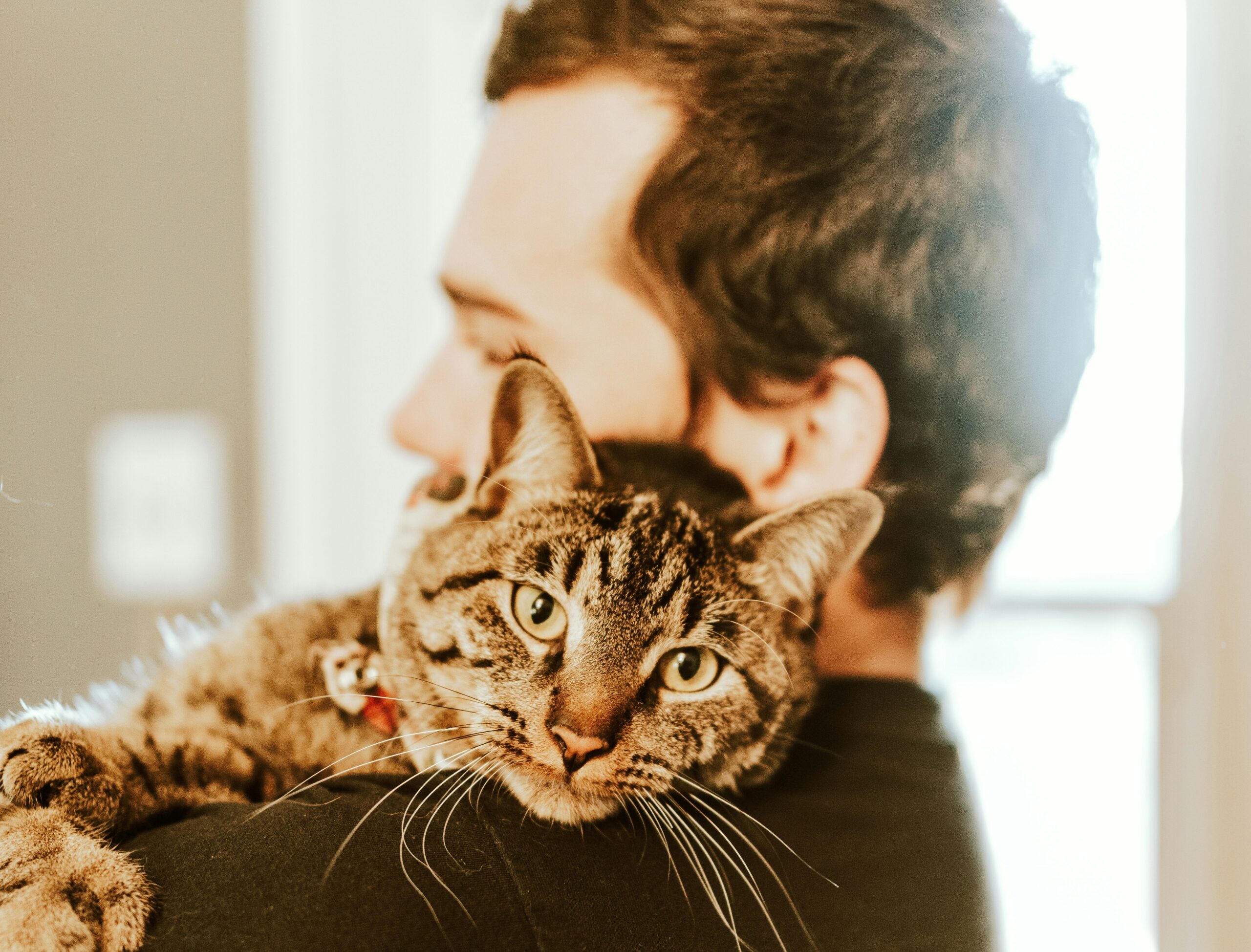
If you are a male cat owner, you might have noticed that your feline friend tends to be unusually talkative when you come home. This is not a coincidence, nor a sign of overflowing affection. A recent study published in Ethology has just shed light on a fascinating behavior: domestic cats miaow significantly more often to greet men than to greet women. Yet the reason behind this difference has nothing to do with a sentimental preference. It appears to be a deliberately calculated communication strategy to draw the attention of owners deemed… less responsive.
A scientific inquiry at the heart of the home
Unlike many prior studies that relied on subjective reports from owners, this study led by Yasemin Salgirli Demirbas’s team at Ankara University adopted a rigorously scientific approach. Thirty-one cats and their primary caregivers were observed in their natural environment, at home, without the disruptive presence of researchers or intrusive equipment.
The methodology was simple yet ingenious. Participants wore a chest-mounted camera, akin to a GoPro or a smartphone, and recorded the first minutes after returning home. The instruction was clear: behave as naturally as possible, as if nothing had changed in their daily routine.
The researchers then dissected the first one hundred seconds of each recording, analyzing twenty-two distinct behaviors ranging from meowing to head rubbing, including signs of stress such as yawning or stretching.
A difference that cannot be mistaken
The results revealed a striking difference. When a man stepped through the door, the cats produced an average of 4.3 distinct vocalizations within the first one hundred seconds. These sounds included classic meows, purrs, and even chirps—this kind of trill that some felines use to express their excitement.
By contrast, when a woman came home, the vocalization count fell drastically to an average of 1.8.
This pattern proved universal across the sample. It did not matter the cat’s age, its breed, its sex, or even the size of the household in which it lived. Whether it was a young kitten or an old tom, whether a chatty Siamese or a reserved Persian, the scheme remained identical. When confronted with a man, the cats intensified their vocal efforts.
A strategic adaptation rather than an affectionate preference
The explanation offered by the researchers might disappoint some male owners hoping to read it as a sign of particular affection. In reality, this heightened vocal communication would be a form of behavioral adaptation. Men tend to speak less frequently to their pets and to display generally lower attentiveness to the subtle signals sent by their cats.
In response to this reduced responsiveness, the felines would adjust their communication strategy. Rather than relying on visual or tactile cues that could go unnoticed, they invest more in vocalizations—an unavoidable channel of communication. It represents a remarkable form of social intelligence: the cat identifies the level of attention its interlocutor provides and tailors its message accordingly.
As the study’s authors put it, cats seem to intuitively understand that men use verbal behaviors less frequently in everyday interactions. This difference would push them to employ vocal signals more actively to elicit a response from them.
A greeting ritual more complex than it seems
Beyond this gendered difference, the study also highlighted the richness and complexity of feline greeting rituals. When a cat welcomes its owner, it does not simply meow. It unleashes a whole repertoire of friendly social behaviors: the tail stands upright as a sign of trust, it approaches deliberately, and it rubs its head or flank against the person’s legs to deposit its pheromones and mark its affectionate territory.
At the same time, researchers observed calming behaviors such as yawns, prolonged stretches, or scratching on vertical surfaces. Far from being trivial, these gestures express active stress management. The return of the owner, though anticipated and desired, generates a certain emotional tension that the cat seeks to regulate. This greeting would thus be a subtle blend of signaling a desire for social connection and a strategy for emotional regulation.
Findings to be confirmed on a larger scale
Despite the ingenuity of this research, the authors acknowledge the limitations of their work. The study was conducted exclusively in Turkey with a sample of thirty-one cats, which remains modest. Further studies conducted in diverse cultural and geographic contexts will be necessary to determine whether these gender-related vocalization differences are truly universal or reflect dynamics particular to certain societies.
Nevertheless, this discovery opens a fascinating window into the adaptive intelligence of domestic cats and their ability to finely tune their communication according to their interlocutor.
