
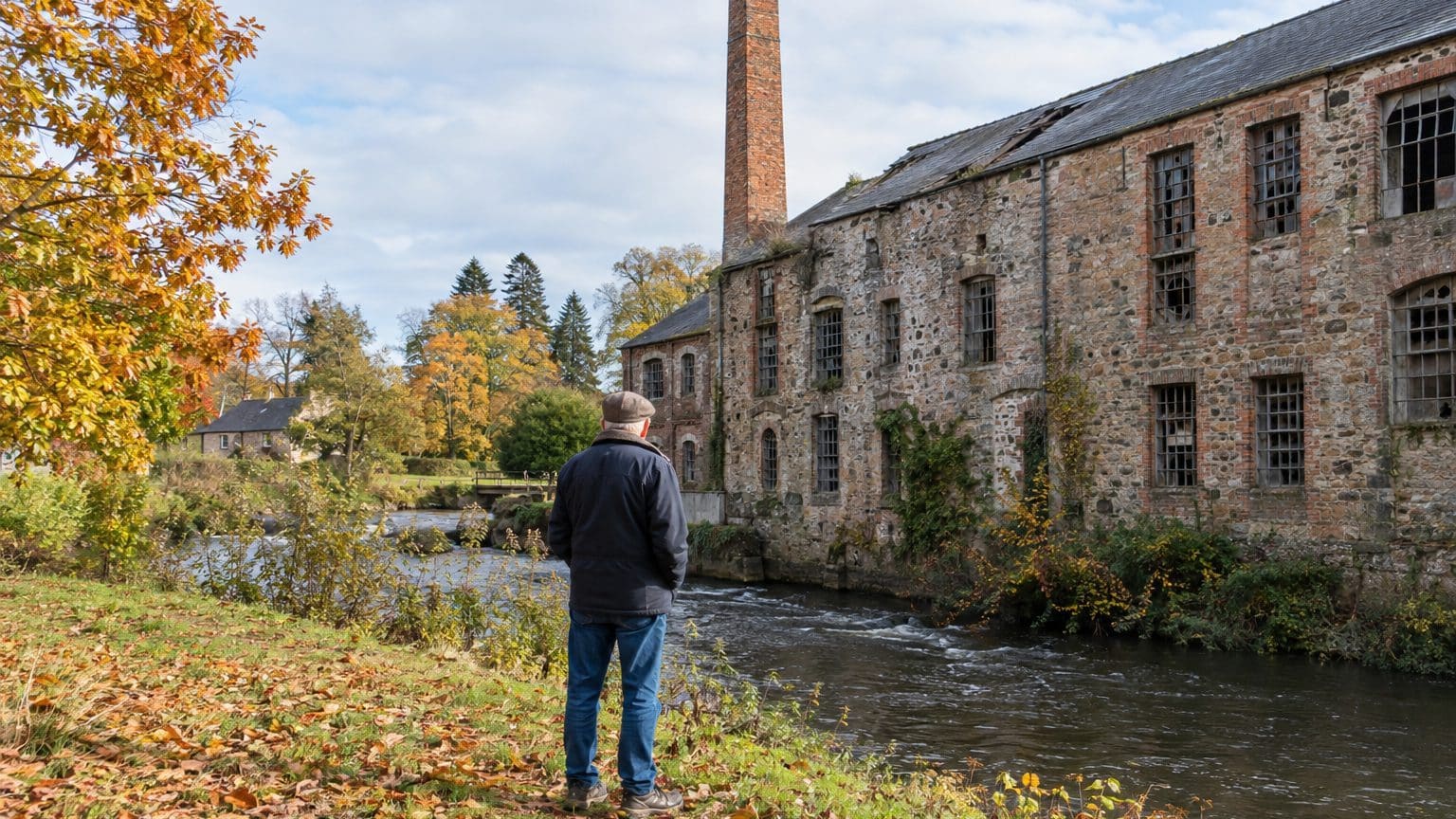
Fifteen thousand euros. That was the price at which the commune of Inzinzac-Lochrist, in Morbihan, sold the payroll office of the Forges d’Hennebont, the place where workers came to receive their wages before the factory’s closure in 1966. The Brittany regional Chamber of Accounts notes unfavorable financial conditions for a project that ran counter to the directions of the local urban plan (PLU), which called for preserving the building’s heritage value. The building is now set for demolition. The matter appears in a report with a stern tone regarding the town’s governance.
The report was presented to the municipal council on September 23, 2026.
The audit was opened on August 14, 2025 and looked at the commune’s financial situation and the reconversion operations of the Forges area. It concerns the management of the previous municipal majority between 2019 and 2025. A multi-month adversarial phase preceded publication, including an interview with the mayor at the time on December 4, 2025 and provisional observations on December 16.
- The commune of Inzinzac-Lochrist sold the payroll office of the Forges d’Hennebont for 15,000 euros.
- The Regional Chamber of Accounts deems the sale contrary to the local urban plan.
- The commune’s debt stands at around 10 million euros, or roughly 1,500 euros per inhabitant.
A factory employing 3,000 workers, then demolition
Established in 1860 and closed in 1966, the Forges of Hennebont long sustained the Blavet valley. By 1938, the workforce reached 3,000 people. Despite a moratorium and local protests, the government decided to close by ministerial decree on May 18, 1966.
In a facility of this size, the payroll office is where labor becomes money. When the Forges’ buildings were demolished, the memory of the workers organized itself: the ecomuseum was created in 1981, driven by Gisèle Le Rouzic, in response to the destruction. It now occupies the former factory laboratory, on the François-Giovannelli quay, which runs along the Blavet.
Forty-five years later, the demolition threatens a new witness.
What the report says, and what it leaves unresolved
The chamber devotes a specific section to this disposal, on page 47 of the report. It deems the financial terms unfavorable and the project contrary to the local urban plan. The published excerpts do not provide the floor area of the building, its number of levels, or the exact year of sale. Those details are to be found in the full report, which the commune has posted on its website.
Until 2022, the commune’s financial situation was sound. It later shifted due to an “ambitious but poorly controlled and underfunded” investment program, which drained working capital and led to borrowing 5 million euros. The 2024 accounts closed with a deficit of nearly 2 million euros, or 20.8% of operating revenues, twice the legal threshold.
The published summaries describe these 5 million as financing a comprehensive investment program. They treat the payroll office sale in a separate section, without stating that one caused the other. The scale is telling: 15,000 euros is 333 times less than the borrowed sum.
For a commune of 6,691 inhabitants in 2023, that amounts to 2.24 euros per inhabitant for the payroll office, versus about 750 euros per inhabitant for the loans. The proceeds from the sale could not have meaningfully altered the accounts. The report does not state either that the sale was decided for that reason.
Low-price disposals and an architect close to the executive
The payroll office is not the only file singled out. The studies and land disposals carried out from 2020 on the western part of the site show, according to the chamber, conflicts of interest and multiple irregularities. An architectural firm close to the executive was chosen without effective competition, and disposals were made at steep discounts to a company belonging to the family of a council member. These decisions are said to have occurred while the municipal executive had been alerted by state services, by Lorient Agglomeration, and by its own services.
The reconversion project, in which the commune acquired most of the site with the help of Lorient Aggolmeration, has been under way since 2014 and remained largely in the study phase at the time of the audit. Only the extension of the business park was underway, carried out by the commune even though this power lies exclusively with Lorient Agglomeration.
Twelve years after its launch, the project remains in the study phase.
The local urban plan sets ground-use rules, and Inzinzac-Lochrist’s plan called for preserving the building’s patrimonial interest. The chamber notes that the sale benefited a project that ran counter to these guidelines. This is what sets this case apart from a simple low-price sale: the commune divested itself of a property in contradiction with its own rules.
An addition that residents will have to pay
The debt stands at around 10 million euros, including the treasury line, i.e., nearly 1,500 euros per inhabitant. Some suppliers remain unpaid and the commune experienced a “partial cessation of payments” in 2024. The chamber places Inzinzac-Lochrist among the Breton communes of comparable size that are the most fragile.
To escape this situation, the commune will have less margin for maneuver: reduced services, higher taxes, or both. As for the heritage, it will not come back. Once the payroll office is razed, only photographs and testimonies kept at the ecomuseum, a few hundred meters away, will remain.
The chamber does not comment on the political appropriateness of the choices: it assesses the reliability of the accounts, the financial balance of the operations, and the legal regularity. Its reports are generally accompanied by recommendations, the implementation of which is monitored. The responses of the people involved appear at the end of the report.
Sources: bretagne.com | inzinzac-lochrist.fr | assemblee-nationale.fr
