
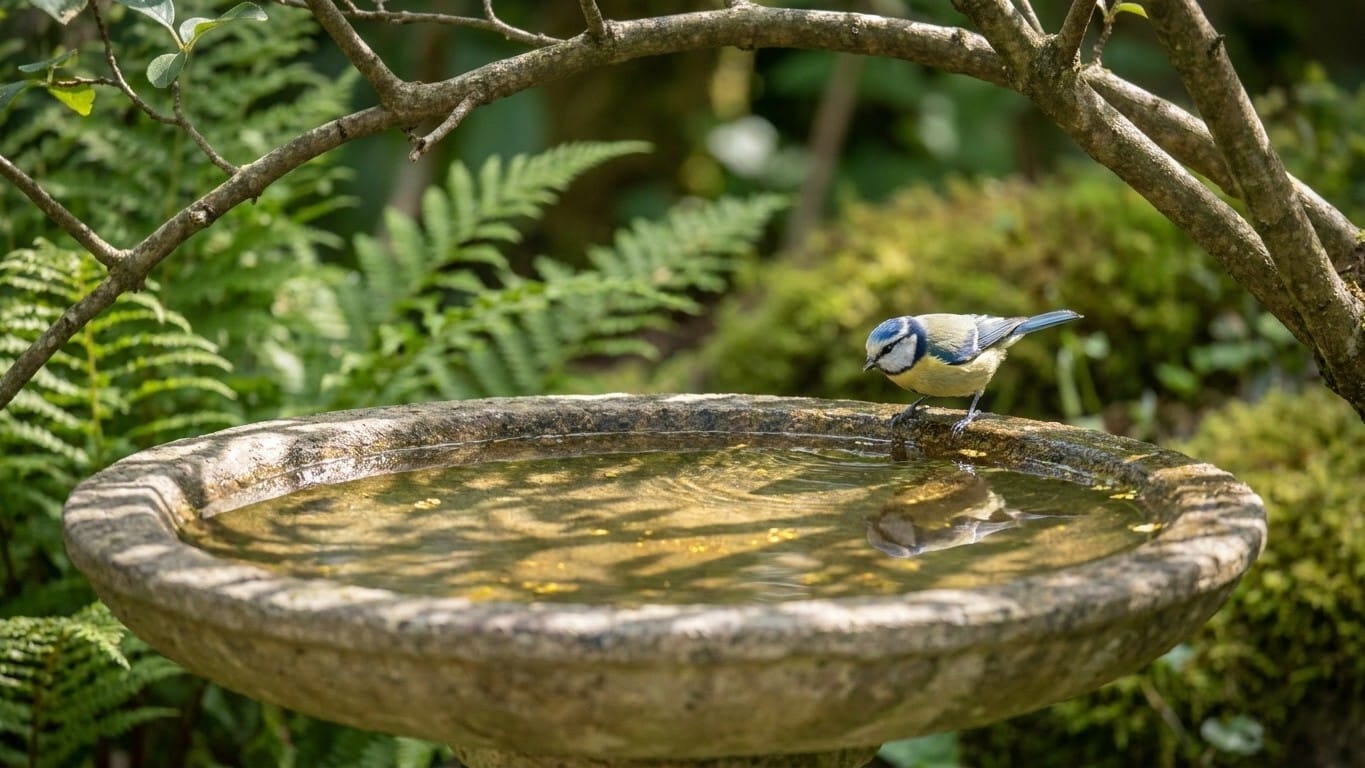
A shallow dish of water left out in the sun for birds: this summer reflex, driven by good intentions, can backfire on the very feathered visitors you are trying to help. This is not an alarmist hypothesis. It is what ornithologists and wildlife protection associations document year after year.
Key takeaways
- Water in full sun heats up in a matter of hours — but not in the way you might expect
- Birds are extremely vulnerable during heatwaves: a single mistake can be fatal
- There is a solution, and it is much simpler than you think
A Water That Transforms into a Culture Broth
Stagnant water left out in bright sun heats up at a breakneck pace. Within a few hours, a tepid puddle becomes a formidable culture broth: bacteria, fungi, and microscopic algae multiply uncontrollably. The mechanism is simple and relentless.
If your birdbath turns green in a matter of days, it’s no accident. Algae love heat, light, and still water. As soon as the basin basks in full sun, the scenery changes quickly. A thin slick layer forms along the bottom and edges. This green film is not only unattractive: it can make the rim dangerous for birds, and it will attract more mosquitoes, complicating the situation even further.
Songbirds that drink from this water face the major risk of ingesting dangerous pathogens or transmitting contagious diseases to the rest of the flock. A sparrow contaminated at the garden’s drinking site can put an entire brood at risk. The transmission chain is fast, quiet, and often fatal for nestlings.
A birdbath exposed to the scorching afternoon sun can heat up rapidly: water evaporates faster, warms earlier, and algae proliferate more easily. A waterer in the direct noonday sun becomes a warm tub that repels rather than attracts in just a couple of hours, and a thermal trap for insects. In short, the effect is double: water becomes dangerous, and it disappears precisely when birds need it most.
Why Birds Are Particularly Vulnerable to Heat
When the mercury climbs above 30°C, birds must work harder to maintain their naturally high body temperature, which sits around 40 to 42°C. In practical terms, birds do not sweat: their primary cooling methods are panting and contact with water. Access to clean, fresh water is not a luxury; it is a survival necessity.
During heatwaves, a bath becomes essential to lower body temperature and prevent heat stress, which can lead to respiratory difficulties, fainting, brain injury, or death. The LPO (League for the Protection of Birds) regularly warns that episodes of extreme heat are detrimental to wildlife in general, and to birds in particular, such as sparrows, tits, and goldfinches.
Birds need water not only to drink but also to perform their daily washing, which helps them achieve optimal feather care. Bathing evenly distributes secretions from the uropygial gland across each feather, aiding the smooth alignment and ensuring proper insulation, waterproofing, and cold protection. Hot, dirty water undermines all of this.
The Right Setup: Shade, Depth, Cleaning
In summer, choose shaded locations, and in winter, spots that receive good sun. This rule, simple to remember, challenges the intuition of many people. It is easy to think that sunlit water is healthier. The opposite is often true. Place your birdbath in partial shade if possible. A spot near shrubs or small trees is often ideal because birds like to approach water while staying sheltered: they can perch nearby to watch for danger and then descend when they feel safe.
First and most important criterion: the depth should not exceed 5 cm to prevent drownings. Water points should be shallow (between 3 and 5 cm), with sloped edges, a rough bottom, and stones or branches, since many small birds and insects do not know how to swim. A basin that is too deep, even if clean and shaded, can drown a clumsy fledgling.
The LPO advises changing the water regularly to prevent it from becoming too hot and to reduce disease spread. It is also recommended to wash the container each week with a non-toxic product, such as black soap or vinegar. This daily renewal has a second benefit: it helps limit the development of mosquito larvae in small drinkers. A weekly vinegar clean, followed by daily rinsing with clear water, forms the minimal routine.
Experts agree on one point: fresh water should be renewed at least once a day. During periods of intense heat, the water should be changed twice a day—morning and evening, as reliably as you water your tomatoes. It’s not more burdensome than that.
Moving Water, Biodiversity’s Best Ally
Rather than relying on viral gardening hacks, try this safer solution: keep the water in motion. A small solar fountain or a drip line helps reduce stagnation and makes the water more attractive to birds. Moving water is easier for birds to spot and tends to stay cooler than stagnant water. This affordable setup mimics the sound of a stream, and birds are naturally drawn to it, even from tens of meters away.
Youth learning to fly, adults in full molt, or migratory visitors passing through find a vital stopover along their summer journey. And for the discreet observer, there is a rare delight: watching a robin splash merrily, a blue tit shake its soaked feathers, or a chaffinch take quick little sips—an intimate scene of fragile, precious nature accessible from your lounge chair.
Installing a water point also triggers a virtuous chain: pollinator insects—bees, hoverflies, butterflies—also come to drink. A single well-placed, diligently maintained container can transform an ordinary balcony into a stopover for about ten species. The condition remains the same: shade, coolness, and unwavering renewal. A small act of kindness, to be truly effective, simply requires a bit more planning than impulse.
Sources: planetezerodechet.fr | masculin.com
