
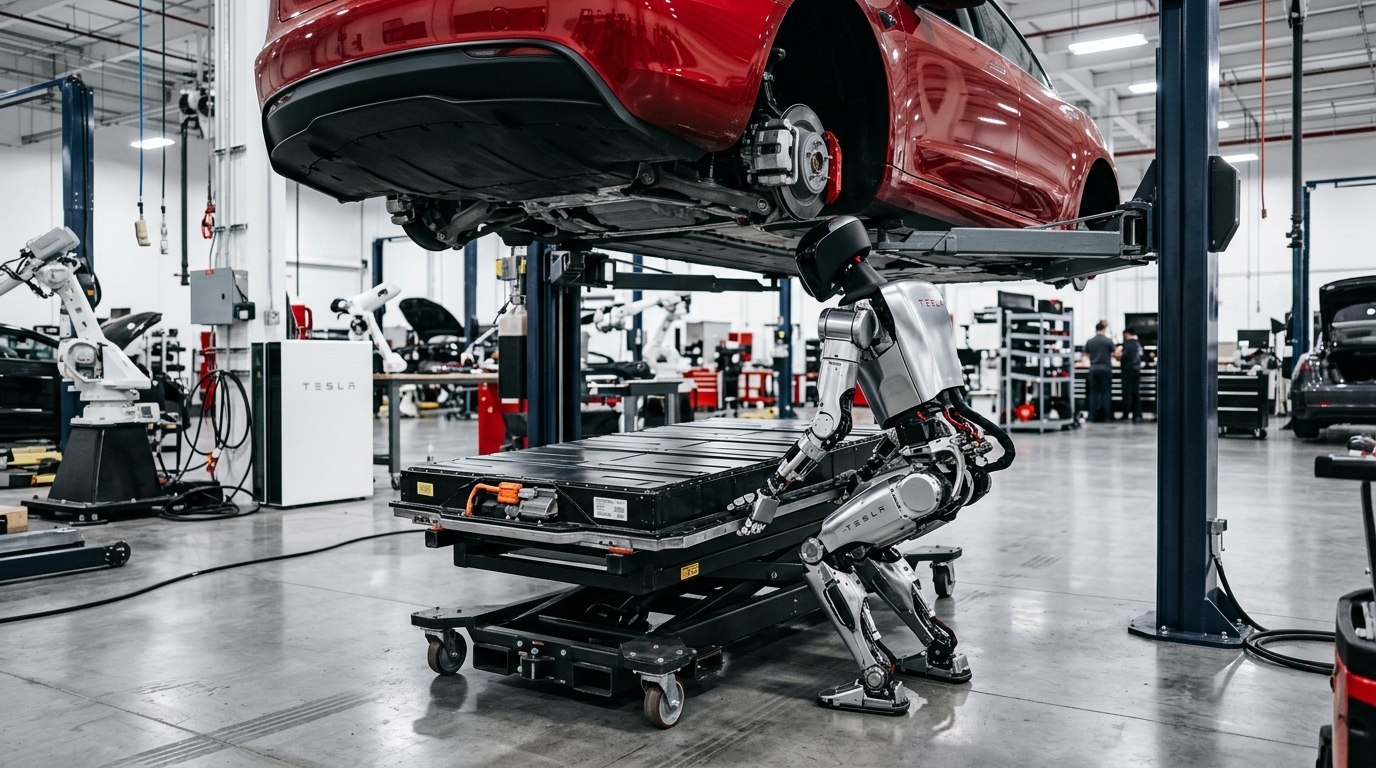
On paper, the idea seems almost obvious. After five years behind the wheel of an electric car, range is no longer quite what it was in the early days, and new generations of batteries promise more kilometers. Why not take advantage of a replacement to install a higher-performing model?
That is precisely where things can become complicated. Replacing a worn traction battery with one that matches the manufacturer’s specified characteristics isn’t the same as modifying the vehicle to offer a different capacity, technology, or set of features.
Replacing a battery isn’t always a simple repair
The battery of an electric vehicle does not operate like the battery in a phone that you could swap for a higher-capacity model. It is part of a complex technical system that includes notably the battery management system (BMS), power electronics, and thermal management devices.
Pack dimensions, mass, voltage, power, or electronic compatibility: installing a battery that is markedly different from the one originally planned can therefore require modifications far more substantial than a routine garage visit.
And the issue isn’t only technical.
In France, a modification made to a vehicle already on the road can be considered a “notable transformation” when it changes its regulatory status or certain technical data listed on its registration certificate. In such cases, a reception for an isolated purpose (RTI) may be required.
A more capable battery can therefore change the game
Here it’s important to dispel a misconception: it is not prohibited to replace the battery of an electric car.
When the manufacturer or a repairer replaces a faulty battery with a pack that is compatible and compliant with the vehicle’s homologated definition, it is essentially a repair.
The situation becomes different when a owner wishes to take advantage of the operation to change the car’s characteristics. Installing a pack of a different technology or making a modification that affects the vehicle’s regulatory characteristics can take it out of its original configuration.
French regulations precisely state that a notable transformation requires a reception for an isolated purpose. They also cover changes to the technical details appearing on the registration certificate.
In other words, gaining tens or hundreds of kilometers of autonomy by installing a different battery does not necessarily amount to a simple parts swap.
The registration certificate may also need to be updated
If the transformation indeed results in a change to the technical characteristics recorded on the registration certificate, the owner must request their updating.
Service-Public indicates that such a step must be carried out within the month following the transformation when it affects certain technical characteristics. Among those explicitly cited are power, weight, dimensions, and energy.
For a notable transformation, the modification file for the registration certificate must notably include the procès-verbal de réception à titre isolé issued by the DREAL.
So it isn’t the mere presence of a new battery that automatically triggers formalities. Everything depends on the exact nature of the replacement and the changes it entails.
Better to check before chasing more range
That is ultimately the essential point for a motorist tempted by an “upgrade” a few years after purchase.
Replacing an aging battery with a compatible reference isn’t unusual. However, trying to install a larger or technically different pack solely to increase range warrants checking in advance its compatibility with the vehicle, but also the regulatory consequences of the transformation.
The regulations also remind that a modification that causes the vehicle to lose conformity with certain characteristics of its initial reception may require a declaration and, depending on the circumstances, a reception for an isolated purpose.
Before signing the quote, it is therefore wise to ask the professional whether the new battery corresponds to a configuration already approved for this exact model or if its installation constitutes a genuine transformation of the vehicle.
A distinction that may seem highly technical when you’re collecting the keys, but which helps avoid discovering later that a few extra kilometers of range also required certain administrative steps.
