
Imagine a city that each year pours hundreds of millions of euros into associations, public authorities, or various organizations, without any elected official or citizen truly able to say where the money goes or why. This is exactly the finding of a note published by the think tank Génération Libre, titled The Great Waste and signed by Édouard Hesse. By sifting through open data files and the municipal budgets of Paris, Lyon, and Marseille, the author reveals a subsidy system that has become so dense, so fragmented, that it now eludes any serious democratic oversight.
- A Génération Libre study reveals 473 million euros in subsidies paid each year to Paris, Lyon and Marseille through more than 8,000 distinct budget lines.
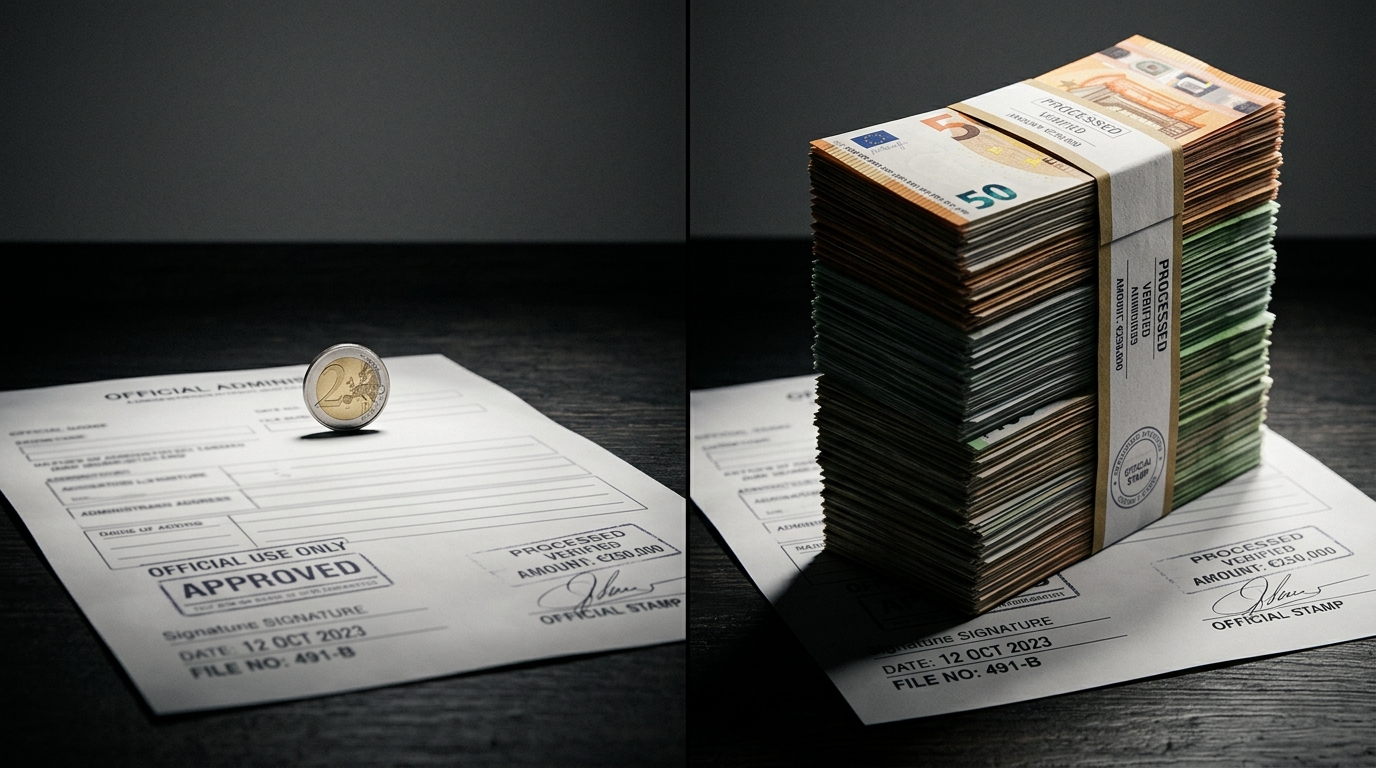
- This extreme fragmentation, illustrated by cases such as a 70-euro grant to a Lyon elementary school or 2.67 million euros paid to retirement funds for former Parisian officials, makes any democratic oversight almost impossible.
- In response to this finding, the note proposes six reform avenues, including limiting automatic renewal of subsidies and strengthening the transparency of their publication.
- 241 million euros voted in a single year in Paris: the figure that raises questions
- Lyon, Marseille: colossal sums hidden behind thousands of budget lines
- When the pension funds of former elected officials benefit from funds never scrutinized
- Record public debt and opaque subsidies: a system that no one can master anymore
241 million euros approved in a single year in Paris: the figure that raises questions
In Paris, the study records no fewer than 5,217 subsidies approved in 2025, for a total amount of €241.2 million. When divided by the number of residents, that amounts to roughly €113 per Parisian, a sum that, added to the thousands of lines of the budget involved, paints a financial labyrinth almost impossible for an ordinary citizen to follow. According to the report, these subsidies account for “only” 2.5% of the city’s operating expenditures, a ratio that seems modest at the scale of the overall budget but actually masks a multiplication of micro- lines, automatic renewals, and budgetary descriptors so technical that they deter citizen verification.
It is precisely this dilution that worries the author most: the more subsidies fragment into small, dispersed amounts, the harder it becomes to assess their real utility, and the more political responsibility dissolves among dozens of municipal services and directorates.
Lyon, Marseille: colossal sums hidden behind thousands of budget lines
In Lyon, the municipality would have disbursed around €109.8–110 million in 2024, spread across 3,234 budget lines, or nearly €212 per inhabitant, a figure notably higher than Paris. The report also notes that subsidies there represent 15.4% of operating expenditures, compared with 2.5% in Paris and 5.7% in Marseille. One example encapsulates the absurdity highlighted: a subsidy of €70 granted to a primary school for a music project, the administrative processing of which could cost more than the aid itself. At the other end of the spectrum, the Opéra national de Lyon would alone absorb €19.3 million in subsidies, with a large portion of in-kind assistance particularly difficult to trace.
In Marseille, the study records €83.9 million earmarked for associations, to which are added €47.2 million channeled toward management bodies and annex budgets, including €22.1 million for Opéra-Odéon and €16.1 million for the Pôle média Belle-de-Mai. Per capita, this amounts to €95, but rises to €148 when annex budgets are included, proving that the visible total of subsidies tells only part of the story.
When the pension funds of former elected officials benefit from funds never scrutinized
Some Parisian cases detailed in the note are particularly striking. The ASPP, responsible for the catering of municipal staff, receives €12.4 million in subsidies, while its consolidated cost would total around €13.7 million, a revealing gap that highlights the rough approximations surrounding the financing of certain structures. AGOSPAP, for its part, is funded at over €7 million, while its beneficiaries would be largely drawn from the hospital sector, according to elements cited by the Regional Chamber of Accounts.
Even more troubling: Paris would finance €2.67 million per year for two entities linked to pensions of former officials, funds that would no longer be sustained by current contributors. In other words, public money would continue to flow to mechanisms frozen in time, with no direct link to today’s municipal activity, and without a public debate commensurate with the amounts involved.
Record public debt and opaque subsidies: a system that no one can master anymore
This comprehensive inventory takes on a different dimension when viewed in the context of French public finances. Paris carries a debt of €9.3 billion, Marseille €1.3 billion, and Lyon, more modestly, €320 million. Nationally, public debt stood at €3,482 billion in the third quarter of 2025, a figure that fuels calls for involving local authorities in the effort to restore balance to the public accounts.
In total, the note estimates €473 million distributed annually across these three cities through more than 8,000 subsidies. In response, six reform avenues are proposed, including the limitation of automatic renewal of subsidies and greater transparency in their publication. This publication comes as the so-called PLM law, which reforms the municipal voting system in Paris, Lyon and Marseille, has just been adopted, re-igniting the debate over local accountability.
Between micro-subsidies difficult to justify, entities funded without a clear link to their activities, and annex budgets that escape the usual oversight, this panorama sketches a system in which the multiplication of budget lines ends up weakening democratic control rather than strengthening it. At a time when every euro of public money is scrutinized, the question remains: how long can these mechanisms continue to thrive before a genuine effort at clarification becomes necessary?
