
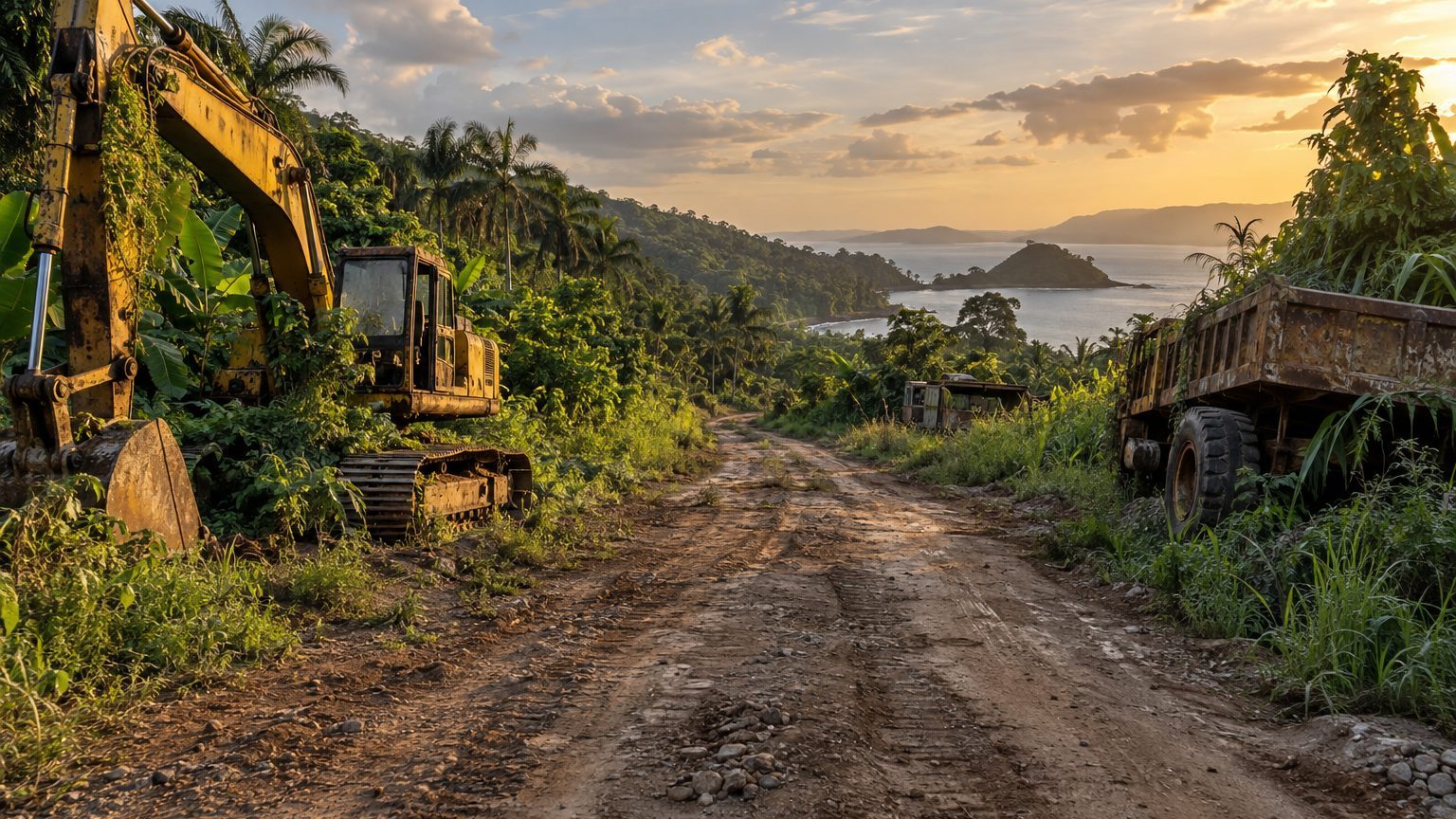
Aligned excavators, a snipped ribbon, and officials in suits posing before the cameras. In December 2014, a Central American state held a launch ceremony for a project billed as historic: the digging of an interoceanic canal that would be broader than Panama’s, capable of accepting ships that the Panamanian work could never accommodate. The speeches promised a radical transformation for the country. In reality, that day’s site activities consisted of clearing a simple access road toward the future route.
The concession had just been awarded to a foreign investor, with exploitation rights stretching over several decades. The canal would connect the two oceans by slicing through the country from one coast to the other, offering a strategic alternative for global shipping lines. For a state among the region’s poorest, the promise was straightforward: jobs, revenue from maritime traffic, a new presence on the international trade map. The government presented the project as the solution to decades of economic stagnation.
- A broader interoceanic canal is launched in 2014 with promises of major economic development.
- Funding proves impossible to raise, while environmental criticisms and local opposition grow.
- The project is gradually de facto abandoned without ever being officially declared a failure, until the concession is finally cancelled.
A promise of an economic breakthrough
The logic was simple: where Panama’s canal hit a ceiling, this new route would go wider. Modern ships too large for the enlarged Panamanian waterway could use this fresh arterial. The country would become an indispensable hub of global commerce, capturing a share of traffic between the Atlantic and the Pacific.
Authorities also pointed to ancillary infrastructure: ports, free-trade zones, regional development. The ambition extended beyond the canal itself, envisioning a full-scale national development project.
Obstacles accumulate, one by one
The first red flag was in the financing. The investor expected to fund the project struggled to marshal the necessary capital, and fundraising announcements rarely came to fruition. Months passed, deadlines slipped.
Then came environmental challenges. The proposed route crossed a large freshwater lake, a critical reservoir for water supply across a portion of the country. Scientists and environmental groups warned about risks of salinization, threats to the lake’s ecosystem, and potentially irreversible consequences for the resource. These technical criticisms fed growing opposition.
Residents affected by expropriations stepped onto the scene. Peasants and rural communities along the route refused to cede their land under the proposed terms. Protests multiplied, led by local collectives who denounced the lack of recourse in the expropriation procedures. The opposition extended beyond the canal itself, targeting the concession as a whole, perceived as lopsided.
A project that fades away without ever dying officially
A grand state project does not simply stop overnight. There is no abandonment press release, no conference to declare the failure. Silence gradually replaces the initial triumphant announcements.
The access road, unveiled with fanfare, remained incomplete. No bulldozer returned to dig the main trench across the lake. The topic faded from government priorities, mentioned less and less in official speeches, as other crises filled the political agenda.
That absence of a crisp break made sense. A public acknowledgment of failure would amount to admitting a strategic error, approving expropriations carried out in vain, accepting a defeat to a popular opposition that had argued the case from the start. So the project stayed legally alive, suspended between promise and abandonment, as years passed and not a single ship crossed even a portion of water dug for it.
The concession eventually falls
After years of stagnation, authorities finally acknowledged what everyone on the ground already knew. The concession granted to the foreign investor was annulled by a legislative reform, swiftly adopted by the country’s parliament.
The text that created the authority charged with overseeing the canal disappeared along with it. The framework agreement binding the state to the investor was simply erased from national law.
What remained was a compacted dirt road, the sole tangible remnant of a project meant to rival one of the planet’s busiest maritime corridors. The freshwater lake the route would have pierced kept flowing as before, indifferent to plans that would never be realized.
Sources: fidh.org | dailygeekshow.com
