
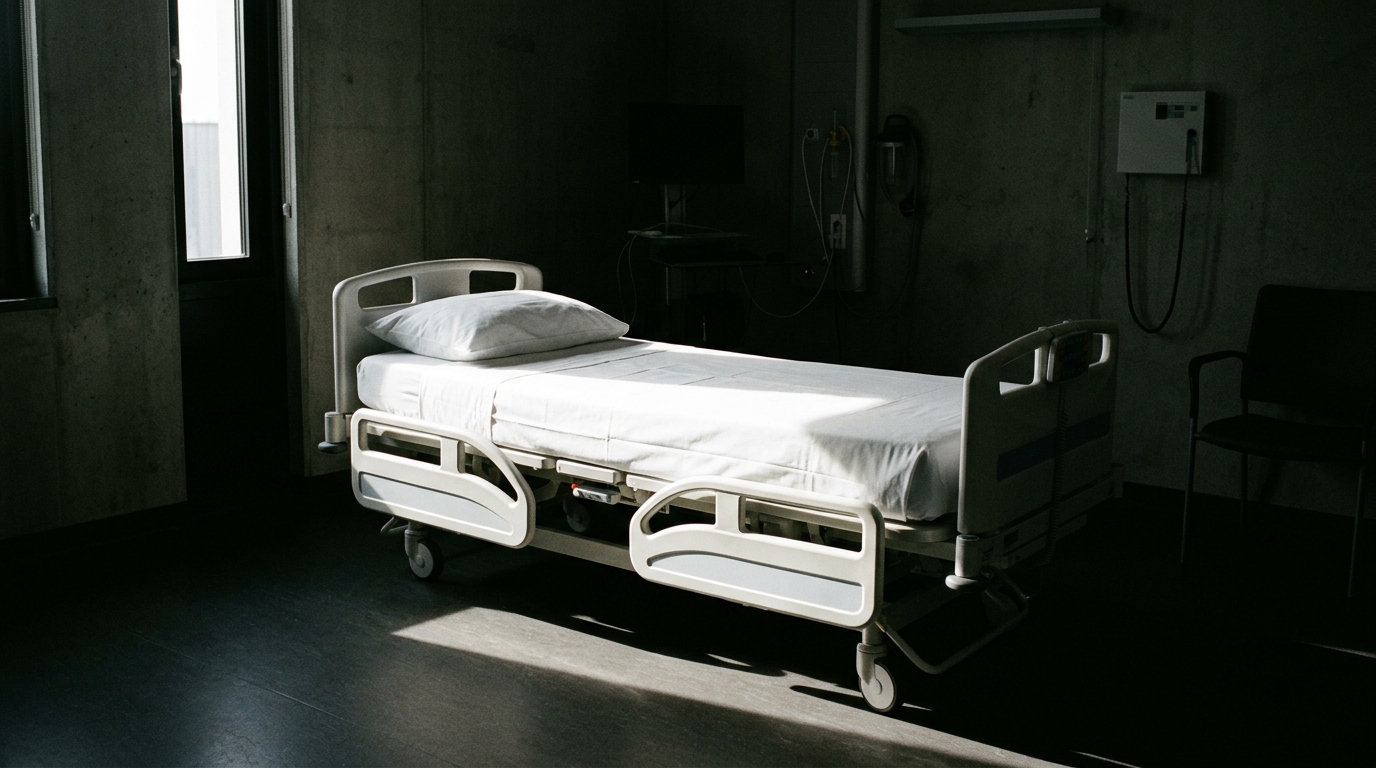
Imagine a family pushing open the door of a brand-new EHPAD, inaugurated with great fanfare only a few months earlier. The hall still carries the scent of fresh paint, the single-occupancy rooms boast modern bathrooms, everything seems ready to welcome a dependent elderly relative. Except that at reception they are told there is no room available, even though an entire wing of the building remains dark, with closed doors. This scenario, far from being anecdotal, repeats in many public establishments across France. The cause: billions of euros invested in building and renovating facilities for the elderly, without the essential follow-up, namely the staffing and skills needed to run these living spaces. A paradox that raises questions about how public money is sometimes spent, and what it reveals about the deep flaws of our system for caring for the elderly.
- €1.5 billion were invested in the construction and renovation of public EHPADs, without solving the staffing shortfall needed to operate them.
- 22,060 positions have remained vacant for more than six months in French EHPADs according to DREES, i.e., 5.3% of sector jobs.
- Out of 7,500 facilities slated for inspection, only 1,400 were actually inspected due to insufficient staff.
- When public money is no longer enough to open a door
- The real bottleneck: caregivers in short supply
- Brand-new buildings, families still waiting on the list
- What this fiasco reveals about the future of elder care in France
When public money is no longer enough to open a door
On paper, the equation seemed simple: build more places in EHPADs to meet the aging population, and the job would be done. Hundreds of millions of euros were injected into renovation and bed-creation programs, with the stated aim of modernizing a housing stock that was often dilapidated. In total, nearly €1.5 billion have been mobilized in recent years for these projects, a colossal amount that should have translated into a clear improvement in the welcome for dependent elderly people.
But the ground reality quickly dashed those hopes. Thousands of newly built beds, sometimes inaugurated with fanfare, ended up closed or simply useless because no one could be accommodated there under decent conditions. The money allowed walls to be erected, but it did not guarantee that life could be organized there in a normal way. Therein lies the problem, and one understands that the question of aging is not just a matter of concrete and subsidies.
The real bottleneck: caregivers in short supply
The Court of Audit has pinpointed the knot of the problem: a persistent lack of qualified staff, which makes any real increase in capacity illusory. According to DREES data for 2023, no fewer than 22,060 positions remain vacant for more than six months in French EHPADs, i.e., 5.3% of sector jobs. A figure already worrying, but which appears nearly modest next to a parliamentary estimate that could reach between 46,000 and 72,000 vacancies when all health and medico-social facilities are taken into account.
The staffing rate, for its part, has risen, from 59 to 63 full-time equivalents for every 100 places. But this evolution remains deemed largely insufficient by the Court in light of the growing needs linked to dependence. More worrying still, in half of the establishments inspected, there is simply no coordinating physician, or the hours worked do not allow for satisfactory medical follow-up. A third of EHPADs examined in the 2022 report had experienced, or were still experiencing, a vacancy for this central post in organizing care.
To fill the gaps, many establishments turn to short-term contractual staff, often recruited urgently for aide roles. This stopgap solution leads to chronic team instability, high absenteeism, and a heavy reliance on temporary staffing that weighs heavily on the quality of resident care. We witness a vicious circle: the lack of attractiveness of the profession fuels the shortage, which in turn degrades working conditions, making the profession even less desirable. The report by Myriam El Khomri on the attractiveness of elder-care jobs even emphasized a 25% drop in applications to nursing assistant competitions between 2012 and 2017, a warning signal that has not received a sufficiently adequate response since.
Brand-new buildings, families still waiting on the list
This is the most painful paradox for the families involved. On one side, public facilities with modern infrastructure, sometimes even oversized relative to the population they actually serve. On the other side, waiting lists lengthen, with relatives forced to wait months to obtain a place for a parent who is losing independence. According to the Court of Auditors, thousands of beds are indeed vacant due to a lack of qualified staff, explaining the stark mismatch between theoretical capacity and actual availability.
This situation shows how a building’s construction does not guarantee its proper functioning. Lacking personnel to supervise residents safely, beds must be closed or simply cannot be allocated. The government had announced the inspection of 7,500 establishments within two years to verify the quality of care, but only 1,400 of them had actually been inspected, according to a parliamentary question. The staffing shortage makes it illusory to expect to inspect the entire remaining stock, a paradox when it is precisely this shortage that lies at the root of the problem.
What this fiasco reveals about the future of elder care in France
As this rentrée unfolds, with the funding of dependence regularly returning to public debate, this episode of beds closed for lack of staff acts as a brutal reveal. Investing in walls without making a massive investment in care professions is akin to building a house without wiring or plumbing: it exists, but it remains uninhabitable. The Court of Auditors estimates between €1.3 and €1.9 billion per year as the overall cost of measures necessary to truly reinforce medical care in these establishments, a substantial but essential financial effort if we want to prevent new buildings from meeting the same fate.
This situation raises a fundamental question for the years to come: how can elder-care professions be made sufficiently attractive to attract and retain caregivers, rather than multiplying infrastructures without people to run them? Wages, working conditions, social recognition of these essential professions — all of this needs a deep rethink. Without it, the risk is to see, season after season, the same absurd scenario of new, empty buildings while thousands of French families wait for a place for a vulnerable relative.
Ultimately, this matter of closed beds in brand-new EHPADs goes far beyond a simple accounting issue. It highlights a society choice still incomplete: whether we truly want to offer dignified support to our elders, or whether we will settle for erecting reassuring facades behind which there is a stark lack of human resources. The question deserves to be posed collectively, because behind every vacant bed lies a elderly person waiting, and a family which worries.
