
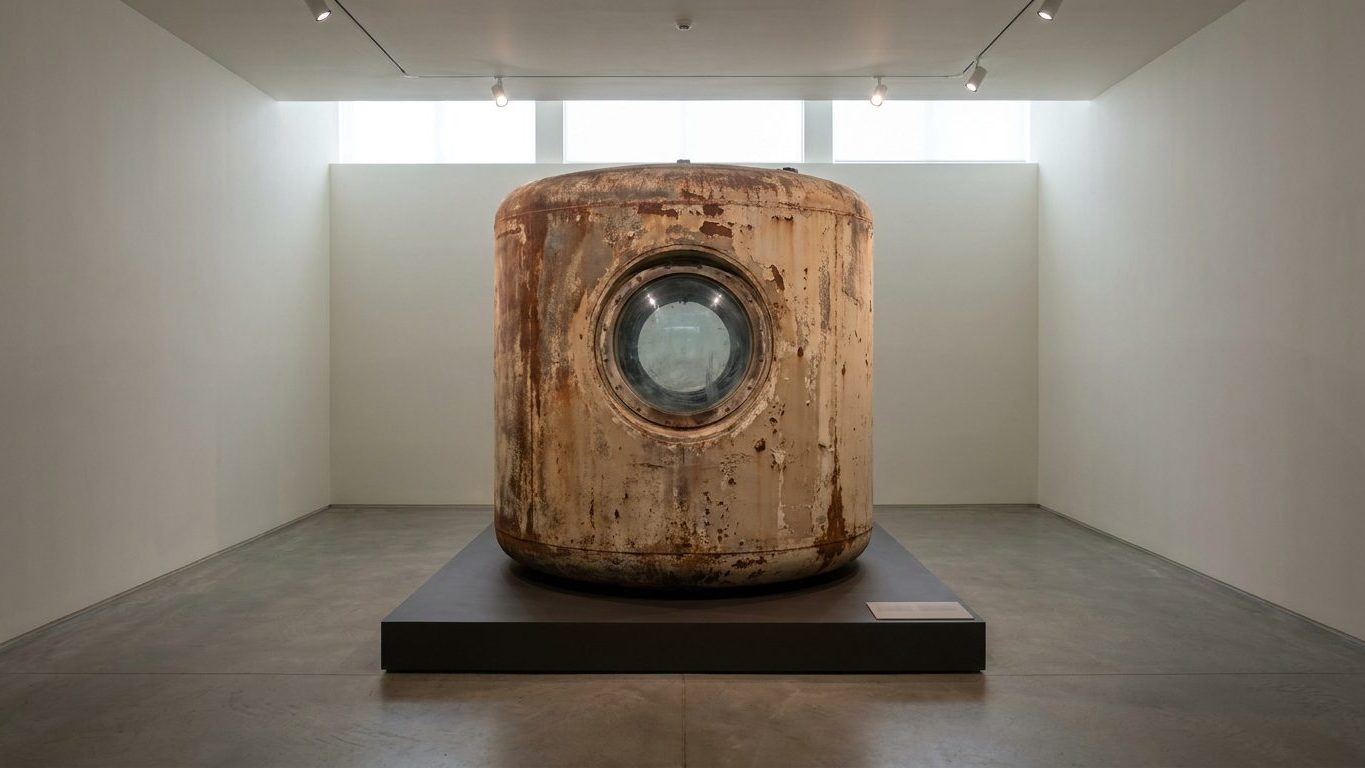
A thirteen-story tower cantilevered from two concrete cores, bristling with 140 steel capsules bearing a circular porthole: this was the Nakagin Capsule Tower, rising in the Ginza district of Tokyo since 1972. The Nakagin Capsule Tower was a mixed-use residential and office tower in Tokyo’s upscale Ginza neighborhood. Each capsule measured roughly 2.5 meters by 4 meters, about ten square meters, and came fully equipped up to a Sony color television. The idea behind its architect, Kisho Kurokawa, rested on a simple promise: each module would be detached and replaced every 25 years. That promise was never fulfilled.
- The 13-story tower houses 140 individual steel capsules of 10 m² each, designed to be replaced every 25 years according to the original plan.
- No capsule was ever detached or replaced for fifty years, due to lack of funding, leading to the progressive deterioration of the iconic building.
- The 2022 demolition allowed 23 capsules to be salvaged, including one acquired by the MoMA and another by the SFMOMA for preservation.
An Architectural Manifesto Left Unfulfilled
Completed in 1972, the structure consisted of 140 individual capsules, prefabricated off-site and bolted to two cores of concrete and steel in the Ginza district of Tokyo. The building embodied the Metabolist movement, a pioneering Japanese avant-garde current that emerged in the 1960s, whose members imagined cities and buildings capable of adapting over time. Kurokawa conceived the tower as a living organism, where the cells renew themselves without the supporting structure moving.
The Nakagin Capsule Tower was made up of two connected towers, onto which 140 prefabricated steel capsules were bolted. These capsules housed compact living spaces. Originally marketed to business travelers visiting Tokyo, they offered a bed, a fold-down desk, and, for those who wanted, optional electronic equipment. The concept was as alluring as it was puzzling: disposable architecture, literally designed to be replaced piece by piece.
The problem, however, was money. Kurokawa’s ambition was for these small residences to be swapped and replaced every 25 years, but a lack of funding meant this never happened, leading to their deterioration. No capsule was ever detached. No replacements were ever made. For fifty years, the same 140 steel boxes aged on their frame, never experiencing the renewal that would have defined the project’s uniqueness.
Demolition, the Only Chance to “Replace” the Capsules
The building ultimately faced demolition due to the deterioration of its concrete and steel structure. Work began on 12 April 2022, following the removal of asbestos and interior dismantling. The demolition started by taking out all remaining interior elements and asbestos, then the capsules were removed, and finally the concrete towers that supported them were demolished. The project anticipated completion by the end of 2022.
The twist is nearly ironic. It was demolition, not a renovation plan, that finally enabled the capsules to be detached from their framework. Between April and October 2022, 23 capsules were saved. A group of former residents devoted to the building, led by Tatsuyuki Maeda, organized their recovery and restoration before the cranes could finish their task. Of the 23 saved capsules, only 14 were carefully reassembled in their original configuration. The others, too damaged, retained only portions of their original structure.
From Ginza to MoMA’s Shelves
One of these fourteen restored capsules, A1305, found its way to New York. By acquiring capsule A1305 in 2023, the MoMA ensured the rare material survival of a building long deemed impossible to maintain. Originally located on the top floor of Tower A, it counted among the best-preserved units. Once located on the top floor of Tower A, its restoration, overseen by Kurokawa’s office, incorporated small elements recovered from other units to faithfully reflect the original design.
The exhibition “The Many Lives of the Nakagin Capsule Tower,” running from July 10, 2025 to July 12, 2026 in the MoMA’s ground-floor galleries, presented capsule A1305 alongside nearly 45 contextual items tracing the building’s evolving and unexpected uses. Original drawings, a model, interior photographs, and testimonies from former residents: the New York museum recounted how this architecture, conceived for single men in suits, transformed over the decades into artists’ studios, DJ booths, or tea rooms. For the show, the interior was staged with items once used to promote the capsule to businessmen, including an Olivetti typewriter and a Sharp calculator.
MoMA was not alone in taking an interest in the capsules’ fate. San Francisco made an even more symbolic choice. The San Francisco Museum of Modern Art acquired Capsule A1302, formerly owned by the architect Kisho Kurokawa himself, one of 23 modules saved during demolition by the project led by former resident Tatsuyuki Maeda. SFMOMA acquired this housing capsule, A1302, more than six months after the tower’s demolition.
An Architecture Now Scattered Around the World
Twenty-three capsules salvaged out of 140. The rest ended up as rubble. The survivors have dispersed far beyond the two American museums: some were exhibited on the grounds of the Museum of Modern Art in Saitama, a building also designed by Kurokawa. Others found refuge in hotel or office lobbies, or now serve as unusual residences in Japan and abroad.
On the Ginza site that once housed the tower, a very different future is now taking shape. Accor has revealed it will open the Pullman Tokyo Ginza hotel on the site of the former iconic Japanese building, planned for late 2027. Where the steel capsules were stacked to renew endlessly, an international hotel chain will build a double-height glass-walled lobby. The paradox did not escape anyone: the building had to be demolished for its fragments to become permanent, hung on the walls of the world’s great museums.
Sources: japantimes.co.jp | architecturalrecord.com
