
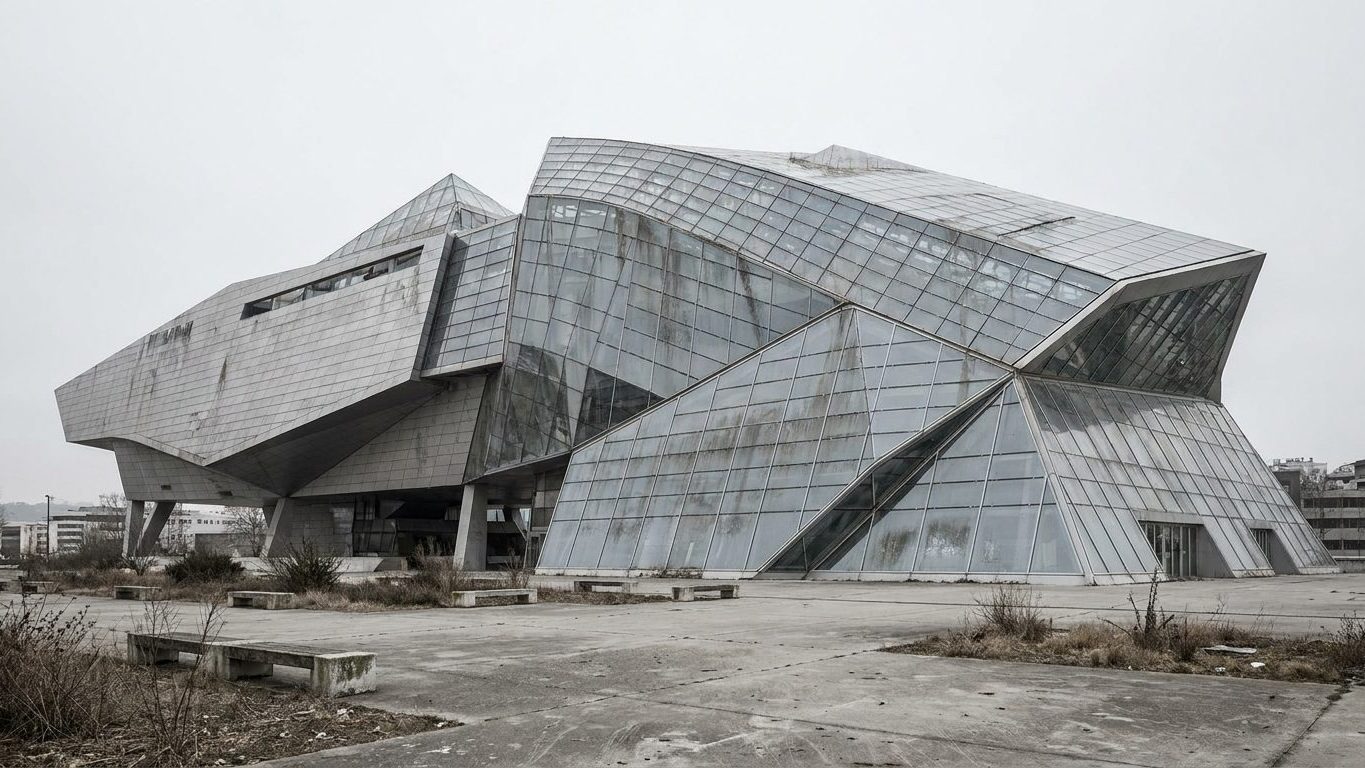
A project approved in July 2000 with a budget set at 61 million euros and a planned opening in 2004. Fourteen years later, the Musée des Confluences finally opened its doors on December 20, 2014, at a final cost of 330 million euros — five and a half times the initial estimate and ten years behind schedule.
Neither the site nor the finances blocked the project.
The project was born in the late 1990s, led by Michel Mercier, who had presided the General Council for ten years and was a candidate in Lyon’s municipal elections of 2001. The aim was to transfer the collections of the Lyon Natural History Museum and the Guimet Museum to a new building, a symbol at the southern tip of the Presqu’île. The initial estimates were in francs: 400 million francs, or 61 million euros. The opening was scheduled for 2004, a delay that, at the time, no one considered unrealistic.
- The Musée des Confluences opened ten years after the planned date, with an overrun of 269 million euros
- The Bec company abandoned the site in 2008 due to a disagreement with the architect and an underestimation of the structure’s weight
- The museum now welcomes about 630,000 visitors a year and houses more than three million objects
The real obstacle: a rift between the architect and the contractor
On November 23, 2005, a company was finally chosen to build the project: a contract was signed with Bec, part of the Fayat group. Construction began only a year later, in the autumn of 2006, and lasted only a few months.
The Bec company permanently abandoned the project in 2008.
The project was halted first between April and September 2007, then again in July 2008, a final stoppage as Bec gave up on building the museum. The cause had nothing to do with the site or the budget: between the architect and the builder, there was a breakdown in communication, the architect being accused of withholding information. Another architectural firm was even appointed as an intermediary to draw certain plans, a sign that dialogue between the two parties had broken down. Added to this was an initially underappreciated technical complexity: the total weight of the structure, nicknamed the “Crystal Cloud,” had been underestimated, forcing the foundations to be strengthened to a depth of 31 meters instead of 19.
Vinci takes over a project that had stalled
The construction of the Musée des Confluences was finally handed to Vinci in January 2010. The specialized SMB and Renaudat Centre Constructions firms carried out the revised studies and the assembly of the metal framework, and the work resumed in April 2010. The new contractor inherited a heavy technical dossier, four years after the work had stopped. The General Council, for its part, sought to shift part of the cost onto the new consortium: a delay penalty of 41.3 million euros was claimed from Vinci, a sum promptly challenged by the company, which pointed to studies provided by the project management chosen by the department as being insufficiently precise.
The museum finally opened on December 20, 2014.
In the meantime, official cost estimates continued to rise. The museum’s price tag, initially put at 61 million euros in July 2000, was revised by the Rhône General Council to 175.1 million euros in 2009, then to 267 million euros in 2012. The final amount, once all items were included, reached 330 million euros. By comparison, other large French cultural facilities from the same era, such as the Musée du Quai Branly or the MuCEM in Marseille, remained noticeably cheaper.
A museum that eventually found its audience
Fourteen years after the initial vote, the institution even changed ownership at the moment of its opening. Built by the Rhône General Council, the building became the property of the Metropolis of Lyon in 2015 with the creation of that authority. The Cour des comptes, which conducted a thematic audit on museum management, offered a nuanced assessment of the file. It noted that the museum houses more than three million objects and has welcomed since its reopening more than six million visitors, or about 630,000 per year, making it the largest museum in France located outside the capital region.
The financial body also notes that in 2022 the institution employed 91 full-time equivalent staff and had a operating budget of 19.9 million euros. The longest and most expensive construction project in the Lyon area ultimately found its audience, but the bill remains recorded in the accounts of both the department and the metropolis.
Sources: ccomptes.fr | keops-ingenierie.fr | patrimoine-environnement.fr
