
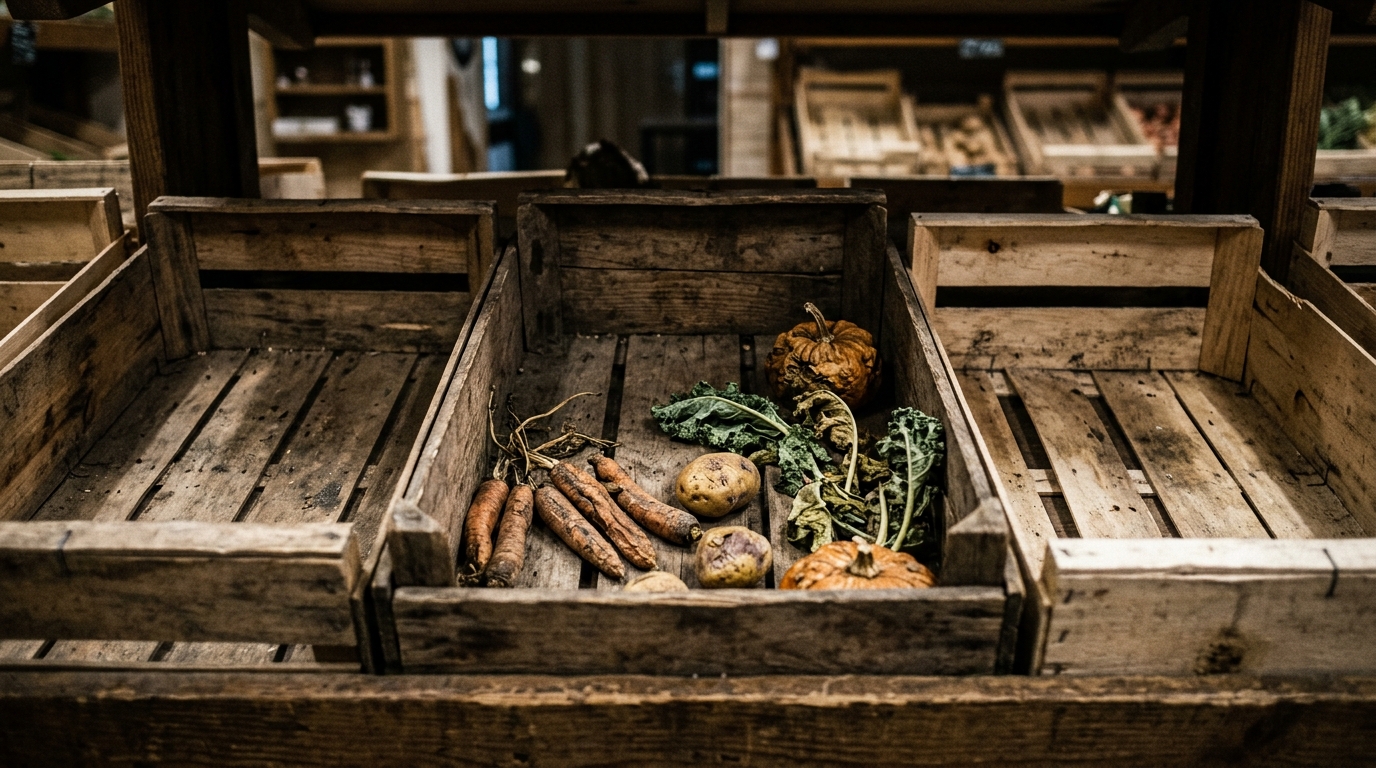
We have long believed that drought was a matter of cracked fields and immobile tractors, a distant problem that mainly concerned farmers and parched rivers. Yet what we lived through this year goes far beyond the scope of the fields. Behind the impressive figures from Météo-France and the mounting prefectural orders throughout the summer lies a reality far more concrete for each of us: the one that unfolds directly on our plates and on our shopping receipts. Because if the climate struck hard in the countryside, the bill will indeed land in the supermarket aisles.
- The spring and summer of 2026 were the hottest ever recorded in France, with precipitation deficits reaching 30% and 40% respectively, placing 101 departments in drought, including 62 in crisis.
- Some farms, notably in Finistère, posted yield losses exceeding 50%, an imbalance between supply and demand that will feed into prices for fruits, vegetables, and dairy products starting in the autumn.
- The government launched the CASI plan, backed by about one billion euros, while the Direction générale du Trésor expects a 0.1 point dip in growth and nearly an 8% drop in agricultural added value in 2026.
- This summer, French fields recorded an unprecedented shock
- Why your shopping cart will translate drought into real euros
- The French agricultural model buckles under the repetition of extremes
- Between forced adaptation and rising prices, what to expect this autumn
This summer, French fields recorded an unprecedented shock
Spring 2026 will go down in the annals as the hottest ever recorded in France, with a precipitation deficit reaching 30 percent. This early drought was followed by a series of heatwaves that rolled in from late May, then in June and July, leaving the soils with no respite to recharge their water. The summer that followed only worsened the situation, becoming the hottest on record since 1900, with a rainfall deficit hovering around 40 percent.
At the beginning of September, all metropolitan departments were under water-use restrictions. Among them, 75 departments were in a crisis situation and 17 departments in heightened alert. Gathered at the request of the Minister of Agriculture Annie Genevard at the end of August, the prefects delivered a blunt assessment: 101 departments in drought, of which 62 in crisis, and 95 departments under water restrictions. A national picture that translates into a reality rarely observed on such a scale.
Why your shopping cart will translate drought into real euros
This is where the thread tightens between the field and the shelf. In several regions of the country, yield losses exceed 50 percent, according to data reported by the prefects. Concretely, this means some farms produced half of what they normally would, while demand has not decreased by a single iota. A mechanical mismatch between supply and demand that almost always translates, sooner or later, into higher price tags.
In Finistère, agricultural unions FDSEA and Jeunes Agriculteurs reported in early September production losses reaching 50 percent among certain vegetable producers, with livestock also suffering greatly from a lack of forage. This is no longer an abstract hypothesis: it is the story of professionals watching their stocks melt away just as they should be preparing autumn harvests. And what the fields produce less of are vegetables, fruits, and dairy products that will be missing from shelves in the coming weeks.
The French agricultural model buckles under the repetition of extremes
What worries industry experts most is not the intensity of this episode but its repetition. By August 31, pasture growth already showed a deficit of 37 percent according to Agreste, a figure that directly affects livestock feed and, by extension, milk and meat production. Even more concerning, the consequences of this drought could extend beyond autumn: they could stretch into 2027 for canola, orchards, and even forests, whose growth cycles are much slower than those of annual crops.
The Direction générale du Trésor has estimated that these heatwaves and this drought could shave around 0.1 point off French growth in 2026, with an nearly 8 percent drop in agricultural value added. A figure that may sound technical, but it encapsulates the scale of the economic shock endured by an entire sector already weakened by years of successive crises.
Between forced adaptation and rising prices, what to expect this autumn
In response to this situation, the government announced in early September a plan named CASI, for Canicule (Heatwave), Adaptation, Sécheresse (Drought) and Incendies (Fires), mobilizing around one billion euros. This budget is distributed notably as 520 million euros for the National Solidarity Indemnification and 300 million euros in tax relief to support the most affected farmers. A substantial financial effort, but it will not make pastures regrow faster, nor fill the silos that remain hopelessly empty.
The drought persists into the September return to school, with no durable rainfall expected before October, except along the Mediterranean littoral. Pastures, canola and orchards remain fragile, and it is precisely this lag, between the agricultural crisis and its arrival in our stores, that explains why the summer shock has not yet fully manifested. Stocks are running down, but the autumn restocking will bear the direct imprint of those months of heat.
What the summaries published in recent weeks reveal, in a more subtle way, is that the climate question is no longer a distant concern reserved for experts or farmers themselves. It now intrudes into daily life, the weekly grocery trip, with price increases likely across several lines of fresh produce in the months to come.
It remains to be seen whether this episode will mark a lasting turning point in our consumption habits, or whether it will be just another memory in a growing list. One thing seems clear, however: the weather of our fields and the contents of our shopping basket are now inextricably linked.
