
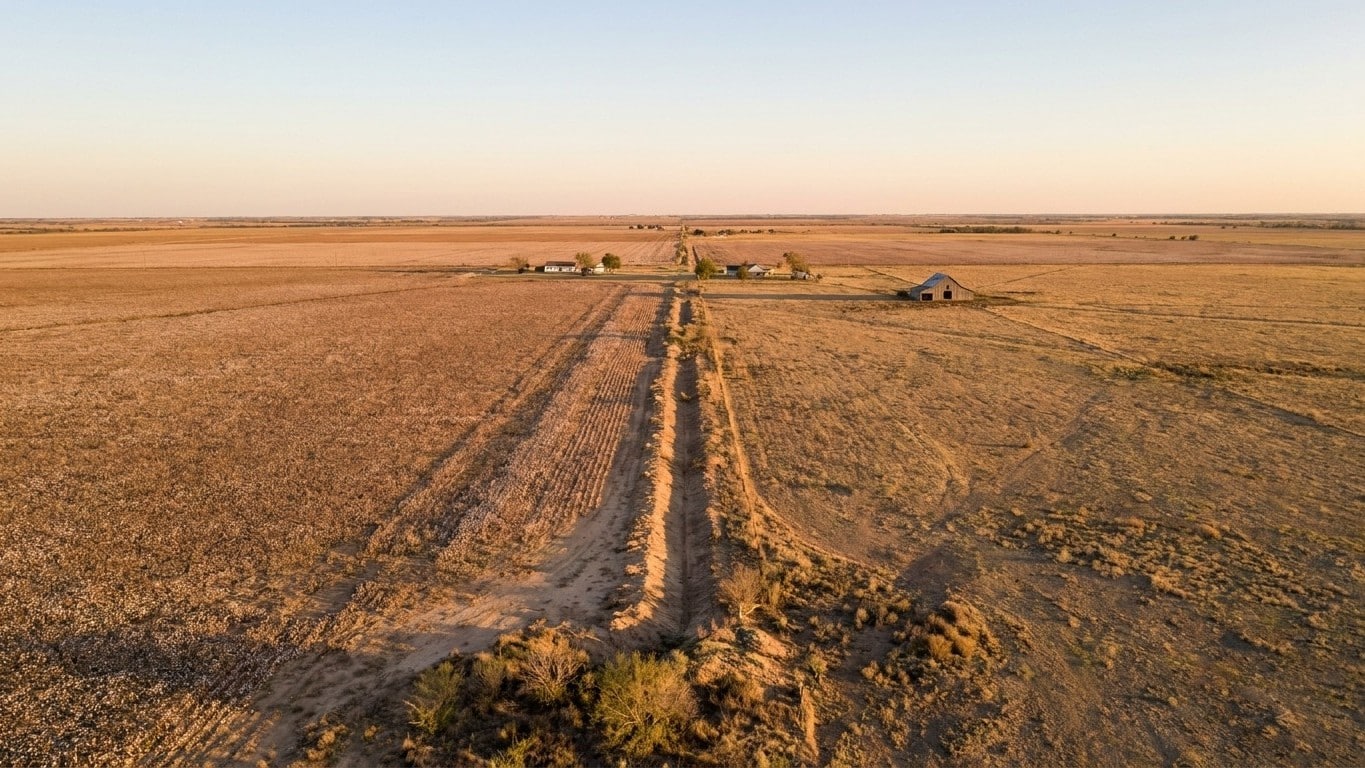
An hour south of Dallas, beneath Ellis County’s cotton fields and pastures, lies a 22.5-kilometer tunnel that no one has ever traversed in a particle-physics dream. After 22.5 kilometers of drilling and roughly $2 billion spent, the project was halted by the United States Congress in 1993. This enormous hole, dug to become the world’s largest particle accelerator, remains today one of the most expensive scientific undertakings ever abandoned in the United States.
Key takeaways
- A giant 22.5 km tunnel really exists beneath Texas’ cotton fields, but what was it truly meant to do?
- $2 billion invested in a project never completed: how could this happen in the United States?
- This cancellation quietly altered the fate of global physics — to whose benefit?
An Accelerator Designed to Crush All Competition
The Superconducting Super Collider, or SSC, was not just another project. Its planned 87.1-kilometer circuit, with an energy of 20 TeV per proton, would have made it the largest and most energetic particle accelerator in the world. To give scale: it would have been more than three times the circumference of CERN’s Large Hadron Collider (LHC), which is currently in operation near Geneva.
The Waxahachie site in Texas had been selected after a fierce competition among U.S. states. When the project was finally approved in 1987 by Ronald Reagan after several years in the design stage, 43 states submitted bids to host it. Texas triumphed, and in November 1988, the Department of Energy declared Ellis County, Texas, near Waxahachie, the winner. On paper, the operation was meant to transform this rural region into the world capital of high-energy physics. Proponents of the project promised federal funding, international prestige, and jobs, starting with 4,500 construction jobs, followed by 2,500 full-time research positions.
The locals believed it with unwavering conviction. A local engineer interviewed years later summarized what the SSC meant for the region in one word: “a savior.” Nothing less.
The Cost Overrun: Chronicle of an Announced Fall
Yet the story began with a seductive figure. The SSC, if built, would have cost between $4.4 billion and $11.8 billion, making it one of the largest public works ever undertaken in the United States. But the initial estimate crumbled year after year. The Department of Energy’s cost estimate to build the SSC rose from $5.3 billion in 1987 to $8.25 billion in 1991. And that was only one step among many.
In 1993, a GAO report decisively concluded that the known cost escalations suggested the SSC’s total cost would exceed $11 billion, and to prevent further increases, annual funding would need to rise sharply. Some estimates even suggested a higher ceiling. By fall 1993, the projected cost had climbed to at least $11 billion, the equivalent of about $18 billion in today’s dollars, partly because administrative costs proved heavier than anticipated. The tunnel, in fact, accounted for only a fraction of the total bill. Excavating tunnels and constructing buildings represented roughly 20% of the total expenditure; the most expensive item remained the development of superconducting magnets, still under development at the time of cancellation.
Congress sought to cut funding on two occasions before ultimately caving. In June 1992 and again in June 1993, the House voted to cancel funds for the SSC; both times the Senate restored the financing. The third attempt, in the autumn of 1993, left no leniency. In October 1993, the United States Congress canceled the Superconducting Super Collider; the government had already spent $2 billion on what was then the largest basic science project ever attempted. President Bill Clinton would sign the law ending the project, albeit with official regrets.
A Giant Hole, a Victory for Europe
What stands out in hindsight is the contrast between Texas ambition and European strategy. CERN never aimed to dig a brand-new tunnel for its own large collider. By reusing an existing 27-kilometer tunnel, the builders of the LHC could devote their resources to high-field superconducting magnets, something that had derailed the SSC’s budget. The result? CERN achieved the Higgs boson in 2012, whereas Texas, according to some physicists, could have done so a decade earlier with much higher collision energy.
The shift of global leadership in particle physics did not occur smoothly. American dominance in the field had been eroding for more than a decade, but the SSC cancellation delivered the fatal blow that left Europe unchallenged at the helm, paving the way for the Higgs boson discovery at CERN.
On the ground, the site has undergone several lives since 1993. Today, the SSC buildings are occupied by Waxahachie-based chemical company Magnablend; the access shafts have been filled, and the remnants of the tunnel now collect rainwater. A 2000s attempt to repurpose the site as a data center even emerged: in 2006, Arkansas magnate Johnnie Bryan Hunt bought the complex for just $6.5 million, hoping to transform it into one of the country’s largest secure data storage facilities, leveraging an independent power network capable of delivering 10 megawatts, expandable to 100 if needed. The conversion project, too, never truly took off at scale: the site remains largely abandoned today, a subterranean relic of an ambition that might have altered the course of modern physics.
Sources: answermind.blog | blogs.library.unt.edu
