
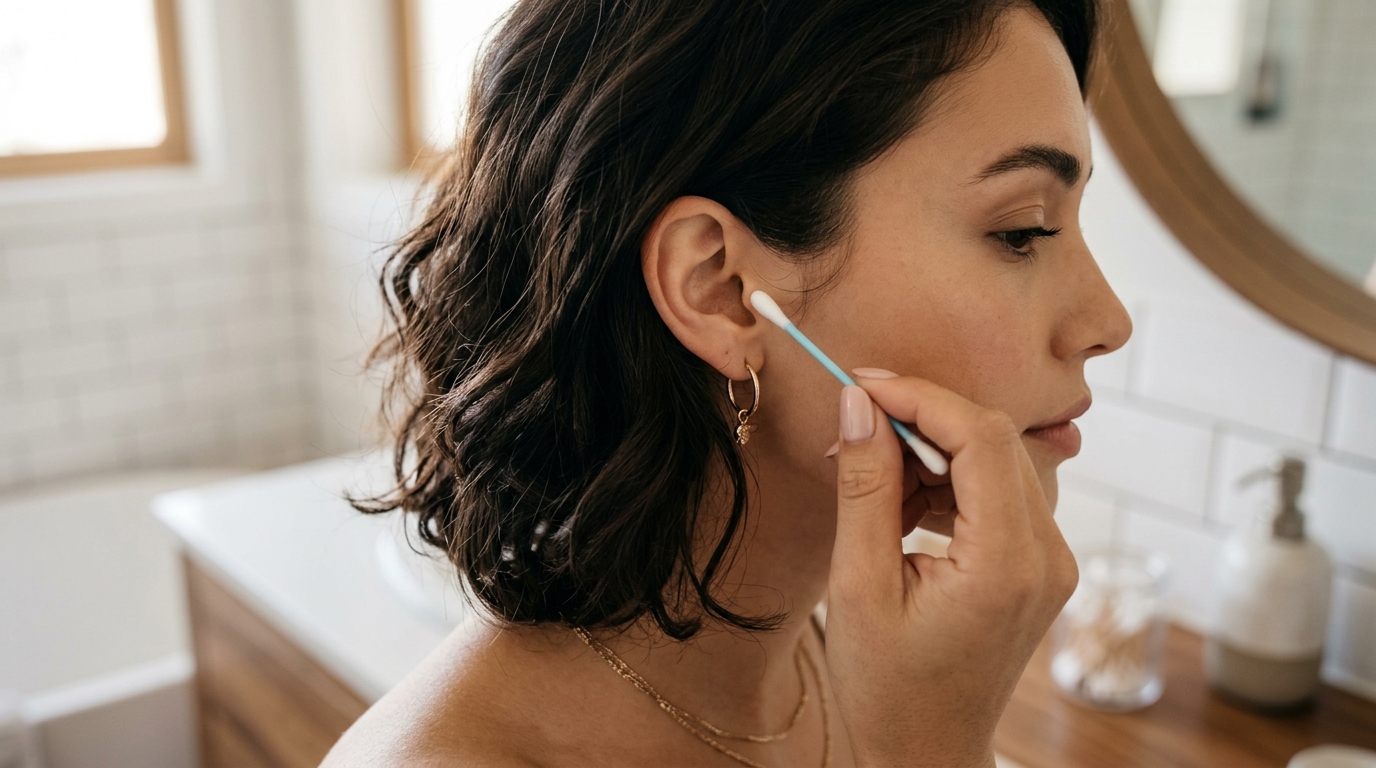
After a shower, the habit returns almost automatically: you grab a cotton swab, gently insert it into the ear canal, and twist slightly to remove the excess moisture and wax. A banal ritual, inherited from our parents, that millions of people in France repeat each week without questioning it. Yet this habit, so deeply rooted in our bathrooms, has repeatedly been the subject of warnings from ENT specialists. Because behind this seemingly harmless little stick lies a gesture that, far from cleaning the ear, might actually damage it. So, what really happens when we use a cotton swab, and above all, what safe replacement should we use?
The cotton swab, this false friend that pushes earwax back instead of removing it
Contrary to common belief, the cotton swab does not clean the ear: it moves the wax. As it is pushed deeper into the ear canal, it acts like a piston that pushes cerumen further inside rather than drawing it outward. This mechanism, repeated day after day, ends up compacting the wax into a solid mass. This repeated gesture can cause a blockage in contact with the eardrum, leading to a sensation of fullness in the ear, a temporary reduction in hearing, and sometimes dull aches. Yet earwax is not dirt to be eliminated at all costs. It plays an essential protective role: it traps dust, slows the proliferation of bacteria, and helps keep the ear canal well-hydrated. Trying to eradicate it systematically thus deprives the ear of its natural defense, a paradox few people suspect when performing this daily act.
The hidden risks behind a daily gesture
Beyond the mere wax plug, the repeated use of the cotton swab exposes the ear to much more serious risks. Micro-injuries of the ear canal are common, often invisible to the naked eye, yet enough to trigger painful inflammations or persistent itching. The gesture becomes especially dangerous during abrupt movements, for example if someone accidentally bumps into the person cleaning their ears, or if a child handles this kind of tool. In the most serious cases, tympanic perforation can occur, causing sharp pain, bleeding, and sometimes temporary hearing loss. ENT emergency services regularly encounter this type of incident, particularly among young children whose ear canal is shorter and more fragile. This risk, often underestimated, largely explains why health professionals strictly discourage the internal use of cotton swabs, reserving them at most for cleaning the outer ear.
The alternatives endorsed by health professionals
Facing these findings, ENTs recommend much gentler gestures, or even no intervention at all in the majority of cases. The ear has a natural self-cleaning system: cerumen gradually migrates outward, carrying along impurities, a process aided by jaw movements during chewing or talking. For additional maintenance, a simple rinse with warm water during the shower, letting the water run gently over the outer ear without forcing it inside, is more than enough. Ear sprays based on seawater or saline solutions, available at pharmacies, can also help soften excess wax without risking compaction. It is also advised to carefully dry the outer ear with a towel after showering or swimming, never inserting objects into the canal. However, certain signs should alert and justify a prompt consultation: a persistent feeling of a blocked ear, pain, dizziness, or a notable drop in hearing. In these cases, only a healthcare professional can perform a safe cleaning using specific instruments.
Adopting these new habits helps preserve long-term ear health while avoiding the sometimes painful complications linked to a gesture long considered banal for generations. This back-to-school season might be the perfect opportunity to review your bathroom kit and permanently abandon the cotton swab reflex. And perhaps taking care of your ears starts simply by letting them do their job, without unnecessary intervention?
