
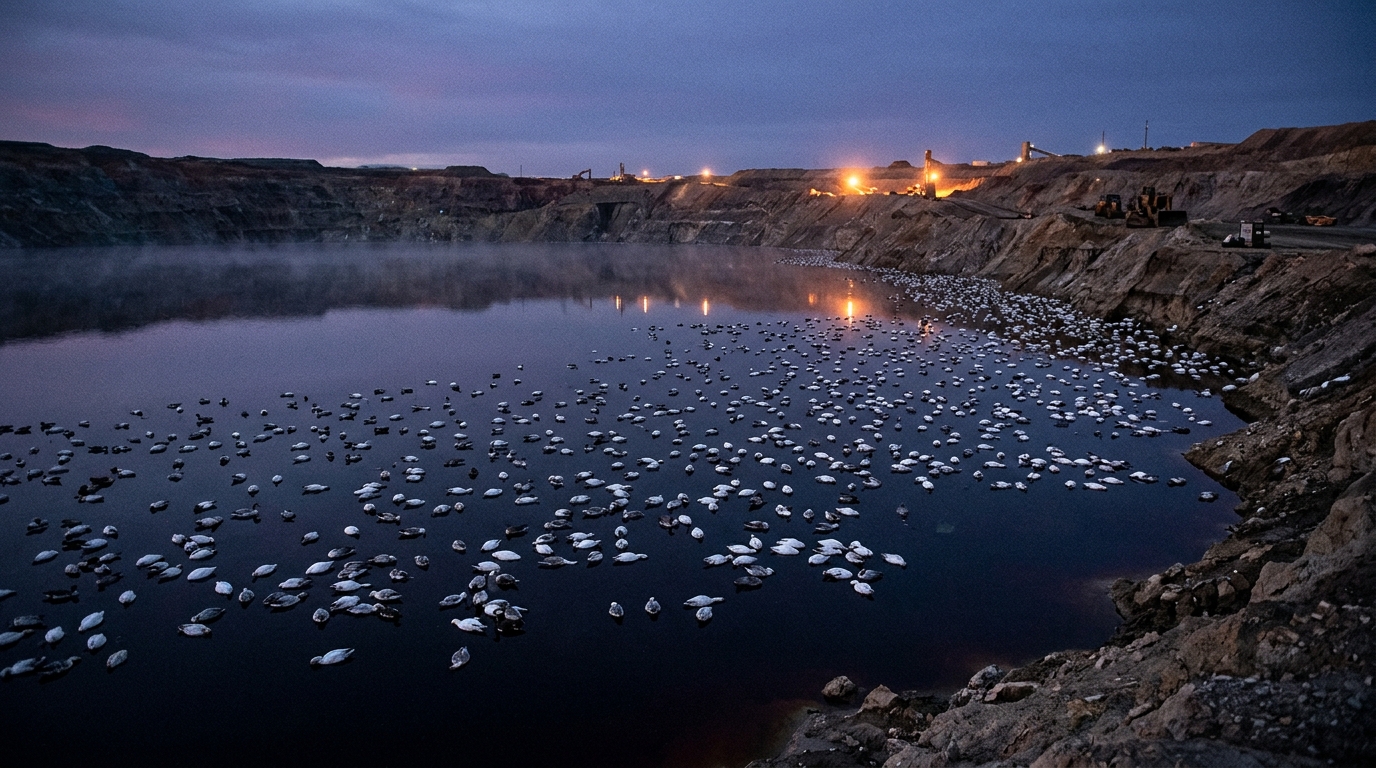
Imagine the scene from the viewpoint of a snow goose worn out after hours of flight through a freezing storm. Below, a vast expanse of dark water glitters faintly under the moon, offering the perfect illusion of a welcoming refuge. Nothing in that darkness hints that this body of water is in fact one of the most toxic traps nature has ever recycled from human activity. In a single night, several thousand birds settled on this artificial lake in Montana, convinced they had found a lifesaving shelter. Many never left again. The water they chose to rest on displayed acidity comparable to that of a car battery, saturated with arsenic, cadmium and copper. This lake is nothing natural: it is Berkeley Pit, an old open-pit mine abandoned since 1982, which has never ceased to fill and never ceased to kill.
The hole that swallows the sky for forty years
In Butte, a small industrial town in Montana, the subsurface has long been the region’s main source of wealth. For decades, copper extraction shaped the landscape until a vast open-crater was left behind, mined relentlessly before finally closing in 1982. Since that date, no pump has emptied the site: surrounding groundwater continues to infiltrate, gradually turning the former mine into an artificial lake about 900 feet deep, roughly 275 meters. Seen from above, this stretch of water looks like any other landing site for migrating birds crossing the region each year. That is precisely what makes it such a formidable trap: at first glance, nothing distinguishes this mine crater from an ordinary lake.
A chemical cocktail more corrosive than a lemon
The Berkeley Pit site is officially classified as a Superfund site, a category reserved for the most contaminated areas in the United States, requiring strict environmental monitoring. Its water has an extremely low pH, far below that of a lemon, and is loaded with heavy metals such as cadmium, arsenic and cobalt. This acidity isn’t merely a statistic: it is so intense that it can dissolve the steel propeller of a motor boat, according to on-site observations. For a human, swimming there would be madness. For a bird drinking this water after a grueling flight in search of hydration, the consequences are much faster and far more violent: necropsies performed on dead geese revealed esophagi scorched and wounds directly caused by ingesting this caustic liquid.
Why do birds keep returning despite the danger
The tragedy of thousands of geese dying in a single night is, unfortunately, not an isolated event. As early as 1995, the carcasses of 342 snow geese were found on the site. The most notable episode remains the end of 2016: a blizzard forced tens of thousands of birds to alight there in an emergency, with the final toll estimated between three and four thousand geese. An official report from the U.S. Fish and Wildlife Service, published the following year, confirmed that these deaths were directly linked to ingestion of the acidic water laden with metals. The problem is that this lake remains, for migratory birds, a water surface visible from the sky, particularly attractive during storms or adverse weather, when landing quickly becomes a matter of immediate survival, well before the hidden danger the water itself represents.
In response to this recurring risk, the site operators have strengthened their deterrence measures. Since 1996 there have been sound devices to deter wildlife, but after the 2016 incident a new plan was put in place, including Phoenix Wailers, specific sound machines, and propane cannons mimicking gunshots, placed all around the pit. These measures had proven effective between 2010 and 2014, a period during which only 14 bird deaths were recorded among nearly 18,000 birds observed on the site, according to data from the United States Environmental Protection Agency.
What Butte reveals about the American industrial heritage
As summer winds down and the great autumn migrations are already being planned in the northern skies, Berkeley Pit continues to pose a silent threat to thousands of passing birds. This toxic lake illustrates how long the traces left by mining can endure long after a site closes, turning a productive landscape into a lasting trap for wildlife. The scientists who regularly study water chemistry remind us that a bird drinking this liquid typically has very little time before internal damage becomes fatal. Butte is not only an old mining town: it is also a symbol, among others in the United States, of what intensive exploitation of natural resources can cost decades later without an appropriate ecological restoration strategy.
What is most striking in this story is the contrast between the apparent banality of a lake seen from above and the chemical violence concealed beneath its surface. Berkeley Pit will likely continue, season after season, to attract new migratory birds, despite the deterrence measures in place. The question now extends far beyond Montana: how many similar industrial legacies, scattered around the world, pose invisible dangers to wildlife today due to insufficient rehabilitation after their exploitation ends?
