
0.7171% instead of 0.7202%. The difference hinges on three decimals, almost invisible to the naked eye. And yet, this anomaly detected in June 1972 in a uranium sample from Gabon put French physicists on high alert, before revealing one of the most extraordinary natural phenomena ever documented on Earth: a nuclear reactor that lit up by itself about two billion years ago.
It all begins at Pierrelatte, in the Drôme, where the Atomic Energy Commission enriches the uranium intended for France’s nuclear deterrent. A routine measurement, by mass spectrometry, of the isotopic content of a sample of natural uranium hexafluoride at the plant’s head presented a small anomaly: only 0.7171% of 235U instead of the magical 0.7202%. Across the planet, in terrestrial rocks, on the Moon, even in meteorites, this proportion of uranium-235 is expected to be a universal constant. In other words, a deviation, even minute, could not be ignored.
Although the difference was slight, it was so odd that the CEA, which operated the plant, launched a thorough, but highly secret, investigation.
To remember
- A three-decimal difference on a routine measurement hides a nuclear mystery that immediately intrigues French physicists
- All rational hypotheses — measurement error, industrial contamination, theft — are eliminated one by one by investigators
- The rock itself becomes the culprit: a spontaneous chain reaction, triggered by the chemistry of deep time, two billion years ago
An investigation that eliminates all logical explanations
The first hypothesis, the most reassuring one: a measurement error. It quickly proved unfounded. The anomaly was not an artefact; it reappeared across several other samples. The industrial track then loomed: could an internal plant incident have contaminated the stock with depleted uranium, accidentally recycled? It wasn’t either an error inside the plant that would have caused an accidental depletion recycle. The investigators pushed further, ruling out the possibility of accidental contamination and the use of reprocessed uranium, which would have left traces of uranium-236 in the samples.
There was thus only one thing left to do: trace the entire chain from the enrichment site back to the mine itself. The investigators traced the anomaly through every stage of the uranium processing, from Pierrelatte to Malvesi then Gueugnon, where the concentrates showed the same low concentrations of 235U. The thread led straight to Africa. Those concentrates all came from COMUF, which operated two uranium mines in Gabon, at Mounana and Oklo, and it soon became evident that all the anomalous ore originated from the northern part of the very rich Oklo deposit. And the anomaly was not incidental: in some shipments, the level of 235U was as low as 0.44%. Drilling directly on the site even revealed samples with an even more dramatic drop, with contents down to 0.29% according to later analyses of ore from the Oklo mines.
The culprit: a chain reaction two billion years old
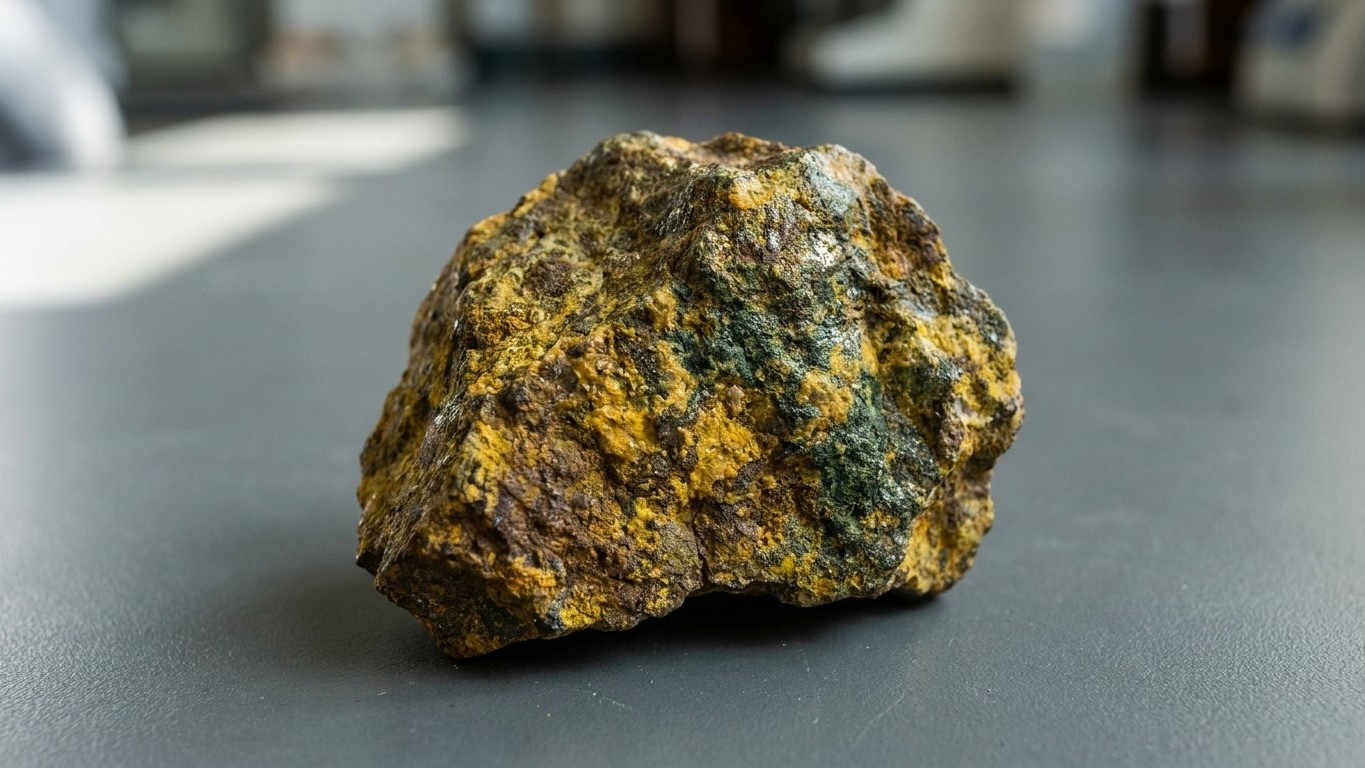
Once all avenues of fraud, error, or contamination were ruled out, there remained only one explanation, as unlikely as it might seem at first glance. There was only one possible explanation: the rock bore evidence of natural nuclear fission that had occurred more than two billion years ago. According to Ludovic Ferrière, curator at the Natural History Museum in Vienna, after further studies, including on-site examinations, researchers discovered that the uranium ore had started to fission on its own. A portion of the missing uranium-235 had not vanished by accident: it had literally burned, consumed by a spontaneous chain reaction, just as in the core of a man-made reactor.
How could a simple rock have transformed into a natural nuclear power plant? The answer lies in the chemistry of deep time. Nuclear scientists know well that reactors do not operate on natural uranium today because the U-235 content is too low, at only 0.7202%, whereas enrichment to about 3.5% is needed to start a reaction. But uranium-235 decays faster than uranium-238. About 1.8 to 2 billion years ago, its natural proportion in any terrestrial deposit approached roughly 3.7%, a level close to what is used today in civil reactors. At Oklo, a sufficient concentration of ore and the presence of water, acting as a neutron moderator to slow neutrons, were enough for the chain reaction to start spontaneously, without human intervention, two billion years before Enrico Fermi and his first artificial reactor.
A reactor that shut down and restarted on its own
The phenomenon did not run continuously. Recent research on the isotopes preserved in the Oklo minerals has allowed researchers to reconstruct a precise operating rhythm. The isotopes preserved in the Oklo minerals record a reactor that functioned in a repeating cycle: about 30 minutes of activity, followed by roughly two and a half hours of dormancy. The mechanism is almost poetic: the deposit heated up, boiled much of its own moderator, and shut down on its own; then, as the rock cooled, groundwater returned and the reaction restarted. A natural cycle of self-regulation that could have repeated for hundreds of thousands of years.
The Oklo site was by no means an isolated case. Sixteen natural reactors have been discovered in the Oklo region, spread across three distinct ore deposits—right at Oklo itself, at Okelobondo, and at Bangombe—all within a 20-kilometer radius. Of these, two zones were studied in depth through mass spectrometry analyses of drill samples, revealing that zone RZ2 saw 1,800 kg of 235U fissioned in 850,000 years, while zone RZ10 fissioned 650 kg in 160,000 years.
A mine turned into a laboratory for fundamental physics
Since its discovery, Oklo has never ceased to serve research. The fission products trapped in the rock for two billion years offer a unique snapshot of how particles behave in a stable, well-dated geological environment. Physicists use it, in particular, to check whether the fundamental constants of the universe, such as the fine-structure constant, may have varied over time by comparing the isotopic ratios of samarium produced by fission with those observed today. It is also a benchmark site for understanding how radioactive waste might behave and migrate, or not, within a clay layer over geological timescales—a matter directly linked to current debates about deep geological storage of nuclear waste. A single spectrometry anomaly, detected on a June morning in 1972 at a French plant, was thus enough to open a window onto nuclear physics at the dawn of the Earth.
Sources: osti.gov | encyclopedie-energie.org | sauvonsleclimat.org
