
It was three o’clock in the morning when phones buzzed across the peninsula. A terse FR-Alert message: evacuate, immediately, by road or by sea. The prefecture activated FR-Alert at 3 a.m. this Friday to order the evacuation of all villages on the Cap Ferret peninsula, following the evacuation already carried out in the town of Lège in the evening. In a matter of hours, this renowned corner of Gironde, normally associated with peaceful holidays amid pine forests and the basin, transformed into an area to be evacuated urgently, ringed by flames on one side and water on the other.
The fire, however, does not relent. The blaze, which broke out on Wednesday to the north of the Arcachon Basin, has consumed more than 8,700 hectares, nearly double the area recorded the previous evening. This area nearly doubled during the night from Thursday to Friday, a pace of spread that eventually convinced authorities that they needed to go beyond the targeted evacuations of the days before. According to the prefecture, the fire crossed around 1 a.m. the defensive line established by firefighters in an attempt to slow its advance. The last barrier intended to protect Lège-Cap-Ferret gave way in the middle of the night, forcing the hand of the state services.
À retenir
- A prefecture orders the evacuation of an entire peninsula in the middle of the night: what forced this decision?
- The fire nearly doubled in size in a single night: how did the authorities lose control?
- When roads are no longer enough, what options remain for residents to flee?
An evacuation in three phases, village by village
Ordering people to leave a peninsula stretching several kilometers is no minor gesture. Facing the advancing fire, the prefecture ordered the gradual evacuation of the entire Arcachon Basin peninsula, village by village, from Claouey to the Cap-Ferret tip. On the ground, the operation unfolded in several successive waves. The evacuation of the town of Lège began a little before midnight, with the availability of two buses, and residents of the Les Tchanqués nursing home were also evacuated and relocated to appropriate reception facilities. Evacuating an elderly care home in the middle of the night is never just a line in a press release: it means waking elderly residents, sometimes dependent, and transporting them into the unknown.
Then came the turn of the villages further south. The evacuation of the Cap-Ferret peninsula continued with the villages of Piraillan, Le Canon, La Vigne and L’Herbe, before the Gironde prefect announced the final stage. Prefect Sophie Brocas ordered the third and final phase of evacuating the Cap-Ferret peninsula: the remaining residents were to leave the area by taking the RD106 toward Bordeaux, the only road linking the peninsula to the mainland. The problem is that this single departmental road was no longer sufficient to absorb the flow of residents and tourists caught off guard in the middle of the peak summer season.
The sea, the only escape for hundreds of people
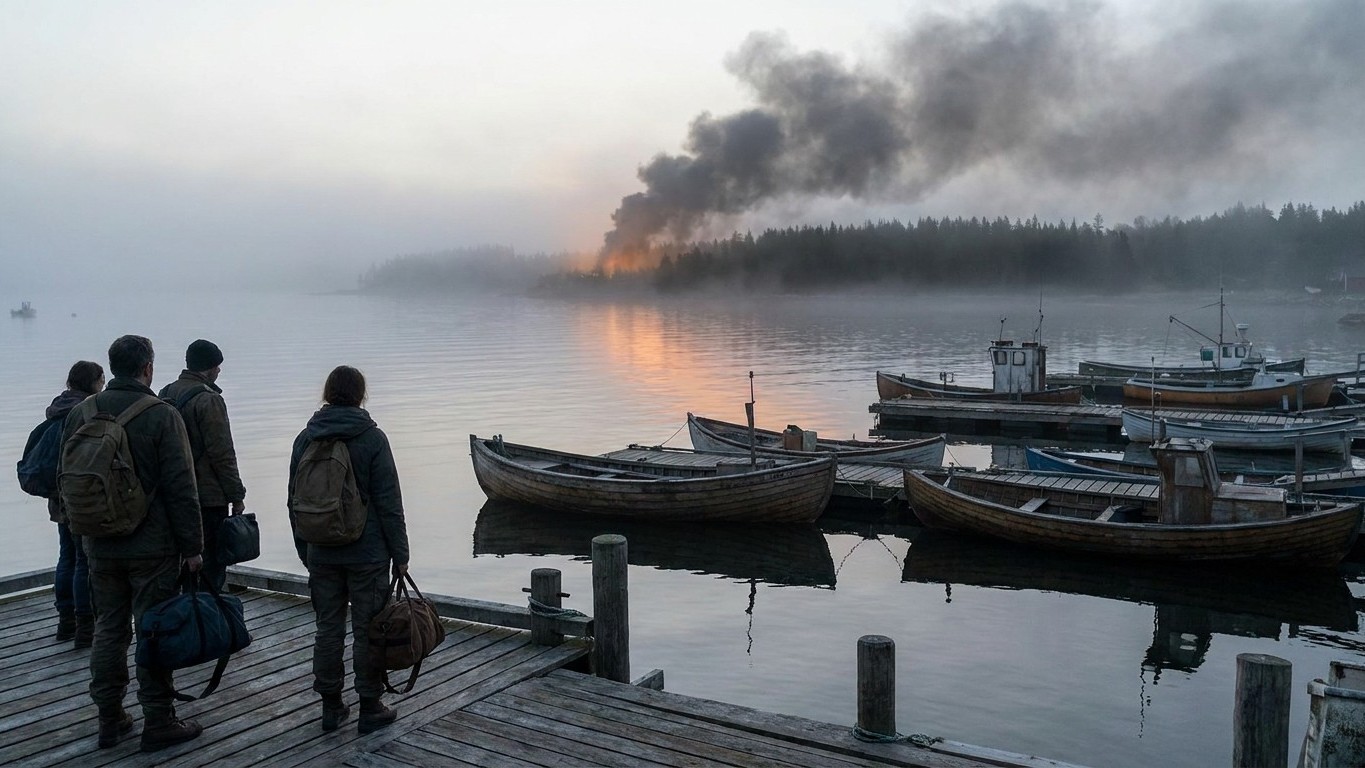
When the road becomes saturated or lies too close to the flames, there is only the open sea left. Ferry services were organized at four piers, and all residents were urged to evacuate as the flames advanced, the town hall clarified. An improvised maritime bridge between Cap-Ferret and Arcachon, on the other side of the basin. More than 400 people have already reached Arcachon by boat from the Cap-Ferret peninsula, while the prefecture ordered road and sea evacuations of residents, announced Arcachon’s town hall to AFP. Crossing the basin by boat to flee a wildfire, suitcases in hand, children and pets pressed close to one another: the image is bound to stay with people, even in a region accustomed to summer alerts.
In total, the scale of the evacuations surpasses anything the Gironde has experienced in recent weeks. Nearly 20,000 people had already been evacuated in the area as a precaution since the fire began on Wednesday, a figure that continued to rise through the night as the evacuation plan broadened to cover the entire peninsula. A firefighter was injured, and the situation remains regarded as unfavorable in a department that had already endured massive fires during the summer of 2022. The memory of Médoc and La Teste-de-Buch, ravaged four years ago, inevitably looms over this new episode.
A fire started from Saumos, houses already lost
Backtrack: it all began on Wednesday, far from the Cap-Ferret beaches. The fire started in Saumos in the early afternoon, in a more interior pine zone, before progressing northward across the Arcachon Basin, aided by dry and windy weather. Since Wednesday it has been devouring the forest north of the basin and now threatens Lège-Cap-Ferret, according to the prefecture, which cites a likely accidental origin. The material toll is also mounting: houses have been destroyed in Le Porge, Lège, and Saumos, three municipalities along the path of the blaze before it even reached the peninsula.
To contain such a front, the resources deployed are considerable. More than 800 firefighters were on the ground, supported by 260 ground rescue resources and six aerial assets comprising a Dash, two Canadairs, two Air Tractors, and helicopter Charlie33. A department-wide deployment, mobilized day and night for forty-eight hours, with no lasting stabilization announced at this time.
What stands out in this episode is the speed with which an entire peninsula shifted from a vacation destination to a disaster zone cut off from the world by land. One question remains for Cap-Ferret residents this morning, suitcases still in hand on Arcachon’s piers: how long will it be before they can return, and in what condition will they find their homes.
Sources: jeanmarcmorandini.com | franceinfo.fr
