
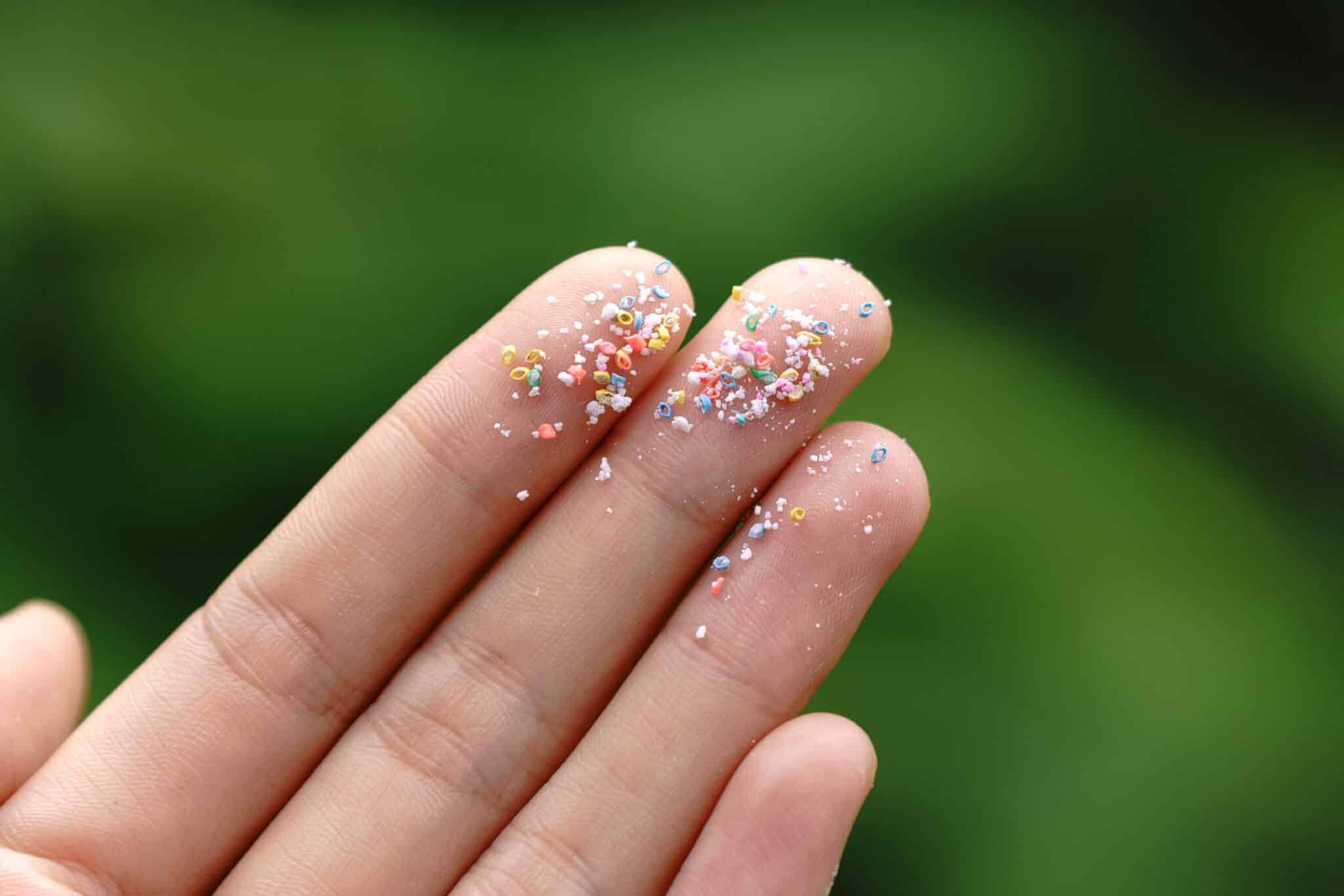
Science has known for several years that microplastics play a role in the warming of the planet. However, a recent study conducted by Chinese and American researchers shows that this role is far more significant than previous studies claimed. According to the researchers, their findings could fully justify a radical decision regarding plastic production.
A contribution equal to 16.2% of black carbon
In 2021, a study from the University of Canterbury (New Zealand) already demonstrated that microplastics (and nanoplastics) present in the air were capable of absorbing Earth’s infrared radiation. However, the same work also showed that these particles mostly reflected sunlight back into space, which caused a slight cooling effect. In other words, the two effects almost canceled each other out, making the overall impact of microplastics negligible with regard to planetary warming.
In May 2026, a new study appeared in the journal Nature Climate Change. Led by Duke University (United States) and Fudan University (China), this research completely changes the picture. Unlike the 2021 study that only considered transparent plastics, the new work shows that colored microplastics suspended in the air retain heat by absorbing light (75 times more). Thus, these microplastics can be placed in the category of other aerosols capable of contributing to climate warming.
According to the results of these studies, airborne microplastics would contribute to climate warming at 16.2% of the impact of black carbon, that is, the soot remaining in the atmosphere after coal combustion. In other words, airborne microplastics exhibit effects equivalent to those of 200 coal-fired power plants each year.
A new, irrefutable argument for abandoning plastic?
According to the authors of the study, the values observed above oceanic plastic waste accumulation zones are even higher. Moreover, the North Pacific Ocean would be the most affected, since it hosts the subtropical gyre. Unfortunately, this area is the very one that concentrates the most microplastics in the world — number one on the map below. These particles detach with currents and waves, before remaining suspended in the air and beginning their warming work.
It is possible that the study in question will carry weight in the near future, as will follow-up studies aimed at determining how much microplastics are already present in the atmosphere. For the researchers, this is about providing a new, irrefutable argument that could lead to the total abandonment of plastic production, a topic long debated for some time. It must be said that the current situation is far from glorious. According to estimates, the amount of plastic waste could rise by another 50% compared with 2020, reaching 40 million tonnes by 2040.
Let us also recall that in 2022 the UN launched an international treaty against plastic pollution. However, negotiations are still at a standstill in 2026, for various reasons. If more than 130 countries – including the European Union, Canada and Chile – demand binding measures to reduce plastic production at its source, the major oil-producing countries and the plastics industry refuse any production limits. They insist that the treaty focus solely on waste management and recycling.
