
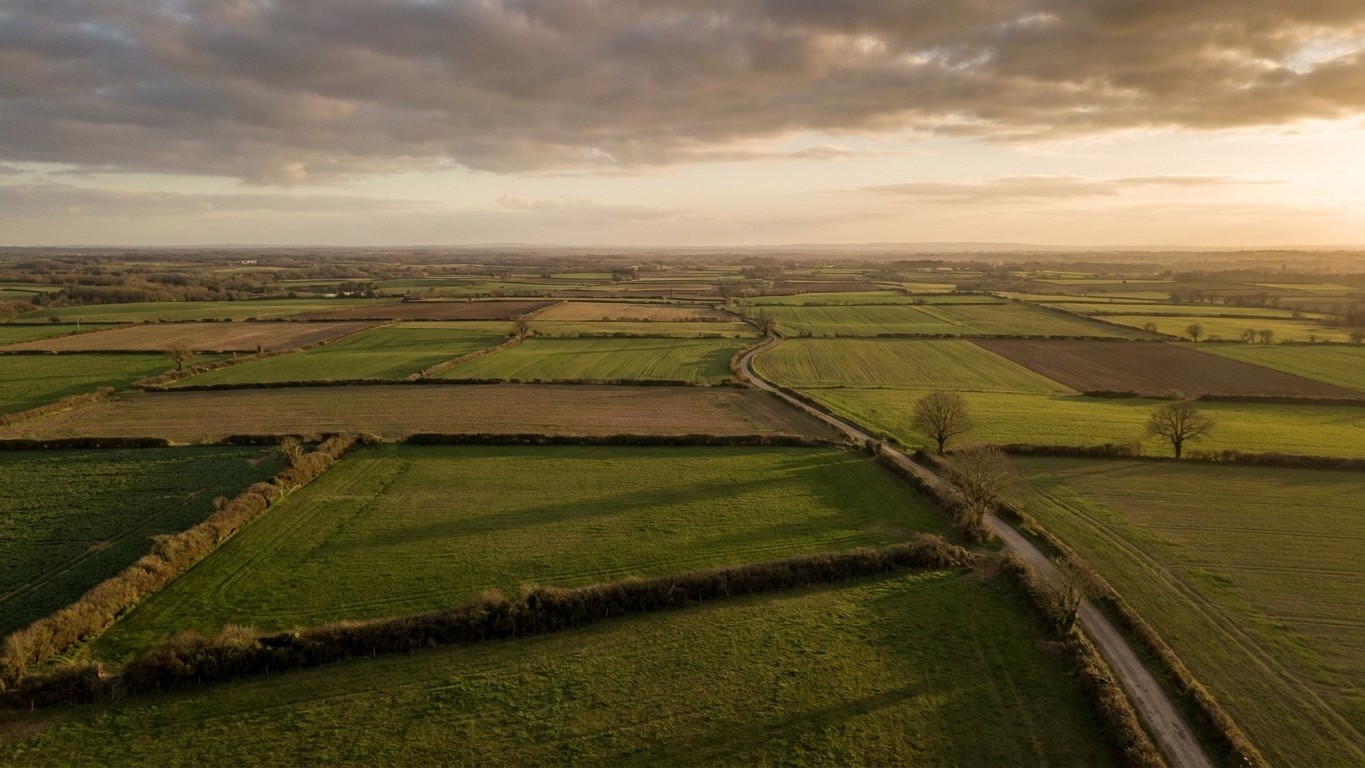
Two hundred ninety million euros. That’s the bill the magistrates on Rue Cambon ultimately tallied for an airport that never came to be at Notre-Dame-des-Landes, in Loire-Atlantique. Ten years of land acquisitions, technical studies and administrative procedures, for a project abandoned in 2018 without a single runway having been laid. The history deserves to be recounted in detail, as it illustrates the state’s difficulty in choosing between development ambition and the reality on the ground.
Key takeaways
- A project launched in the 1960s only materialized on paper for five decades
- Land acquisitions and studies piled up over the years, inflating the bill
- The sudden abandonment in 2018 left the State with a 290‑million bill and administrative files still open
A project born in the Thirty Glorious Years, buried fifty years later
It all begins in the 1960s, during a period of economic euphoria. The airport was planned during the era of strong growth, starting in 1963, and its footprint had been laid out in urban planning documents since 1974. As early as 1974, a prefectural order created the famous deferred development zone, a tool enabling authorities to gradually acquire land for a future project. On paper, the mechanism looked flawless. In practice, it would stretch over decades.
Until 1988, the Loire-Atlantique General Council had obtained only 850 hectares of the 1,600 hectares required, a pace that set the tone. The two oil shocks intervened, the expansion of air traffic slowed, and the file drifted back into the drawers. It would be necessary to wait until 2000 for it to resurface, driven by the ambition to connect the Great West to Europe. The public utility inquiry took place in October–November 2006, and despite a majority of the opinions expressed opposing it, the declaration of public utility was published on February 10, 2008.
This text changed everything. It opened the door to expropriations and, two years later, triggered the signing of a concession contract with Vinci via its subsidiary Aéroports du Grand Ouest. The group won the bid in 2010 for a concession covering the design, financing, construction and operation of the future airport for 55 years. On the ground, however, nothing really moved. Opponents settled in, occupied farms and woods, and turned the administrative acronym ZAD (zone d’aménagement différé) into a zone to defend. A local referendum held in 2016 nevertheless gave a majority to “yes,” but the legality recovered would not be enough to bring the airport off the ground.
The 300 million euros of land and studies: where did the money go?
January 17, 2018, a dramatic twist. Prime Minister Édouard Philippe announced that the Notre-Dame-des-Landes airport project was abandoned after “50 years of hesitations.” Fifty years is also how long the State took to accumulate a colossal bill for an airport that never saw a single plane take off from this bocage plain north of Nantes.
The breakdown of expenditures is dizzying. Of the 1,650 hectares of land reserved since 1974, the State and its concessionaire had to buy back, parcel by parcel, the agricultural lands still in private hands. AGO thus acquired for the State around 180 hectares amicably and 210 hectares through expropriation within the airport concession area. In addition, years of impact studies, public debates, counter-expertise and mediation reports were ordered repeatedly as opposition intensified. All of this, ultimately, was financed with public money, before the government drew a line under the whole project.
The paradox is cruel: the more opposition delayed the project, the more studies accumulated, and the higher the bill rose, until the outright abandonment. A vertiginous way to pay twice for nothing: once to prepare an airport, once to give up building it.
Vinci, the indemnity battle and the historic airport under strain
The project’s abandonment did not close the file; it opened another, almost as costly. The contract signed with Vinci in 2010 provided for a capped termination, with compensation to the concessionaire for invested capital and foregone profits on the decades of anticipated operation. In March 2024, Vinci’s subsidiary asked the Nantes Administrative Court to order the State to pay it 1.6 billion euros for fault, or as a subsidiary claim 1.4 billion euros as compensation for termination on grounds of public interest. The court ruled in April 2024 by denying this request, but the legal battle is far from over.
Meanwhile, Nantes-Atlantique airport, supposed to be replaced by the new platform, bears the fallout from this political decision. The Cour des Comptes, in a report published late 2025, delivers a harsh assessment: more than 50 years after the first hints of transferring from Notre-Dame-des-Landes, and seven years after its abandonment, the institution deems the airport saturated and undersized, with constraints tied to traffic that had, by 2024, returned to 2019 levels. Specifically, the terminals are too cramped, parking spaces are insufficient, and the 2010 concession contract continues to apply due to the lack of agreement on a new framework. Initially slated for December 2021, the failure of a first bidding round in 2023 pushed this deadline to late 2026. Eight years after the abandonment, the State has still not closed the administrative file tied to its own renunciation.
As for the reclaimed agricultural lands, their fate has gradually come into focus. The Court examined the 1,425 hectares of the former deferred development zone, most of which the State had transferred back to the Loire-Atlantique departmental council, which since then has pursued an agricultural and environmental project there. A conversion into a zone for organic farming and hedge preservation, lauded by former opponents, but which does not compensate for the hundreds of millions spent on a project dead on arrival.
One question remains that the Cour des comptes itself poses without fully answering: how much will it finally cost to bring Nantes-Atlantique up to speed, this aging airport that was neglected for fifty years while everything was placed on a site that will never see an airplane? The bill, for its part, continues to run.
Source: esspace.fr
