
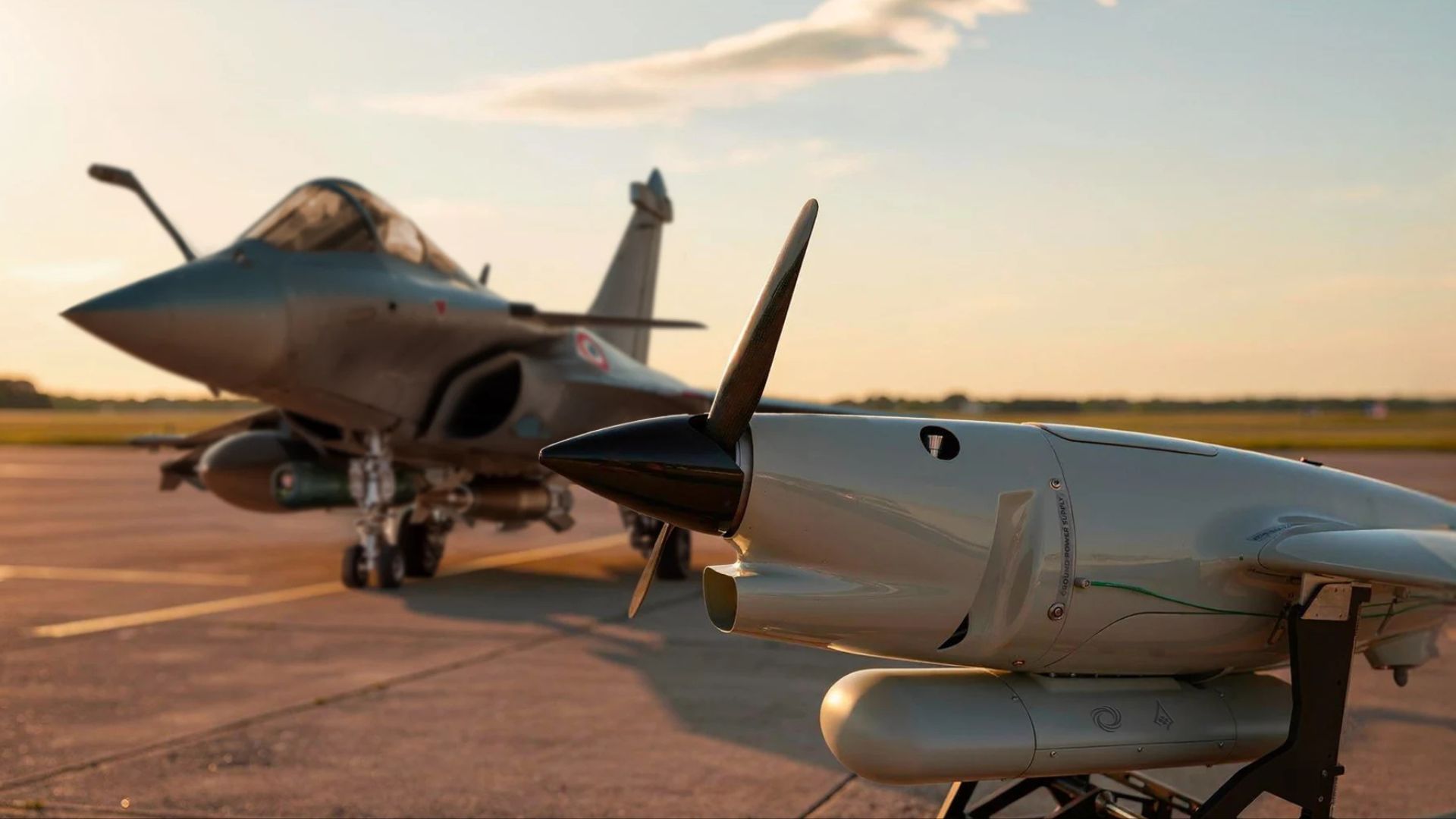
Imagine a hunter capable not only of sprinting at more than twice the speed of sound, but also of listening through the invisible clamor of the battlefield. This is precisely the wager of the Rafale F4, the latest standard of the French combat aircraft, which carries a new kind of electronic warfare payload. Whereas earlier generations were content to defend themselves against enemy radars, this flagship of French expertise goes further: it listens, analyzes, and maps enemy emissions in flight. A discreet, nearly silent feat, but one that could well redraw the balance of power in the sky. A look at the heart of a technological revolution unfolding where the eye sees nothing.
When the Rafale Becomes an Ear Attuned to the Enemy
In a modern confrontation, whoever sees first has often already won. But seeing is no longer enough: one must hear. Each radar, each air defense system, each jamming device emits a unique electromagnetic signature, a kind of vocal fingerprint amid the din of signals. The Rafale F4 was designed to capture these invisible murmurs. Its new electronic warfare payload turns the aircraft into a true flying sensor, a giant antenna sweeping the spectrum in search of the slightest hostile signal.
In concrete terms, the aircraft no longer merely endures the gaze of adversaries’ radars: it flips the script. By intercepting their emissions, it becomes capable of localizing a threat before it even reveals itself. A simple metaphor? Picture a poker player who, instead of guessing his opponents’ cards, can hear their heartbeats quicken with every bluff. That is the kind of advantage this technology provides.
Listening to Survive: the Invisible Revolution of the Battlefield
In contested zones, where the opponent deploys formidable air defenses, a pilot’s survival hinges on moments. The ability to instantly identify the nature of a threat changes everything. Is it a distant, still-harmless early warning radar, or a tracking system ready to launch a missile? The F4 payload enables real-time sorting of these inputs and offers the pilot, or his squad, the best course of action: circumvent, jam, or strike back.
This shift is fundamental. Mastery of the electromagnetic spectrum becomes as decisive as the power of the onboard weapons. We are talking about a war where radio silence, discretion, and constant listening weigh as much as an air-to-air missile. The Rafale F4 does not merely seek to strike: it seeks to understand the invisible environment that surrounds it so as never to be taken by surprise.
Inside the System’s Core: What the F4 Payload Really Detects
What precisely does this electronic ear pick up in flight? It surveys a broad range of frequencies used by radars, data links, and guidance systems. Each detected signal is instantly cross-checked against an extensive library of known signatures. In a few moments, the system can determine the type of emitter, its approximate position, and its level of danger.
But the value extends beyond the flight itself. The data gathered during a mission gradually enriches this library, refining knowledge of potential threats. It’s a virtuous circle: the more the Rafale flies, the more it learns. This collaborative dimension, where aircraft share their discoveries over a network, constitutes one of the major strengths of the F4 standard. The airplane becomes both hunter and spy, capable of delivering to the ground a precise snapshot of the adversary’s electromagnetic field.
France’s Master Edge in the Electromagnetic Spectrum Race
Behind this achievement lies a strategic stake of great importance for France. Mastering such technology guarantees autonomy in the face of major powers that invest heavily in electronic warfare. It also strengthens the position of the French aerospace industry on the international stage, as the Rafale continues to attract numerous partner nations.
This ascent illustrates a broader shift: tomorrow’s conflicts will be fought more and more in the invisible realm, in this silent war of waves where information superiority precedes military superiority. By equipping its fighter with this listening capability, France asserts its intention to stay at the forefront of this technologically quiet yet decisive competition.
The Rafale F4 thus embodies a deep evolution in the way aerial combat is conceived: less noise, more intelligence. By turning the aircraft into an attentive ear capable of deciphering enemy intentions before they materialize, this electronic warfare payload pushes the boundaries of survival and dominance in the sky. A fascinating question remains: as these machines become true connected flying brains, to what extent will listening and analysis replace firepower as the ultimate criterion of air superiority?
