
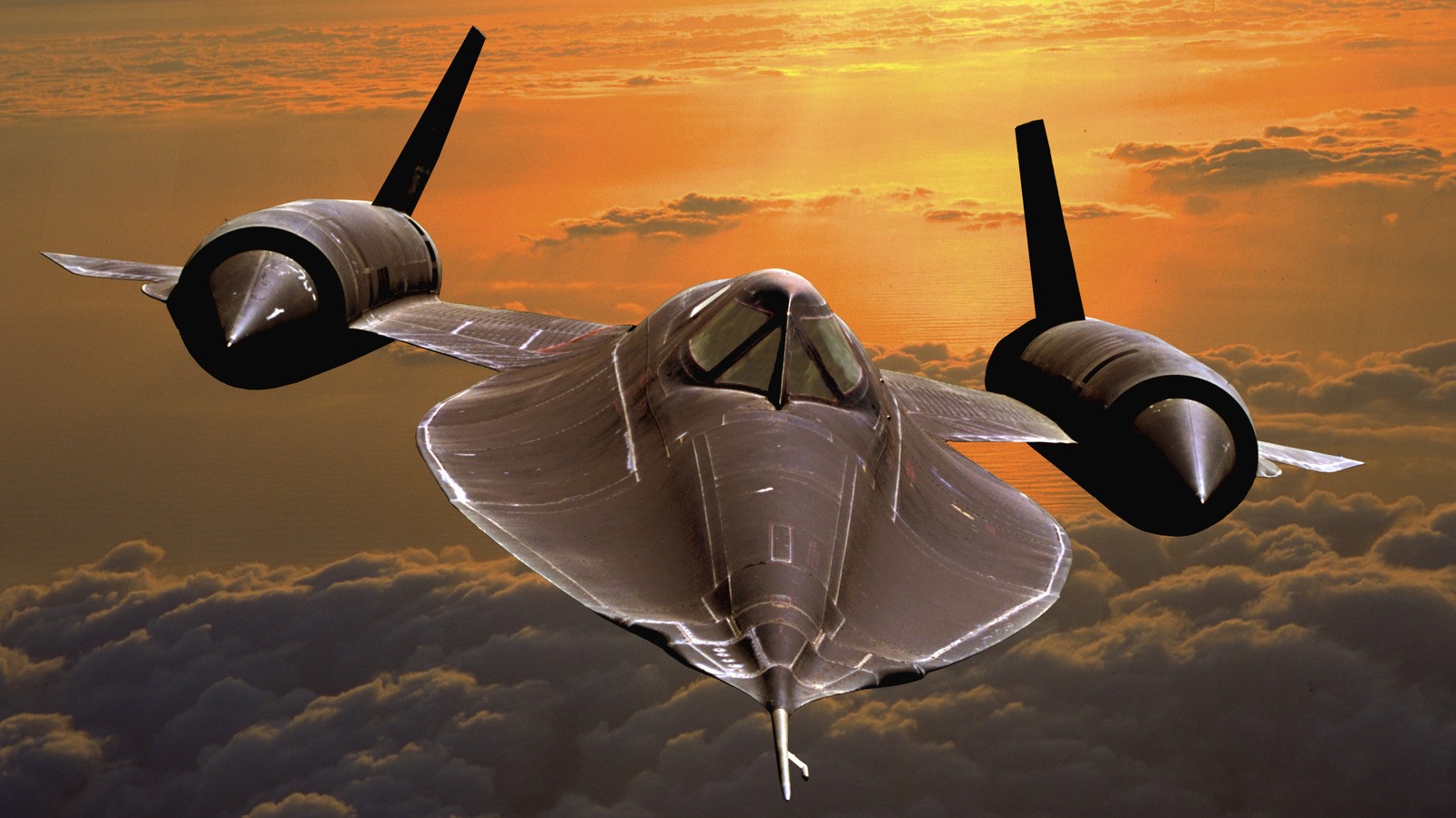
More than 90% of the SR-71 Blackbird’s airframe originated from Soviet soil. The CIA, which also supervised the development of its predecessor, the A-12 Oxcart, set up shell companies abroad to purchase this metal from the nation it was spying on. The enemy paid, unknowingly, for the raw material of its own surveillance.
The story begins with a diplomatic slap. On May 1, 1960, a Soviet missile downed an American U-2 spy plane over the Urals, and the pilot, Gary Powers, was captured. Washington understood then a brutal truth: flying high is no longer enough in the face of Soviet air defenses. It was also necessary to fly fast, very fast, fast enough to outrun any missile. From this geopolitical urgency arose the program entrusted to Lockheed’s renowned Skunk Works, led by engineer Kelly Johnson.
Takeaways
- A revolutionary reconnaissance aircraft requires a material that only the USSR truly controlled
- Fictitious pizza ovens and international intermediaries muddy Moscow’s trace
- The adversary financed its own surveillance without ever uncovering the scheme
Titanium, the Only Metal Capable of Surviving Mach 3
Designing an aircraft that could fly at more than three times the speed of sound posed a challenge no one had solved at the time: heat. Even cruising at altitudes above 96% of the atmosphere, friction with air molecules caused the fuselage temperature to climb to about 800 degrees Fahrenheit. Aluminum, the standard aerospace material, would literally melt under such conditions. Stainless steel handles heat well, but its weight makes sustained supersonic flight unfeasible.
The remaining option was titanium. A metal famed for its scarcity in the early 1960s and even more so for its processing. The catch was that the United States did not produce enough of it in refined form suitable for aerospace work. While titanium ore is cheap and abundant, converting it into metallic titanium is arduous and costly, and Soviet production of refined titanium far exceeded American output. The Soviet Union possessed both the ore—rutile—and the industrial capacity to refine it to aerospace standards. Paradoxically, the country targeted by the espionage held the technical key to the very program designed to monitor it.
Front Companies, Third Countries, and Pizza Ovens
Buying thousands of tons of titanium openly from Moscow would have instantly triggered suspicions. That is why the CIA, without the Soviets’ knowledge, enlisted fictitious intermediary companies to obtain this Soviet titanium intended for American military use. The setup was intricate: orders routed through third countries, frequently from the developing world or European intermediaries, obscuring traceability back to Washington. According to some accounts, a titanium shipment could change hands legally several times before it even landed, with each shell company reselling the cargo at sea to another entity in a different country.
To justify these massive purchases, a credible cover was needed. The most famous remains the industrial pizza ovens. According to Colonel Rich Graham, a Blackbird pilot, the aircraft is composed of about 92% titanium, a metal sourced from a ore called rutile—rare and sandy in texture—whose main supplier was the USSR, obtained via third-world nations and fictitious operations. He recalls that the Soviets believed American companies were seeking the metal to manufacture pizza ovens, which enabled SR-71 engineers to secure the titanium necessary for constructing the aircraft. Other commercial façades cited textile machinery, agricultural silos, or pipelines for the chemical industry. Titanium indeed has legitimate civilian uses for heat- and corrosion-resistant equipment, which made the cover technically plausible.
This pizza-oven anecdote deserves a caveat. It rests largely on the memoirs published in 1994 by Ben Rich, head of the Skunk Works, who wrote that “our supplier, Titanium Metals Corporation, had only limited reserves of this valuable alloy, so the CIA conducted a worldwide search and, through intermediaries and shell companies, discreetly purchased the metal directly from one of the world’s major exporters: the Soviet Union.” Aviation historians note that this particular pizza-oven detail remains difficult to document in declassified archives, even though the overall framework (shell companies, third countries, Soviet procurement) is broadly corroborated.
Why Moscow Didn’t See It Coming
The true fuel behind this operation wasn’t merely the CIA’s tightly guarded secrecy. It was also the Soviet Union’s economic necessity. The operation worked entirely because of the USSR’s desperate need for Western hard currency during the stagnation of the 1960s, with the government so eager to inject cash into its economy that it accelerated exports of raw materials without rigorous checks on buyers. Factories operated at full tilt to meet rigid production quotas, with little concern for who ultimately received the goods at the far end of the supply chain.
The result of this labyrinthine scheme proved as ambitious as it was audacious. The CIA eventually secured enough titanium to build 32 SR-71s, more than a dozen A-12s, and several derivatives, all sourced from ore obtained illegally from the Soviet Union. Once in American soil, the handling of the metal required continued discretion: it had to be laundered a second time to obscure it from domestic observers and from Soviet spies present in the United States. There is no evidence to date that Moscow uncovered the operation’s operational lifespan — no declassified documents confirm that the Soviets knew what the titanium was truly used for, as the CIA’s shell network maintained operational security throughout the program.
One detail that underscores the irony: once built with that Soviet titanium, the Blackbird was never shot down on a mission. More than 4,000 missiles were fired at Blackbirds during their service, and none reached their target, the aircraft simply accelerating to outrun the threat. In this way, the USSR financed, ore by ore, one of the few aircraft it never managed to intercept over its own territory.
Sources: combataerien.com | 19fortyfive.com
