
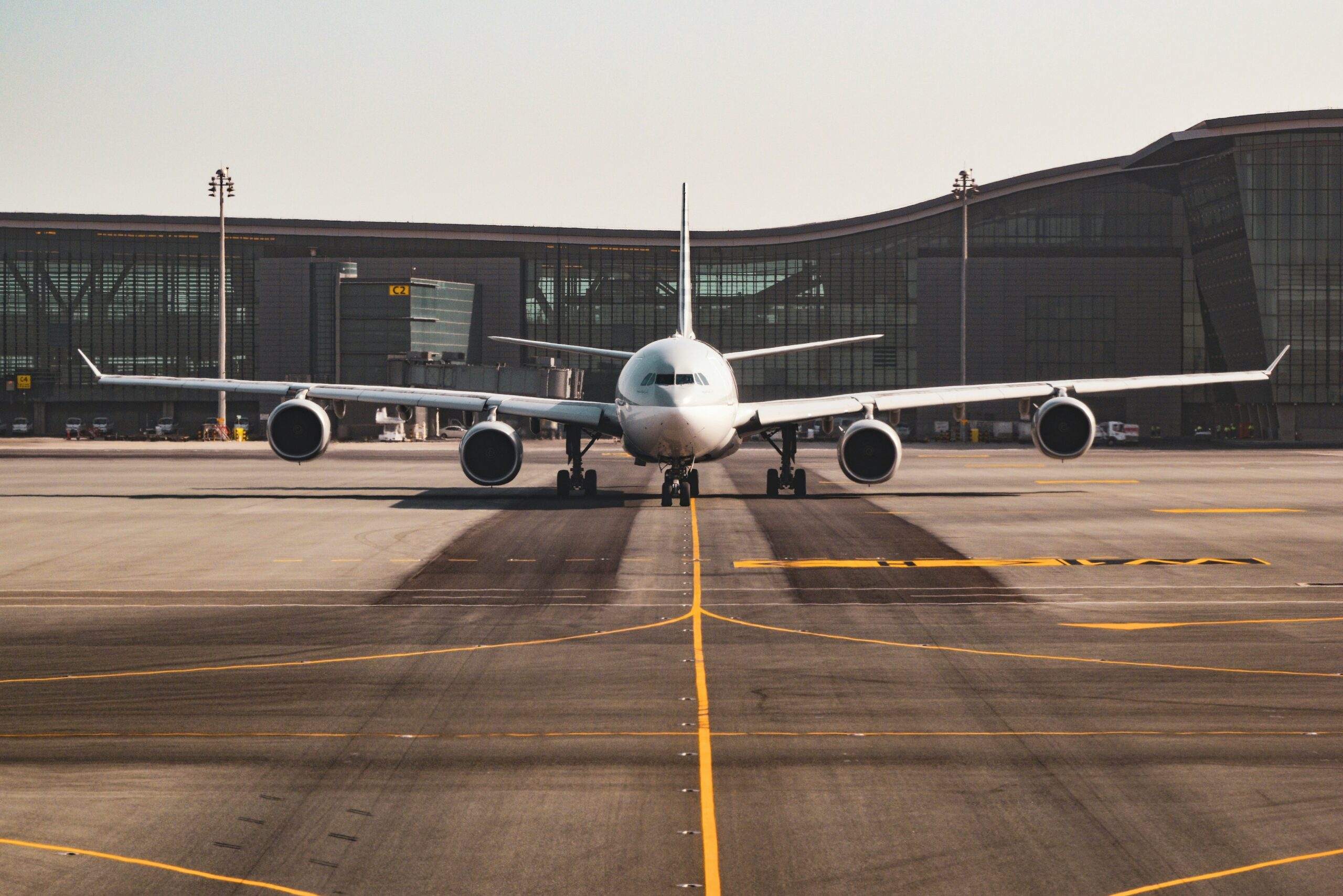
As European quotas under ReFuelEU loom, energy giants and agricultural champions, such as Avril and the Rebound joint venture, are pushing to lift a national SAF sector off the ground. A colossal industrial challenge where the battle over narrative and clarity is only just beginning.
The war between the United States and Iran has repositioned oil at the center of aviation concerns. Jet fuel prices have risen, traffic disruptions have occurred, and worries about supply have resurfaced: airlines have once again measured their dependence on an energy whose price and geopolitical uncertainties they do not control. In this context, sustainable aviation fuels, or SAF, appear as an alternative that is still underutilized but increasingly strategic.
A Geopolitical Context Unfavorable to Aviation
In the days following the military escalation in the Middle East, markets reacted to the threat hanging over energy supplies, pushing up crude oil prices and then jet fuel prices. For Europe, which imports a significant portion of jet fuel from Gulf countries, the signal was particularly scrutinized.
This sharp rise quickly weighed on airlines. Several of them revised their flight schedules or warned about the economic consequences of the situation. Transavia canceled hundreds of flights in the spring, while Ryanair warned about the risks a prolonged crisis would pose to its summer operations. EasyJet and Volotea also had to cope with an environment that had become more uncertain.
Beyond cancellations, the crisis underscores a well-known reality of air transport: a portion of its economic balance remains closely tied to fluctuations in oil. When energy prices soar, costs rise quickly, in a market where the ability to fully pass on these increases to ticket prices is limited. Some carriers sought solutions. Volotea had notably contemplated a fuel surcharge applied after ticket purchase, before backing away in the face of criticism. The episode illustrated the difficulty of directly bearing the consequences of a sustained rise in energy costs by passengers.
The SAF Horizon
Seeking alternatives to kerosene is therefore no longer merely a climate issue. Sustainable aviation fuels occupy an increasing place in sector strategies, but also in their communications: Volotea reminds everyone of its 7 million litres consumed in 2025.
However, the challenge extends beyond individual initiatives. Carriers broadly view SAF as one of the main levers for decarbonizing aviation, while highlighting a recurring obstacle: the volumes available remain far from sufficient. Several airlines regularly alert to the contrast between stated institutional ambitions and production capacities. And European targets measure the scale of the challenge. The ReFuelEU Aviation regulation envisions a progressive incorporation of SAF into aviation fuels, with 6% by 2030, 20% by 2035, then 70% by 2050. All while SAF still accounts for less than 1% of global aviation fuel consumption today.
Initiatives are nonetheless plentiful. In France, the Rebound joint venture is developing an alcohol-to-jet pathway aimed at producing sustainable aviation fuel from ethanol. More broadly, several players seek to structure a production chain capable of feeding the European market in the coming years. TotalEnergies and Avril have thus embarked on studies around intermediate crops intended to supply feedstocks for sustainable fuels. Indeed, SAF can originate from several non-fossil sources: used oils, agricultural residues, organic waste, or alcohol converted through various industrial processes. For these players, the objective is to develop a supplementary resource that does not directly compete with food production. Avril, already active in biofuels, uses it as a flagship to demonstrate the role that agriculture can play in the emergence of a higher-scale SAF industry.
65 to 100% Emissions Reductions
While SAF production remains more expensive than conventional kerosene, it has arguments in its favor that may help explain broad interest. The ecological aspect is the primary one highlighted by institutions, notably Europe, which recalls that lifecycle emission reductions relative to traditional fuel range from 65% to 100%, depending on the SAF type used. Sovereignty is also a crucial issue: as with road fuels, kerosene is imported and therefore geopolitically dependent. Biofuels, whether for road or aviation, enable centralized production on national soil.
Nevertheless, other debates accompany the development of this industry. Like road biofuels before them, SAFs are criticized for their possible competition with certain agricultural productions. Sector players insist that the crops used are mainly intermediate crops, which do not compete with food crops but rather complement them. Beyond its use, questions remain about understanding the SAF production and operation process, and its media visibility remains too often confined to insiders. It remains to be seen whether this will be enough to anchor the SAF narrative and to help meet the decarbonization ambitions of aviation over the coming decades.
