
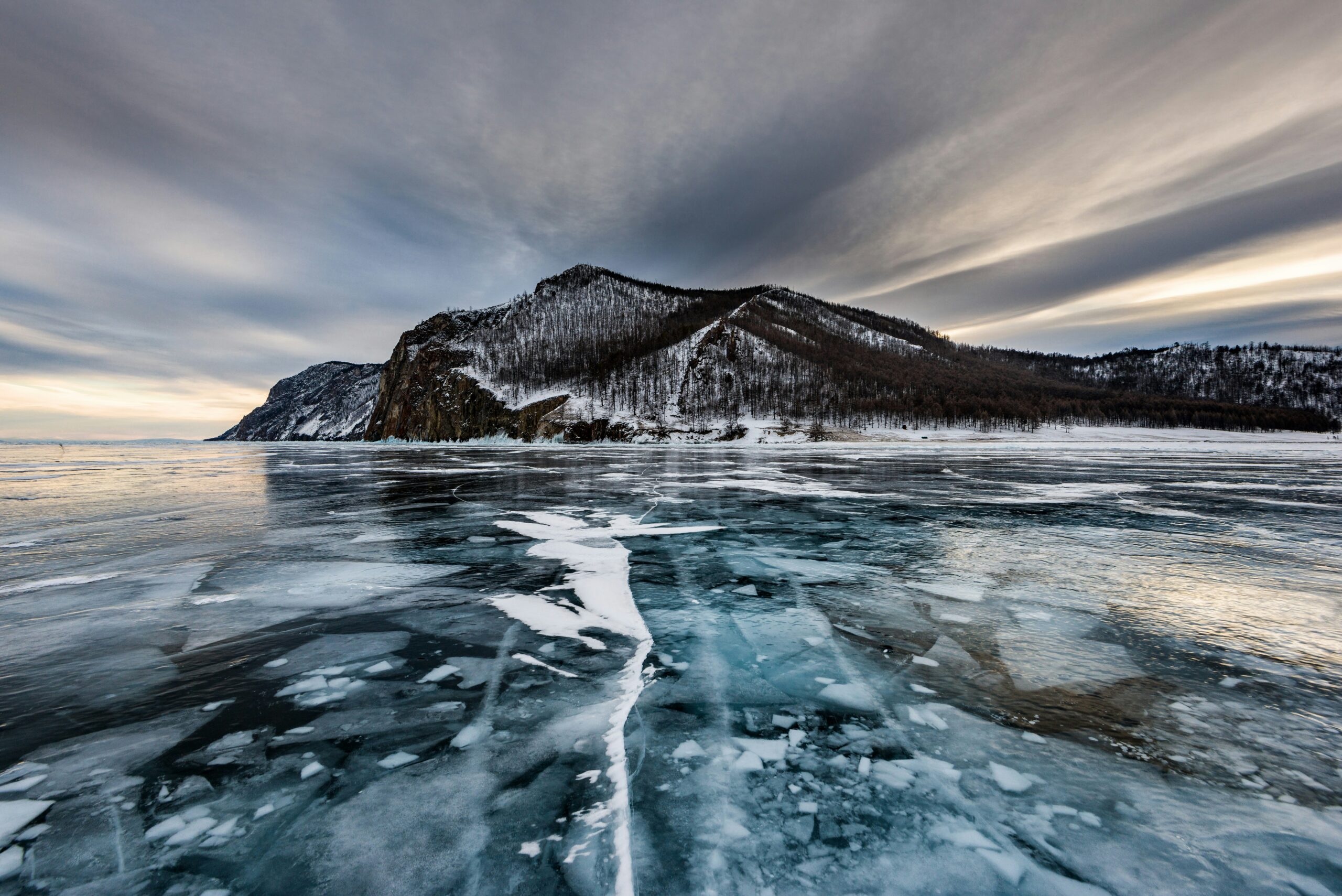
During a fascinating exploration of the Baikal’s mysterious depths in Siberia, a robot deployed last summer revealed astonishing findings: images of cracks and distortions caused by mud volcanoes previously unknown. This discovery offers an intriguing glimpse into underground geological activity and its potential implications for the region.
A Lake Still Shrouded in Mysteries
Formed about 25 million years ago, Lake Baikal, situated in eastern Siberia, is the oldest freshwater lake in the world. It spans an impressive area of more than 31,000 square kilometers and reaches maximum depths of around 1,642 meters, making it also the deepest lake on the planet. This remarkable body of water is surrounded by wild, pristine nature that hosts a unique biodiversity with many endemic species of plants and animals, including the Baikal seal, the only freshwater seal in the world. The crystal-clear waters of Lake Baikal are also renowned for their exceptional purity.
Despite its long history and ongoing exploration, Lake Baikal still harbors many mysteries and secrets. Observations carried out with robots and other cutting-edge technologies regularly reveal surprising new discoveries, unveiling the extent of the richness and diversity of this unique ecosystem. Researchers are especially interested in the lake’s depths, where extreme environments and unique conditions may shelter unknown life forms and fascinating geological phenomena.
Mud Eruptions Near a Fault Line
Recently, observations made with an underwater robot revealed scars marked by mud eruptions at depths of 100 to 165 meters at two locations along the lake’s northwestern shore: Malaya Kosa Bay and Goryachinskaya Bay.
Mud volcanoes are outward manifestations of deeper geological processes that form when mud and gases escape from the depths of the earth. The footage shows deep craters overflowing with mud, evidence of recent eruptions, as well as layers of rock ripped open and displaced by these underground forces. In addition, hundreds of small cone-shaped craters were identified at greater depths, suggesting widespread volcanic activity in the region.
Although scientists had previously documented mud volcanoes in Lake Baikal, this latest finding is especially troubling due to its proximity to a known fault zone named Severobaikalsk, which traverses along the lake’s shore.
Researchers speculate that these recent mud eruptions could serve as early indicators of impending seismic activity. Indeed, this fault zone has been the site of powerful earthquakes in the past, raising concerns about the possibility of future quakes in the region. However, scientists emphasize that these mud and dissolved-gas eruptions should not fundamentally disrupt Baikal’s ecosystem. On the contrary, they could form an integral part of the lake’s natural balance, providing unique opportunities to study underwater geological and ecological processes.
Analyses of the samples collected around the newly discovered mud volcanoes have also revealed traces of microbial activity. These extremophilic microorganisms, capable of thriving under extreme pressure and temperature, open new perspectives on the biodiversity of deep aquatic ecosystems. Studying them could not only enrich our understanding of life’s processes in Earth’s most challenging environments but also fuel hypotheses about the existence of life in similar settings on other planets or moons within our solar system.
