
How could an 88 mm-wide crab end up trapped in a bottle whose neck opening measures only 24 mm? Japanese researchers have resolved this marine mystery: the crab entered as a juvenile, devoured everything inside for two months, and grew until it could no longer escape. The study is published in Ecosphere.
What you will learn
- How the researchers reconstructed the crab’s full story through DNA analysis of its stomach and the growth of barnacles on the bottle
- What this episode reveals about an overlooked impact of plastic pollution on marine crustaceans
- Why the authors compare this crab to a character from a famous Japanese short story
A Floating Mystery Off Okinawa
On July 15, 2022, researchers from Hiroshima University studying juvenile fish off Sesoko Island, near Okinawa, stumbled upon a plastic bottle floating about 500 meters from shore. The bottle was encrusted with algae and barnacles, and surrounded by juvenile fish. Inside lay a large, very much alive crab.
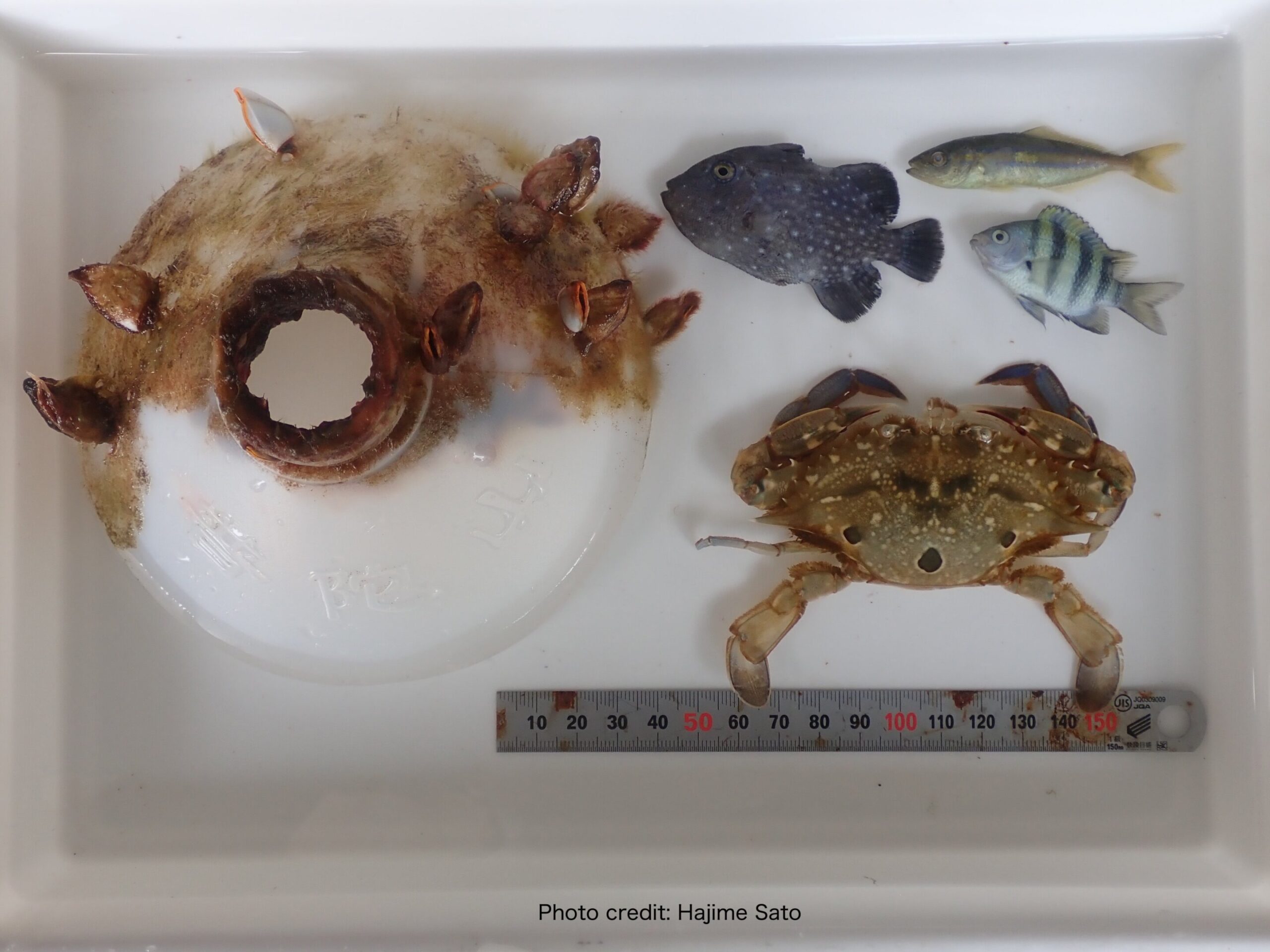
The problem: the bottle’s neck measured only 24 mm in diameter. The crab, meanwhile, measured 88.23 mm across, 40.31 mm in length, and weighed 42 grams. The bottle was open, allowing water to circulate freely — yet the crab clearly could not exit. How did it get in?
Two Months of Unwitting Captivity Reconstructed
To resolve this mystery, the researchers combined several types of analyses. The examination of stomach contents through DNA analysis revealed that the crab had fed on juvenile rough triggerfish and sergeant major — species associated with the floating bottle — as well as algae that had proliferated inside.
Dating was possible thanks to barnacles of the species Lepas anserifera attached to the bottle: their growth rate allows estimating the duration of the drift since the moment the bottle reached the sea. The bottle bore a manufacturing mark dated November 17, 2021.
Conclusion: the crab entered the bottle as a juvenile, fed on the resources available inside for about two months, and grew to a size that made it impossible to extract through the neck. An involuntary, gradual trap with no way out.
“Plastic Salamander”
The authors compare this crab to the eponymous character from a famous Japanese short story by Masuji Ibuse — a salamander who, after two years of incessant feeding in its burrow, becomes unable to get out because of its own growth.
Similar cases of crabs trapped inside plastic bottles have already been reported in Japanese waters, suggesting this phenomenon is not merely anecdotal. Floating bottles, by creating a food-rich microhabitat, attract juveniles who end up growing inside them — and becoming prisoners there.
