
Eight parabolic dishes, each sixteen meters in diameter, mounted on the hulls of decommissioned submarines and driven by mechanisms salvaged from battleships. This isn’t a steampunk fiction, but the reality of the Pluton complex, built in 1960 on the western coast of Crimea near the town of Yevpatoria. This Soviet installation, born out of the urgency of the space race, remains one of the most spectacular examples of large-scale industrial bricolage ever undertaken by a technological power.
To remember
- How to recycle three generations of military technology to conquer space?
- A radio station built against the clock from spare parts of submarines and battleships
- An infrastructure success quietly eclipsed by the history of space exploration
A station built against the clock to talk to Venus
Everything starts in 1959. The USSR was preparing the launch of its first probes toward Venus and Mars, but no ground infrastructure existed yet to communicate with a craft tens of millions of kilometers away. Something had to be invented, and quickly. In 1959, an effort was launched to support the 1960 launches of the Venera missions to Venus and the Mars program toward the Red Planet. The schedule left no room for conventional improvised engineering: engineers had to produce antennas capable of capturing extremely weak signals, and they had to do so in mere months.
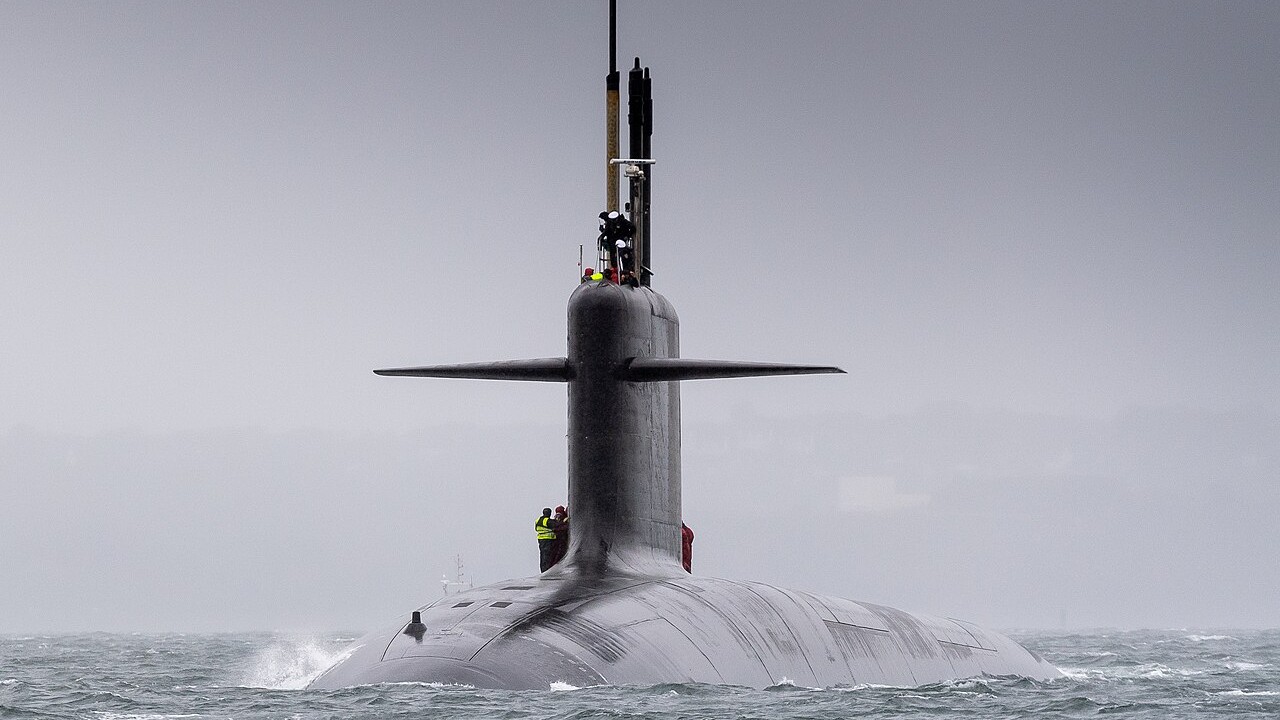
The problem was that the Soviet industry was brutally short of means to manufacture metal structures of that size. Faced with a shortage of building materials, the design effort required a great deal of ingenuity. Rather than casting new structures, the teams turned to what lay around in the arsenals: decommissioned submarine hulls. Decommissioned submarine hulls were retrieved and fixed onto old railway bridges to fashion new antennas. The result almost sounds like a technical gag: steel cylinders designed to dive underwater ended up repurposed as radio-astronomical reception supports oriented toward space.
The rest was just as improvised. A rotator for the dish was built from an unused cannon. According to technical sources detailing the design, the setup consisted of eight 16-meter parabolas laid out on two diesel submarine hulls, welded together and placed on railway bridge girders, themselves mounted on bearings taken from the gun turrets of battleships. Three generations of military technology—submarine, rail, and naval—were combined to give birth to a radio astronomy instrument.
Two sites, eight parabolas, a unique architecture
The Pluton complex was not a single site but a distributed system. The final installation, known as NIP-16, consisted of two stations about eleven kilometers apart: a receiving station near the village of Vitino and a transmitting station near the village of Uyutnoïe, both operated by Soviet military officers. This physical separation between transmission and reception prevented interference between the two functions, a classic radio-astronomy technical choice but rarely implemented with such heterogeneous means.
Tech-wise, the setup used the ADU-1000 design, a scheme where three of the antennas followed the ADU-1000 concept, a network of eight reflector antennas, each 16 meters in diameter. Two receiving antennas were built at the North station, in Vitino, and a transmitter was built 8.5 kilometers away at the South station, at Zaozerne; each receiving paraboloid employed a Cassegrain system with subreflectors mounted on tripods in front of the dishes. The total collecting surface approached 900 square meters, a figure that, at the time, placed the USSR among the few nations capable of tracking distant probes across multiple frequency bands, from 5 to 39 centimeters in wavelength.
Such technical detail might seem marginal. It is not. Using submarine hulls was not merely a salvage trick: their cylindrical shape and structural strength made them natural supports for bearing the substantial weight of sixteen-meter metal parabolas, without the need to design new frames from scratch. Soviet ingenuity, often mocked for its artisanal character, found here a purely pragmatic justification.
Venera 1, first real-world test
The first real mission of the Pluton complex occurred almost immediately after its commissioning. The first mission of the Pluton complex was Venera 1, a probe bound for Venus launched on February 12, 1961. On paper, the story could have been a resounding technological triumph. It turned into a partial fiasco, however: the mission failed, the probe going silent en route to Venus, but the Crimean station worked as planned.
This paradox sums up quite well the spirit of the Soviet space program of that era: probes often failed, but the ground infrastructures, they kept their promises. The Pluton complex had fulfilled its mission, proving that a station cobbled together from recycled military hardware could rival installations designed from the outset for radio astronomy. Space history rarely highlights these infrastructure successes, eclipsed by the more visible failure of the probes themselves.
An outpaced installation but never fully abandoned
The complex did not remain frozen in its 1960 state. The need to communicate with ever more distant probes quickly made the sixteen-meter dishes insufficient. In 1978, these antennas were supplemented by 70-meter antennas at Yevpatoria and Usuriysk. These newer installations, much more imposing, took over the most demanding interplanetary missions, relegating Pluton to a secondary role.
Nonetheless, the station weathered the decades, surviving the collapse of the USSR, passing under Ukrainian administration, and then the 2014 Russian annexation of Crimea. This territory, still internationally disputed today, continues to house these remnants of improvised engineering, silent witnesses to an era when space was conquered with whatever was at hand. It is hard to imagine today a space agency solving a major technical problem by recycling submarine hulls and battleship cannons, but it is precisely this material constraint that pushed Soviet engineers toward a solution as radical as it was effective.
Source: memorial-national-des-marins.fr
