
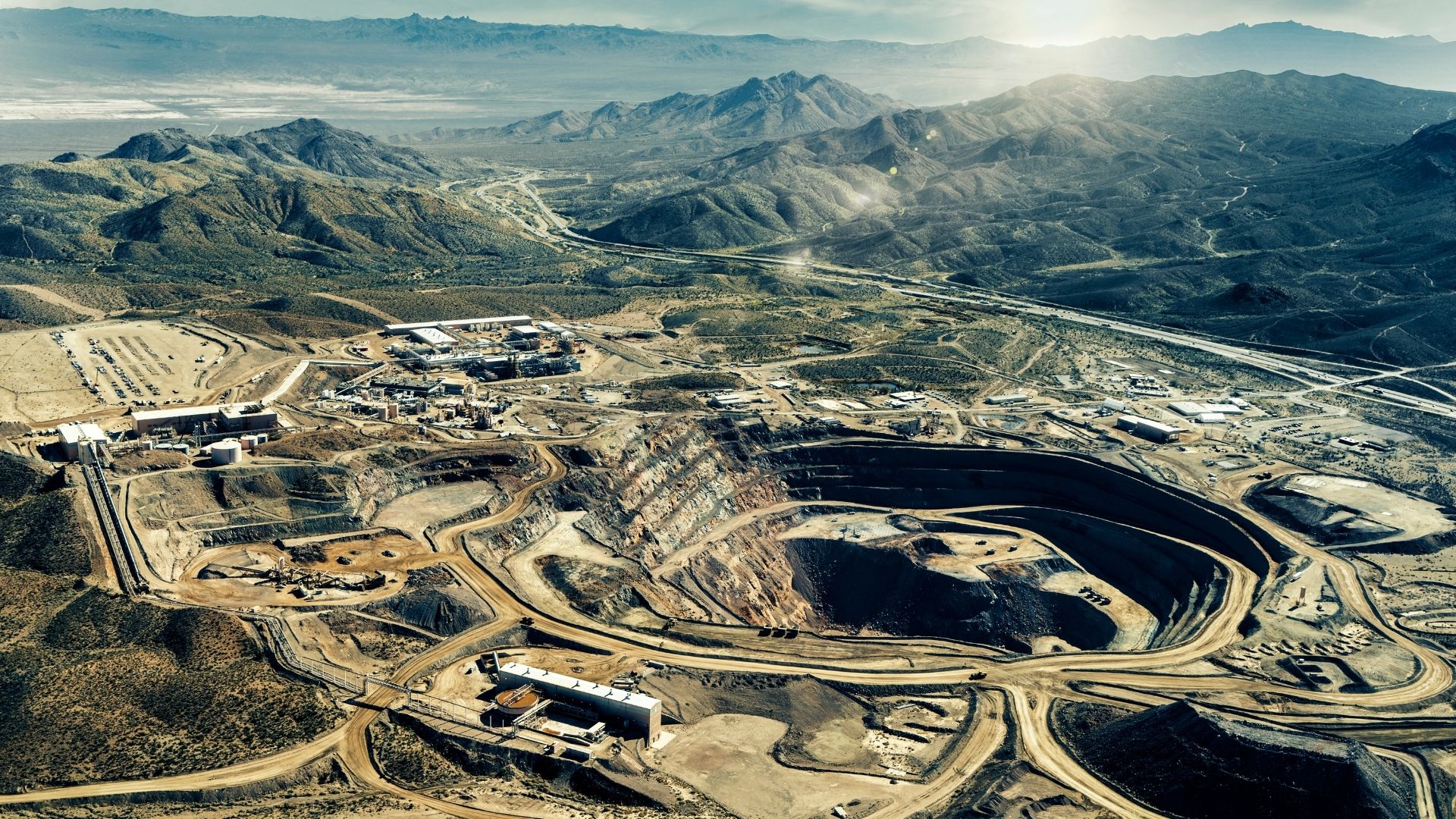
The United States and Canada hold enough rare earth deposits to free themselves from Chinese imports — but tapping these resources will be costly and will require sustained government support. That is the conclusion of a University of Michigan study published in Resources, Conservation & Recycling, as global demand for these critical materials is expected to rise by 65% by 2040.
What you will learn
- Why China currently supplies about 70% of the world’s rare earth supply — and how it built this dominance
- Which rare earths the United States can produce on its own, and where cooperation with Canada is indispensable
- Why nearly all North American deposits are of lower quality than those in China — and whether that makes them unusable
Critical materials at the heart of the energy transition and defense
Rare earths are not ordinary metals. Neodymium, praseodymium, dysprosium and terbium are essential for making extremely powerful magnets — those that equip electric vehicle motors, wind turbines, consumer electronics and modern weaponry. Without them, these technologies would be considerably heavier and less efficient, or even impossible in their current form.
Global demand is only rising: from 91 kilotonnes in 2024, it is expected to reach 123 kilotonnes in 2030 and 150 kilotonnes in 2040, driven mainly by the growth of electric vehicles.
Chinese dominance: a multi-decade strategy
Since the 1980s, China has invested massively in vast mines, sophisticated processing plants, and integrated supply chains. The result: it now supplies around 70% of the global supply. Importing from China is currently cheaper than extracting and processing North American deposits — even though these deposits exist in sufficient quantities on American and Canadian soil.
North American deposits of slightly lower quality, but exploitable
The University of Michigan team analyzed North American deposits to assess their potential competitiveness. The finding is nuanced: with the exception of the Mountain Pass mine in California — already in operation — all identified deposits are of lower quality than those mined in China and Australia.
But “lower quality” does not mean “unexploitable.” According to Stephen Kesler, professor emeritus in the Department of Earth and Environmental Sciences, the quality of these deposits is close enough to existing standards to enable, with modest government support, to feed a national supply chain — especially if rare earth prices remain high. The extra costs of extraction could also be offset by savings at other stages of processing and manufacturing.
Light rare earths vs heavy rare earths: two distinct scenarios
The study distinguishes two categories. Light rare earths — lanthanum, cerium, neodymium, praseodymium — are relatively abundant and the United States could secure their supply on its own. Heavy rare earths — dysprosium, terbium, used in high-temperature magnets — are far rarer. For these, American-Canadian cooperation would be indispensable, with Canadian deposits being better endowed.
A delicate balance between security and overproduction
Researchers warn against a purely industrial response to dependence on China. Overproduction would drive prices down and bankrupt industry players, as has happened in the past. Targeted government control — financing, incentives, coordination — is therefore necessary to build a stable industry without triggering a destructive price war.
