
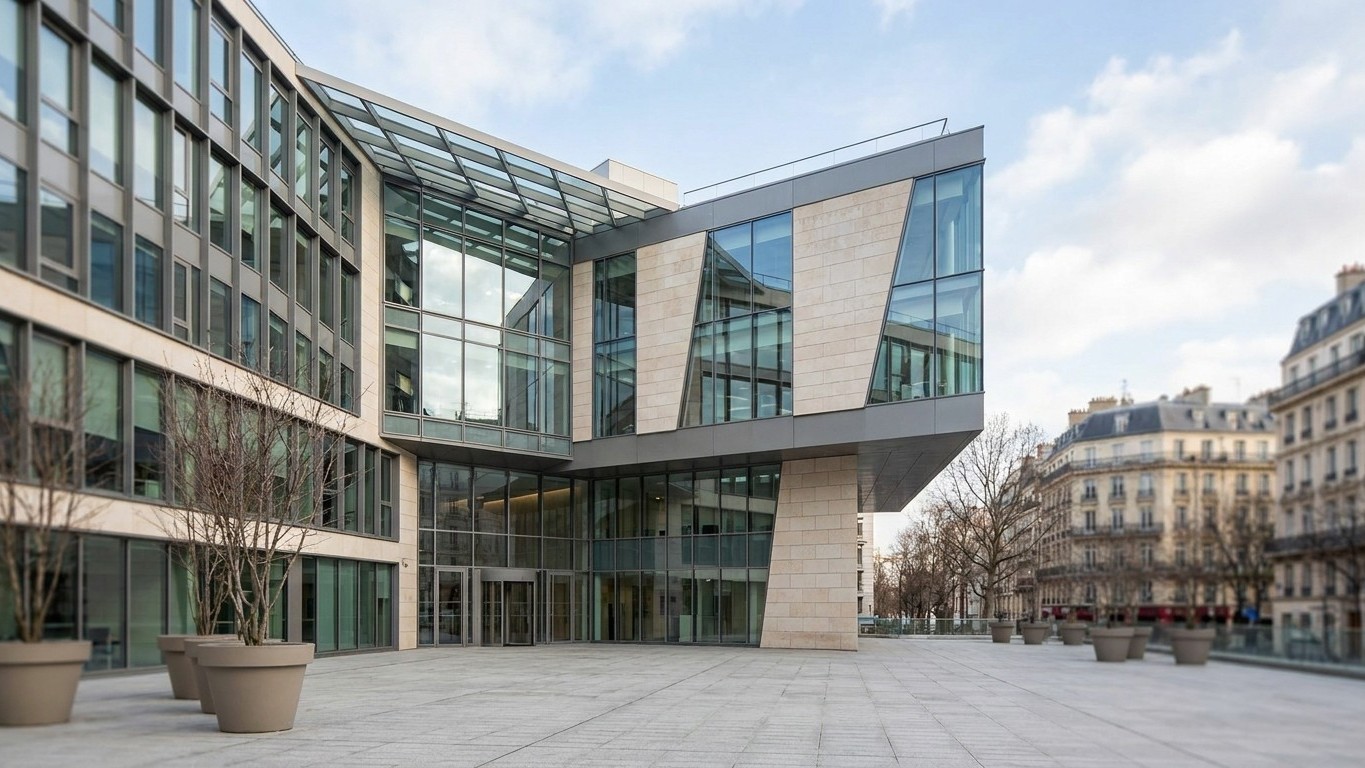
A 71-page report, an irate tone in the replies of former leaders, and a dizzying sum: 46 million euros spent on a Paris campus, six years of financial results scrutinized in detail, and 6.9 million euros in cumulative losses. In a deliberated report dated May 6, 2026, the Chambre régionale des comptes of Pays de la Loire offers a stern assessment of Audencia’s management from 2018 to 2024, noting cumulative losses of 6.9 million euros, a board of directors kept out of key decisions, annual accounts never published, and a Île-de-France real estate project pursued without a safety net. Enough to tarnish the image of a century-old institution that prided itself on being impeccable.
On paper, Audencia bears no mark of a school in distress. Founded in 1900 by presidential decree, the École supérieure de commerce de Nantes became Audencia Business School, seventh in the SIGEM 2025 ranking, triply accredited by AACSB, EQUIS and AMBA—a respected house, home to about 7,500 students and roughly 37,000 alumni. Yet behind the showroom, financial magistrates laid bare a far more troubling mechanism, built on questionable choices and governance that allowed the counters to run wild.
Key takeaways
- Why did a major school in Nantes hide its annual accounts for eight years?
- How was the students’ favorite real estate project never chosen?
- What role did the patron of the developer play behind the scenes of this decision?
A Hybrid Status That Deprives the School of Subsidies
Everything begins with a discreet statutory shift. On January 1, 2018, the Audencia association transformed into an establishment of higher education consular (EESC), a nonprofit joint-stock company, a hybrid status created in 2014, whose capital must remain predominantly consular. The stated objective at the time? To raise financial standing and loosen the grip of a chamber of commerce less generous than before.
The problem is that this gamble did not pay off. The declared aim was to gain autonomy and diversify funding, in a context of the gradual disengagement of the Nantes Saint-Nazaire CCI, but the chamber’s assessment is mixed: this status fails to attract private investors, Audencia has none in its capital, and it deprives the school of the public service charge subsidy enjoyed by private-interest general institutions. Result? A school caught between two worlds, not quite public, nor truly equipped to attract private capital.
The transformation operation itself deserves a closer look. The founding contributions reached 32.6 million euros, including the real estate portfolio of the Jonelière campus, transferred to the CCI upon the dissolution of the mixed syndicate—a move magistrates note proved highly favorable to the consular chamber, Nantes Metropolis, and the department, which donated an asset they had financed alone. Several communities paid, the CCI recovered the property for free. A bit of patrimonial sleight of hand that apparently did not escape the magistrates.
Saint-Ouen, the project chosen against students’ wishes
It is the Île-de-France campus file that the report treats most harshly. The Bauer Box complex in Saint-Ouen, sold as a future delivery by a promoter, was not the daily inhabitants’ preferred choice. In December 2021, four projects were presented to the board of directors. The Saint-Ouen option, the Bauer Box complex, sold as a future delivery by a promoter, was the cheapest. It was selected, even though consulted students had ranked it last, and the promoter in question funded a school chair. A detail that alone would already raise questions about the independence of the decision.
But the most troubling element unfolds behind the scenes of the presentation to the administrators. The chamber notes that among the two finalist projects, only this promoter was invited to come and present his operation in person to the administrators, after joint preparation with Audencia’s teams. The magistrates deem that the principles of objectivity, transparency, and non-discrimination were evidently not respected. Two letters of offer would later formalize the commitment, in July 2022 and February 2023, signed by the president and the then-chief executive officer.
The concern has not appeared overnight. As early as 2022, internal voices already raised concerns about the project’s financial burden. The operation was conducted with the promoter Réalités, a powerful benefactor of the school, while the financial management warned of financial risk and employees expressed concerns. These alerts evidently were not enough to derail the trajectory, up to the campus’s effective opening on Boulevard Victor Hugo in Saint-Ouen, for the 2026 academic year.
A Deficit Accelerates, Governance Laid Bare
The numbers speak for themselves and tell of a deterioration that worsens year after year. The overall net result stood at -2.2 million euros in 2022, -2.9 million in 2023, -4.9 million in 2024, whereas between 2018 and 2020 only 2019 had been in deficit, at around -1 million euros. This drift, accumulated over the 2022-2024 period alone, approaches 10 million euros of deficit, even before accounting for the earlier year.
In terms of form as well, the chamber harshly criticizes the school’s functioning. The board of directors, supposed to validate major orientations, is said to have been kept distant from the most consequential choices, while the institution’s annual accounts were never published for the audited period. An opacity all the more problematic since the money spent ultimately originates from consular funds, i.e., indirectly from companies that fund the CCI through their contributions.
The social climate, already marred by several internal controversies in recent years over management deemed brutal, did not improve the matter. The report confirms revelations about management that wore down employees and details surprising practices over these eight years. Another curiosity noted by the magistrates: the entry of another consular chamber into the capital under financial conditions that also deserved questioning. The Vendée CCI’s 5% stake in 2021 cost one million euros, i.e., 64.70 euros per share.
Since January 2024, a new general management has taken the helm and begun a turnaround effort, with the stated aim of stabilizing accounts that have long remained in the red. The Saint-Ouen campus is now open and will welcome its first students in the 2026 intake: the question remains whether the 46-million-euro investment can be turned into an asset, rather than a lasting financial burden for the companies that ultimately foot the bill through the CCI.
Sources: audencia.com | oeil.europarl.europa.eu | questions.assemblee-nationale.fr
